Is Uber’s Arbitration Clause Enforceable?

Photo Credit: Uber.com

By: Reynolds Pittman

Member, American Journal of Trial Advocacy

Style over utility has Uber in an arbitration conundrum. The design choice of a sleek and inconspicuous gray box for the terms of service in their downloadable app might mean facing a potential class action in court, rather than moving to arbitration. While it is understandable in the modern age that businesses want to streamline their interaction with consumers, app-based businesses potentially run the risk of class action litigation when their arbitration clauses are not “reasonably communicated” to the consumer.[1] While there is a strong presumption in favor of enforcing arbitration clauses, the app design arguably did not provide any notice says the First Circuit. Continue reading “Is Uber’s Arbitration Clause Enforceable?”
Challenging the Constitutionality of Lethal Injection “As-Applied” Under the Eighth Amendment & a Defendant’s Obligation to Provide an Alternative Means of Execution

By: Suzanne Norman

Senior Associate Editor, American Journal of Trial Advocacy

The Supreme Court of the United States will hear oral arguments next week concerning the Constitutionality of execution by lethal injection.[1] Attorneys for Russell Bucklew are expected to argue that their client should not be subject to this manner of execution based on his rare illness that, he claims, will result in “a gruesome death” for Mr. Bucklew, in violation of the Eighth Amendment to the Constitution of the United States.[2] Continue reading “Challenging the Constitutionality of Lethal Injection “As-Applied” Under the Eighth Amendment & a Defendant’s Obligation to Provide an Alternative Means of Execution”

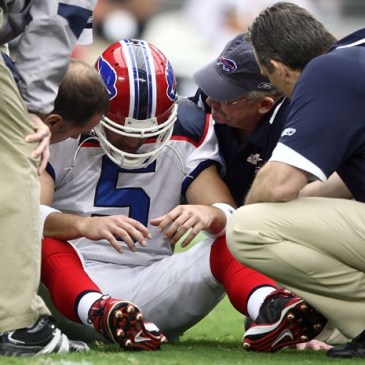
CTE as Latent Disease – Will Other Courts Follow?

By: Callie Brister

Member, American Journal of Trial Advocacy

Background – Schmitz v. NCAA

In October of 2014, Steven Schmitz, a former running back and receiver at the University of Notre Dame, and his wife, Yvette Schmitz, filed a lawsuit against the University of Notre Dame (“Notre Dame”) and the National Collegiate Athletic Association (“NCAA”) alleging that they both “failed to notify, educate, and protect Schmitz from the long-term dangers of repeated concussive and subconcussive head impacts.”[1] Steven was a football player at Notre Dame in the mid-1970s.[2] During his career at Notre Dame, he sustained repeated “concussive and subconcussive impacts.”[3] Steven was diagnosed with a degenerative brain disease, chronic traumatic encephalopathy (“CTE”), in 2012.[4] By 2014, at the age of fifty-eight, Steven had also been diagnosed with Alzheimer’s disease, dementia, severe memory loss, and cognitive decline.[5] Steven ultimately died in early 2015.[6] Continue reading “CTE as Latent Disease – Will Other Courts Follow?”

Birthright Citizenship: No Country for New Babies?

By: Kimberly Fasking

Member, American Journal of Trial Advocacy

Jus Soli

Jus soli is a Latin phrase which was largely unfamiliar outside Immigration Law circles until the recently, when President Trump indicated he was considering ending this longstanding aspect of the country’s citizenship policy via Executive Order.[1] The phrase, meaning “law of the soil,” is used to describe what is commonly referred to as “birthright citizenship,” that is, citizenship determined by where a child is born.[2] Continue reading “Birthright Citizenship: No Country for New Babies?”

Can the Safety Act Provide for a Mass Tragedy?

Written by: Haleigh Chastain

Student Materials Editor, American Journal of Trial Advocacy

On October 2, 2017, one of the largest mass shootings in the United States occurred at an outdoor concert in Las Vegas, resulting in the deaths of 59 and injuries to 527.[1] For reasons still unknown, Stephen Paddock, with an arsenal of high powered weapons and ammunition, which were brought unsuspectedly into his hotel room at the Mandalay Bay Resort and Casino, launched a deadly assault on the outdoor concert goers.[2]  Since this tragedy, numerous legal actions have been filed or threatened to be filed against MGM Resorts International (hereinafter “MGM”), owner of the Mandalay Resort and the concert venue.[3] One of the prime legal theories asserted against MGM is inadequate security.[4] Continue reading “Can the Safety Act Provide for a Mass Tragedy?”

Put it in Writing: Lamar, Archer, Cofrin, LLP v. Appling and the Limits of the Fraud Exception to Discharge

By: Ian Shippey

Articles and Symposium Editor, American Journal of Trial Advocacy

Pursuant to § 523 of the Bankruptcy Code, a debtor is not entitled to discharge to the extent that the debtor obtained the “money property, services or . . . extension renewal or refinancing of credit,” in question, “by false pretenses, a false representation, or actual fraud, other than a statement respecting the debtor’s or an insider’s financial condition.”[1] In order for a statement regarding a debtor’s financial condition to be subject to this discharge exception, the statement must be in writing and satisfy four elements: (1) the statement must be materially false; (2) the statement must relate to the debtor’s financial condition; (3) the creditor must have relied on the statement; (4) the debtor must have intended to deceive the creditor at the time the statement was made.[2] Continue reading “Put it in Writing: Lamar, Archer, Cofrin, LLP v. Appling and the Limits of the Fraud Exception to Discharge”

Hodnett v. Hodnett (Miss. Ct. App. 2018) – No Family Exception to the Automatic Presumption of Undue Influence in Attorney-Client Relationships

Written by: Austin Boyd

Member, American Journal of Trial Advocacy

Introduction:

Recently, in Hodnett v. Hodnett,[1] the Court of Appeals of Mississippi issued an opinion involving an attorney that drafted a series of transactions for her parents, which resulted in her obtaining the entire estate of her parents.[2] Interestingly, her brother, whom she had also represented in an unrelated matter, received nothing from their parents estate.[3] The brother, Tim Hodnett, then sued his sister, Sarah Hodnett, to “set aside a deed to the family farm from their mother to a revocable trust [which named the sister as sole beneficiary].”[4] The brother argued that an automatic presumption of undue influence was created when his sister drafted legal documents for her parents because of their attorney-client confidential relationship.[5] To see how this plays out, it is useful to provide some background information around the presumption of undue influence in attorney-client relationships. Continue reading “Hodnett v. Hodnett (Miss. Ct. App. 2018) – No Family Exception to the Automatic Presumption of Undue Influence in Attorney-Client Relationships”

Sale of a House: Applying the Home Sale Gain Exclusion

By Lisa K. Cagle
Research and Writing Editor, American Journal of Trial Advocacy

Moving. . . the word conjures up feelings of anxiety, excitement, or even remorse. In the United States, most people will move at some time during their lives.[1] In fact, over 35 million Americans move annually[2] with many moves involving the sale of the home.[3]

Continue reading “Sale of a House: Applying the Home Sale Gain Exclusion”

The Culture of Silence: The Impact of #metoo on Nondisclosure Agreements

Photo Credit: https://questfusion.com/non-disclosure-agreements-critical-startup/

By: Whitney Lott

Associate Editor, American Journal of Trial Advocacy

Introduction

While the #MeToo movement has forced national reflection, a new enemy of safety in the workplace has come to light: the nondisclosure agreement.  Nondisclosure agreements, once an anomaly of the tech industry, are now taking center stage in the national consciousness with its connection to the #Metoo movement. Employers of predators must now take stock if they are partially to blame for the culture of silence surrounding abuse in their companies due to the proliferation of these nondisclosure agreements. The use of nondisclosure provisions or confidentiality provisions in settlement agreements has forced victims of sexual misconduct, including the victims of Harvey Weinstein, Bill O’Reilly and even Larry Nassar, to remain silent on matters concerning the sexual abuse or harassment perpetrated on them.[1] Continue reading “The Culture of Silence: The Impact of #metoo on Nondisclosure Agreements”

Black (enough?) Letter Law: What’s the Threshold to Qualify for Minority Race Status?

By Averie Armstead

Member, American Journal of Trial Advocacy


Ralph Taylor is a 55-year-old who has lived majority of his life as a white man.[1] In 2010, the Lynnwood, Washington citizen took a home DNA test, and now Taylor identifies as multiracial.[2] The DNA test “estimated he was 90 percent Caucasian, 6 percent indigenous American and 4 percent Sub-Saharan African.”[3] After receiving the results, Taylor applied for state certification so his company, Orion Insurance Group, would be considered a minority-owned business.[4] The Washington Office of Minority & Women’s Business Enterprises (OMWBE) approved Taylor’s application because there was no criteria to define a threshold to qualify for minority race or ethnicity.[5] However, Taylor’s Federal Disadvantaged Business Enterprise (DBE) application was denied for failure to provide sufficient evidence that he was a member of a recognized racial minority group.[6] Taylor filed suit in the United States District Court of the Western District of Washington.[7] Continue reading “Black (enough?) Letter Law: What’s the Threshold to Qualify for Minority Race Status?”