Menendez v. People: An Examination of Media as a Tool for Post-Conviction Relief

Samantha Stutsman, See the Case of Monsters: The Lyle and Erik Menendez Story Side-by-Side with the Real People they Play, People (Sep. 19, 2024), https://www.today.com/popculture/tv/monsters-lyle-erik-menendez-cast-vs-real-people-rcna168424.

Authored by Leslie A. LaTurno

With the development and advancement of technology and media, the tools in which attorneys can use to advocate for their clients have expanded as well. But how can criminal defense attorneys use technology and media to their advantage?

Lyle and Erik Menendez were convicted of first-degree murder in the 1989 killings of their parents, Kitty and Jose Menendez.[1] The brothers––who were 18 and 21 at the time of the murders––were sentenced to life in prison without the possibility of parole.[2] Both of the brothers’ first trials ended in a mistrial, with their second trials having procedural bars to the kinds of evidence allowed to be permitted.[3] Specifically, their attorneys could not put on evidence that went to the alleged sexual, physical, and mental abuse the brothers faced by their parents.[4] Because the self-defense theory presented by the defense attorneys hinged on this testimony and evidence, the lack thereof resulted in guilty verdicts by the juries.[5] This chain of events is highlighted in Netflix’s most recent viral true crime documentary, Monsters. While this case garnered media attention at its conception, society’s stance on mental health and rehabilitation has drastically changed since the 90s.[6]

The “1960s to the early 2000s” highlighted a time period in which crime riddled California took a “tough on crime” stance –making an example of high profile defendants and prosecuting to the highest extent of the law.[7] However, as times have changed, the state has put in place new statutes in an effort to alleviate the harsh sentencings imposed during that period.[8] These post-conviction relief routes are designed to allow the courts to have an avenue to correct overly punitive or unjust rulings.[9] While every convict has the federal right to appeal under 28 U.S.C. § 2255, this appeal may only be used once and is time-barred for one year after the prescribed requirements. This is typically “the date on which the judgment of conviction becomes final.”[10] Once a convicted defendant has used this appeal or the time has lapsed, the defendant must look to their state’s post-convicted remedies to see what relief could be afforded.[11]

“In California specifically, post-conviction relief can be afforded at any time upon the recommendation of the secretary or the Board of Parole Hearings in the case of a defendant incarcerated in state prison, the county correctional administrator in the case of a defendant incarcerated in county jail, the district attorney of the county in which the defendant was sentenced, or the Attorney General if the Department of Justice originally prosecuted the case, recall the sentence and commitment previously ordered and resentence the defendant in the same manner as if they had not previously been sentenced, whether or not the defendant is still in custody, and provided the new sentence, if any, is no greater than the initial sentence.”[12]

Further, the state has given District Attorneys immense discretion in recommending any case for re-sentencing to the court.[13] This avenue of relief, coupled with the social outrage from Monsters: The Lyle and Erik Menendez Story, presented the perfect scenario for Lyle and Erik Menendez. Following Monsters: The Lyle and Erik Menendez Story and The Menendez Brothers, millions of viewers took to social media in support of the brothers and expressed discontent that the pair remain incarcerated today.[14] Roughly 114,000 people have signed a petition in support of freeing Lyle and Erik.[15] News outlets from “ABC News to Fox News, . . . have dissected the tragic event and every stage of their lives since.”[16] Through Cal. Penal Code § 1172, and because of the large support in favor of Lyle and Erik, George Gascón, the Los Angeles County District Attorney, recommended that the brothers be re-sentenced.[17] Following this recommendation, a hearing in front of the court will be set, and a judge will “make a ruling based on what is presented.”[18]

This is not the first time that a “true crime” media craze has provided a sort of post-conviction relief to a convicted defendant. In similar fashion, Gypsy Rose Blanchard was convicted of second-degree murder and sentenced to ten years in prison for the 2015 slaying of her mother.[19] Her co-conspirator and boyfriend at the time were sentenced to life in prison without parole.[20] Years later, HBO’s Mommy Dead and Dearest (2017),  Hulu’s The Act (2019), and various related documentaries and docuseries were released detailing the physical and psychological abuse Gypsy Rose faced at the hands of her mother.[21] The public’s reaction to the stories of severe medical abuse leaned towards empathy and support for Gypsy Rose and contention over whether she should be in prison.[22] In 2023, Gypsy was released early after only serving eighty-five percent of her ten-year sentence.[23] The relevant state law required that Gypsy serve a minimum of eighty-five percent of the original sentence to be eligible for parole.[24] While the on-goings of her parole hearing were not public, it is likely that the mass support for her release played a strong factor in the immediate approval of her parole.

Why does all of this matter to attorneys? Attorney’s jobs as advocates do not end at conviction and sentencing.[25] The media can now become a tool for attorneys to rectify convictions and sentencings that do not align with society’s view on certain crimes. How do we use it? First, find the rules in your respective state regarding post-conviction relief.[26] If your state provides a provision that allows for discretion in convictions or sentencings, focus on the requirements of such provision. For example, California, Washington, Oregon, Illinois, and Minnesota have all passed discretionary provisions that allow prosecutors to initiate resentencing.[27] Focus on finding those with the discretion to recommend or initiate review. Next, attract the attention of local or national media. This could include journalists, producers, online campaigns, and all forms of media. Work with the media to tell the story in a way that sheds light to the injustices faced by the defendant(s).[28] “By presenting a story that strongly supports one side of a case (whichever side that might be), the creators are essentially showing the ‘right’ side for their viewers to be on.”[29] If an attorney can successfully accomplish the above, there is hope for post-conviction relief.


[1] See Michael Arntfield, Expert insight: The Menendez brothers’ case and the moral paradox of true crime, Western News (Oct. 30, 2024), https://news.westernu.ca/2024/10/menendez-brothers-and-true-crime/.

[2] See Alana Wise, DA recommends resentencing of Menendez brothers for the 1989 slaying of their parents, NPR (Oct. 24, 2024), https://www.npr.org/2024/10/24/nx-s1-5163531/menendez-brothers-murders-resentencing-recommended.

[3] See id.

[4] See Kate Christobek, The Menendez Brothers Could Be Released From Prison. Here’s What to Know., N.Y. Times (Oct. 31, 2024), https://www.nytimes.com/article/menendez-brothers-case.html (“The judge, Stanley M. Weisberg, prohibited their lawyers from using the ‘abuse excuse,’ essentially leaving only two options for jurors: an acquittal or a murder conviction.”).

[5] See id.

[6] See Jessica Walthall, The Evolution of the Mental Health Movement, National Alliance on Mental Health (June 1, 2020), https://www.nami.org/advocate/the-evolution-of-the-mental-health-movement/.

[7] Steven Greenhut, How California Softened Its ‘Tough-On-Crime’ Approach, R Street Institute (July 2017), https://www.rstreet.org/wp-content/uploads/2018/04/102-1.pdf; Kendall Fisher, No Time Like the Present, Except the Past Fifty Years: Why California Should Finally Adopt the Model Penal Code Sentencing Provisions, 49 The U. Of Pac. L. Rev. 661, 669 (2018) (“Although the ‘tough on crime’ era peaked in the 1990s, it remains a popular slogan among politicians seeking to win elections by promising a heavy-handed approach to crime, and capitalizes on public fears by making examples out of recent high-profile crimes.”).

[8] See generally Cal. Penal Code §§ 17(b), 745, 1016.5; S.B. 731, 2022 Gen. Assemb., Reg. Sess. (Ca. 2022); S.B. 483, 2021 Gen. Assemb., Reg. Sess. (Ca. 2021).

[9] Greenhut, supra note 7.

[10] 28 U.S.C. § 2255 (f)(1).

[11] See Carlos M. Vazquez & Stephen I. Vladeck, The Constitutional Right to Collateral Post-Conviction Review, 103 Va. L. Rev. 905, 910-11 (2017) (“States are under no obligation to permit collateral attacks on convictions that have become final, and if they allow such attacks, they are free to limit the circumstance in which claims may be relitigated.”) (citing Foster v. Chatman, 136 S. Ct. 1737, 1759 (2016)).

[12] Cal. Penal Code § 1172.1(a)(1).

[13] See A.B. 2942, 2018 Gen. Assemb., Reg. Sess. (Ca. 2018).

[14] See Jeetendr Sehdev, The Menendez Brothers Mania: America’s Obssession With Bad Boys, Forbes (Oct. 28, 2024), https://www.forbes.com/sites/jeetendrsehdev/2024/10/28/the-menendez-brothers-mania-americas-obsession-with-bad-boys/.

[15] See Menachem Enayatian, Free the Menendez Brothers, Change (last visited Nov. 8, 2024) https://www.change.org/p/jail-for-getting-abused-free-the-menendez-brothers.

[16] Sehdev, supra note 14.

[17] See Cindy VonQuednow & Dalia Faheid, What’s next for the Menendez Brothers as DA recommends their resentencing decades after their parents’ killing, CNN (Oct. 25, 2024), https://www.cnn.com/2024/10/25/us/erik-lyle-menendez-brothers-resentencing-whats-next/index.html.

[18] Id.

[19] See Marlene Lenthang, Gypsy Rose Blanchard released from prison early after serving time for the murder of her abusive mother, NBC News (Dec. 28, 2023) https://www.nbcnews.com/news/us-news/gypsy-rose-blanchard-released-prison-early-serving-time-murder-abusive-rcna131423.

[20] See id.

[21] See Anna Kaplan & Ariana Brockingston, 6 movies, documentaries and shows about Gypsy Rose Blanchard to watch, Today (July 10, 2024), https://www.today.com/popculture/gypsy-rose-blanchard-movies-documentaries-rcna132066. (“Blanchard is thought to be a victim of Munchausen syndrome by proxy, a psychological disorder in which a caretaker purposefully makes someone sick. In 2015, Blanchard’s then-boyfriend, Nicholas Godejohn, stabbed her mother to death while she hid in another room.”).

[22] See The internet’s unfortunate idolization of Gypsy Rose Blanchard, Daily Free Press (Jan. 22, 2024), https://dailyfreepress.com/2024/01/22/the-internets-unfortunate-idolization-of-gypsy-rose-blanchard-editorial/.

[23] Aaron A. Bedoya, Is Gypsy Rose out of Prison? Details to know about release, El Paso Times (Dec. 28, 2023) https://www.elpasotimes.com/story/news/2023/12/28/gypsy-rose-released-details-to-know-about-age-how-long-in-prison/72049377007/.

[24] See Mo. Rev. Stat. § 558.019.3 (2024).

[25] See David M. Siegel, My Reputation or Your Liberty (or Your Life): The Ethical Obligations of Criminal Defense Counsel in Postconviction Proceedings, 49 The U. Of Pac. L. Rev. 661, 669 (2018).

[26] See, e.g., Rule 32, Ala. R. Crim. P.

[27] Where is PIR happening?, For the People (last visited Nov. 8, 2024), https://www.fortheppl.org/faqs#:~:text=Since%202018%2C%20five%20states%20have,Florida%2C%20Massachusetts%2C%20and%20Maryland.

[28] Kathryn A. Doughty, Exploring the existence of a “documentary effect: examination of true crime documentaries on judgments of evidence manipulation and perceptions of police (May 2018) (ASU Electronic Theses and Dissertations) (Conducting a study that poses a correlation between true crime media’s portrayal of the defendant as innocent or acting with a defense and the viewer’s positive perception of the defendant).

[29] Ryan Murphy, Crime Documentaries: Are They Really Helping?, BC Law: Impact (Nov. 3, 2016), https://bclawimpact.org/2016/11/03/crime-documentaries-are-they-really-helping/.

Vaccine Mandates and Religious Rights: When Personal Beliefs Enter the Courtroom

Photo Credit: Dr. Kiran Raman, There’s a new updated COVID-19 vaccine just in time for the respiratory virus season, Arizona Department of Health Services, October 11, 2023, https://directorsblog.health.azdhs.gov/theres-a-new-updated-covid-19-vaccine-just-in-time-for-the-respiratory-virus-season/.

Authored by Bethany M. Logan

Title VII of the Civil Rights Act prohibits workplace discrimination based on religion. Title VII requires employers to reasonably accommodate employee’s religious practices unless doing so results in undue hardship. In recent years, the COVID-19 pandemic sparked a wave of lawsuits involving religious objections to vaccination mandates. But how does the law distinguish between sincerely held religious beliefs and personal preferences masked as faith?

Title VII was amended in 1972 to clarify the definition of religious discrimination under the statute by stating that “[t]he term ‘religion’ includes all aspects of religious observance and practice, as well as belief, unless an employer demonstrates that he is unable to reasonably accommodate to an employee’s or prospective employee’s religious observance or practice without undue hardship on the conduct of the employer’s business.”[1] Title VII makes it unlawful for an employer to discharge or otherwise discriminate against an individual in hiring, firing, compensation, or any aspect of employment based on religion, race, color, sex, or national origin.[2] An employee must first demonstrate that they hold a genuine and sincerely held religious belief, which they have communicated to the employer, and that this belief conflicts with a job requirement.[3] The COVID-19 pandemic led to a surge of lawsuits, as employees who were required by their employers to get vaccinated sought religious exemptions.

As of March 1, 2022, EEOC guidance allows employers to request an explanation from employees who claim a religious objection to the COVID-19 vaccination requirement regarding how their religious beliefs, practices, or observances conflict with this mandate. [4] While religious beliefs are protected under the law, political beliefs are not, nor are general concerns about vaccine safety.[5] Employers are required to evaluate these objections on a case-by-case basis.[6] Additionally, religious accommodations may be revoked if an employee’s beliefs change or if granting such exemptions imposes an undue burden on the employer.[7] The Supreme Court has defined “undue hardship” as the employer bearing “more than a de minimis cost” or as infringing upon the rights of other employees.[8]

The Supreme Court laid out the test for whether a belief is religious in a case interpreting a conscientious objector statute.[9] The relevant objective test examined whether “the claimed belief occup[ies] the same place in the life of the objector as an orthodox belief in God holds in the life of one clearly qualified for exemption.”[10] The Court distinguished between individuals whose beliefs were genuinely religious and those whose views were “essentially political, sociological, or philosophical or a merely personal moral code.”[11] While the court should not inquire into the credibility of the beliefs, the court should “decide whether the beliefs professed by a registrant are sincerely held and whether they are, in his own scheme of things, religious.”[12] A belief in god is unnecessary; however, beliefs must “certainly occupy in the life of that individual ‘a place parallel to that filled by * * * God’ in traditionally religious persons.”[13]

The plaintiffs in Ringhofer sought religious accommodations for the mandatory vaccination policy instated by the employer, Mayo.[14] Plaintiffs alleged that the vaccination mandate conflicted with their Christian beliefs since “(1) according to Scripture, their body is a temple they must respect and protect, and (2) their anti-abortion beliefs, rooted in religion, prevent using a product produced with or tested with fetal cell lines.”[15] The Eighth Circuit reversed the district court’s dismissal of the employees’ claims and remanded for further proceedings consistent with its opinion, affirming the necessity of accommodating religious beliefs under Title VII.[16] The case has yet to be heard on remand.

In 2017, the Third Circuit focused on defining what constitutes a “sincerely held” religious belief.[17] Fallon’s employer began requiring employees to obtain a flu vaccine or submit an exemption form for a medical or religious exemption.[18] Importantly, Fallon did not claim to belong to any religious organization, but instead, he held a strong personal belief against flu vaccinations.[19] He was consequently suspended and ultimately terminated.[20] The court considered whether Fallon’s beliefs “address[ ] fundamental and ultimate questions having to do with deep and imponderable matters, are comprehensive in nature, and are accompanied by certain formal and external signs.”[21] Fallon’s specific belief against the vaccine mandate was that it would “violate his conscience as to what is right and what is wrong.”[22] The court found that Fallon was concerned about the health effects of the flu vaccine, due to his disbelief of widely accepted science.[23] Therefore, the court concluded that Fallon’s beliefs were not similar to a more traditional faith and not religious for the purposes of Title VII.[24]

Following the decision in Fallon,the Third Circuit has continued to take that same stance. In Brown, the plaintiff complied with the company mandate to receive the flu vaccine; however, after five years she “could no longer go against [her] beliefs.”[25] Her evidence did not include a pastor to validate such beliefs, but instead an “advance vaccine directive” prepared by National Solutions Foundation which registered her opposition to vaccines.[26] Subsequently, Brown was fired for failure to comply with the flu vaccine mandate.[27] The court predominantly followed the Fallon analysis.[28] Despite the plaintiff’s argument that the “vaccine was unnecessary for her because she scrupulously washed her hands” the court found that her concerns about the vaccine were a medical belief, not a religious one.[29]

Earlier this year, the Seventh Circuit chimed in on the issue concerning the COVID-19 vaccine. In Passarella, the plaintiff worked at a hospital in Wisconsin that mandated a COVID-19 vaccination for all employees.[30] Passarella justified her Christian belief that her body “is [the Lord’s] dwelling place” and that “[a]fter prayerful consideration, I don’t feel at peace about receiving the COVID vaccine” and instead “must trust God with my body (His temple) and that he will provide for me and protect me as he has already proven time and time again during my life.”[31] The plaintiff also believed that the vaccine would cause blood clots or heart inflammation.[32] She also took the angle of the vaccine being inconsistent with her broader life pattern of eating organic foods and exercising.[33] The court agreed with Passarella since “[a]n employee may object to an employer’s vaccine mandate on both religious and non-religious grounds.”[34] Her Christian beliefs regarding the sanctity of the human body were sufficient for protection under Title VII.[35] The court also stated in dicta that there are limits to this analysis in which “[r]eligious accommodation requests rooting themselves entirely in safety considerations with no plain and express connection to religion will fall outside of the statute even at the pleading stage.”[36]

In conclusion, there is a strong circuit split on the interpretation of a “sincerely held” religious belief under Title VII. The Third Circuit has consistently ruled that personal or medical objections do not qualify as religious beliefs. In contrast, the Eighth Circuit has been more accommodating, affirming that religious objections tied to personal health practices can be protected. The Seventh Circuit strikes a balance, recognizing claims that combine religious and non-religious elements but limiting those based purely on safety concerns. Until the Supreme Court addresses this split, the question remains: How far should the law go to protect personal convictions in the guise of religion?


[1]42 U.S.C. § 2000e(j).

[2]42 U.S.C. § 2000e-2(a).

[3]See Fallon v. Mercy Cath. Med. Ctr. of Se. Pennsylvania, 877 F.3d 487, 490 (3d Cir. 2017) (“Under Title VII, in order to establish religious discrimination, the employee must have shown that (1) he held a sincere religious belief that conflicted with a job requirement, (2) he informed his employer of the conflict, and (3) he was disciplined for failing to comply with the conflicting requirement.”); Dockery v. Maryville Acad., 379 F. Supp. 3d 704, 718 n.18 (N.D. Ill. 2019) (“[W]hile the validity of a religious belief cannot be questioned, the threshold question of sincerity . . .  must be resolved in every case.”) (internal quotation marks omitted).

[4]§ 5:146 EEOC guidance on COVID-19 and the ADA, the Rehabilitation Act, and other EEO laws, 1 Employee Medical Leave, Benefits and Disabilities Laws § 5:146.

[5]Id.

[6]Id.

[7]Id.

[8]Trans World Airlines, Inc. v. Hardison, 432 U.S. 63, 84 (1977); see US Airways, Inc. v. Barnett, 535 U.S. 391, 394 (2002)(“As we interpret the statute, to show that a requested accommodation conflicts with the rules of a seniority system is ordinarily to show that the accommodation is not reasonable.”) (internal quotation marks omitted).

[9]United States v. Seeger, 380 U.S. 163, 184 (1965).

[10]Id.

[11]Id. at 165.

[12]Id. at 185.

[13]Welsh v. United States, 398 U.S. 333, 340 (1970) (“If an individual deeply and sincerely holds beliefs that are purely ethical or moral in source and content but that nevertheless impose upon him a duty of conscience to refrain from participating in any war at any time, those beliefs” are sufficiently religious); see also Afr. v. Com. of Pa., 662 F.2d 1025, 1032 (3d Cir. 1981)(“First, a religion addresses fundamental and ultimate questions having to do with deep and imponderable matters. Second, a religion is comprehensive in nature; it consists of a belief-system as opposed to an isolated teaching. Third, a religion often can be recognized by the presence of certain formal and external signs.”).

[14]Ringhofer v. Mayo Clinic, Ambulance, 102 F.4th 894, 898 (8th Cir. 2024).

[15]Id. (internal quotation marks omitted).

[16]Id. at 903.

[17]Fallon, 877 F.3d at 488.

[18]Id. at 489.

[19]Id.

[20]Id.

[21]Id. at 491 (quoting Africa, 662 F.2d at 1032) (internal quotation marks omitted).

[22]Id. at 492.

[23]Id.

[24]Id. (“[H]is concern that the flu vaccine may do more harm than good—is a medical belief, not a religious one.”).

[25]Brown v. Children’s Hosp. of Philadelphia, 794 F. App’x 226, 226 (3d Cir. 2020).

[26]Id.

[27]Id. at 227.

[28]Id.

[29]Id.

[30]Passarella v. Aspirus, Inc., 108 F.4th 1005, 1007 (7th Cir. 2024).

[31]Id.

[32]Id.

[33]Id.at 1007-08(“I am asserting my rights as a Christian to be exempt from taking this vaccine. I feel it was developed in a rush. I don’t trust the information and long-term effects. Therefore I believe this is not right for me to put this vaccine into my body. I also feel that it’s my body and no one has the right to tell me what to do with my personal being. I have prayed about this and have asked GOD for guidance, and believe that HE is with me on this decision.”).

[34]Id. at 1009 (“[F]or example, on the view that receiving the vaccine would violate a religious belief and implicate health and safety concerns. Congress permitted this, as we see no other way to give effect to the breadth of its definition of ‘religion’—as covering ‘all aspects’ of an employee’s religious observance, practice, and belief.”).

[35]Id. at 1010-11 (“Perhaps above all else, then, one guidepost is clear: [c]ourts should not undertake to dissect religious beliefs … because [they] are not articulated with the clarity and precision that a more sophisticated person might employ.”) (internal quotation marks omitted).

[36]Id. at 1011.

The “Apex” of Corporate Litigation Protection

Molly John, Mount Everest, The Tallest Peak in the Himalayas, Nepal (photograph), in The World’s Tallest Mountain Ranges, WorldAtlas (Feb. 17, 2021), https://www.worldatlas.com/articles/the-world-s-tallest-mountain-ranges.html.

Authored by Madison E. Clark

The prevalence of constant litigation exposes corporations to the burden of navigating potentially frivolous lawsuits initiated by aggressive litigants.[1] As a result, high-level executive depositions, often called “apex depositions,” have become particularly arduous, costly, and impractical.[2] Instead of targeting employees or executives possessing direct knowledge of pertinent facts, plaintiff lawyers opt for apex depositions of top-tier executives despite the limited additional insights they may offer.[3] Such tactics are pursued with the awareness that these depositions are disruptive to the executives and the overall functioning of the companies they lead.[4] The practice underscores the importance of maintaining fair and equitable legal processes without unduly burdening corporate entities with frivolous or overly aggressive litigation strategies.[5]

Protective orders are a key safeguard against abusive discovery practices under the Federal Rules of Civil Procedure. Rule 26(c) outlines the general framework for requesting a court to prevent an apex deposition.[6] It is specifically provided in Rule 26 that “a court may, for good cause, issue an order to protect a party or person from annoyance, embarrassment, oppression, or undue burden or expense.”[7] According to Rule 26(c), the party seeking the protective order must show “good cause” for the order to be issued.[8] The majority of states have also enacted laws mirroring civil procedure rules.[9] In Georgia, for instance, at the request of a party or the individual from whom discovery is sought, and upon showing good cause, “the court where the action is pending . . . [may] make any order which justice requires to protect a party or person from annoyance, embarrassment, oppression, or undue burden and expense.”[10]

Despite the Federal Rules and complementary state law, courts have broad discretion when deciding whether protective orders should be imposed.[11] A unique line of authority has evolved under Rule 26(c)(1) known as the apex doctrine.[12] The apex doctrine “provides courts with a framework for determining whether good cause exists to forbid or limit the deposition of a high-ranking corporate executive who lacks personal, unique knowledge of facts relevant to the litigation.”[13] As a result of the apex doctrine, corporate bosses can avoid depositions unless a plaintiff demonstrates they have specific information that cannot be obtained anywhere else.[14] In contrast to Rule 26(c)(1), which imposes the burden of showing “good cause” why the deposition should not be taken, the apex doctrine shifts the burden of proof to the party seeking the deposition.[15] By applying the apex doctrine instead of the Rule 26(c)(1) standard, courts require the party seeking the deposition to: “(1) show that the putative deponent possesses ‘unique or superior’ and often ‘first hand’ relevant knowledge and (2) demonstrate it has pursued all other ‘less burdensome’ means of acquiring that knowledge.”[16]

Even though some courts refuse to recognize the apex doctrine as a separate rule, they reach similar conclusions as courts that adopt the doctrine solely on the basis of Rule 26(c) or similar state laws.[17] According to these courts, since Rule 26 allows a court to protect a party or person from annoyance, embarrassment, oppression, or undue burdens or expenses, the apex doctrine is not needed.[18] The inquiry is substantially the same regardless of whether a court uses the term “apex doctrine.”[19] For example, in General Motors v. Buchanan, the Georgia Supreme Court declined to adopt the apex doctrine but held that the party opposing the apex deposition may raise certain apex factors in support of a motion for protective order.[20] In particular, General Motors established that trial courts must evaluate certain apex factors to determine if “good cause” exists, which include “the executive’s high rank, the executive’s lack of unique personal knowledge of relevant facts, and the availability of information from other sources.”[21]

In determining whether to grant or deny a protective order under the apex doctrine, courts primarily assess whether the apex deponent possesses “unique or superior knowledge” pertinent to the matter in question.[22] This conclusion usually drives the court’s decision on whether to grant or deny the protective order because the apex doctrine “is normally aimed at high-level decision makers who have no particular knowledge of the facts pertaining to the particular lawsuit.”[23] Within In re Alcatel USA, Inc.,[24]the Texas Supreme Court made significant strides in clarifying the parameters of “unique” or “superior” knowledge within the context of apex depositions.In this case, the party seeking to depose a high-ranking corporate official was tasked with presenting factual evidence to the court, illustrating that the official could possess relevant, discoverable information.[25] The court’s ruling in Alcatel emphasized that mere relevance alone wouldn’t suffice; instead, there must be a demonstration that the executive holds personal knowledge that is either exclusive to them or of significantly greater quality or quantity than other potential sources.[26] The court underscored that a plaintiff must do more than merely establish the existence of discoverable information; they must establish that the executive possesses uniquely valuable insights into the matter at hand.[27] The Alcatel decision affirmed that adopting a relaxed “some knowledge” standard would effectively render apex depositions devoid of meaning, highlighting the necessity for a rigorous standard to ensure the integrity and efficacy of the legal process.[28]

A recent illustration of this principle emerged in the Florida Court’s ruling in Telsa, Inc. v. Monseratt,[29] where Florida’s version of the apex doctrine was invoked. Here, the court articulated that if a senior corporate official, through a sworn affidavit, attests to lacking unique knowledge concerning the disputed issues, plaintiffs must demonstrate they’ve exhausted alternative discovery avenues, that such methods were insufficient, and that the apex deponent indeed harbors distinctive, personal insights into the discoverable facts.[30] The court held that the plaintiff failed to meet this burden, and therefore, the apex deposition was denied.[31] Tesla emphasized the careful requirements for apex depositions and the strict criteria necessary to justify their necessity, highlighting the delicate balance between protecting high-ranking individuals from undue burdens and ensuring that relevant information is thoroughly explored in legal proceedings.

Furthermore, courts frequently consider whether the party seeking a deposition pursued less burdensome discovery methods when applying the apex doctrine.[32] The opposing party may request that the deposition of an apex deponent be postponed until all other discovery methods have been exhausted.[33] A court will generally determine whether a party seeking the deposition has exhausted a number of other discovery options, including depositions of lower-level employees with relevant knowledge, interrogatories, depositions on written request, and depositions of corporate representatives.[34] It may be possible for the court to bar the apex deposition if the requesting party has not exhausted all other discovery options.[35] However, in such a case, the court may include a provision to reconsider the protective order if the information cannot be obtained through other means.[36]

In the case of Celerity, Inc. v. Ultra Clean Holding, Inc., the plaintiff initiated a patent infringement lawsuit against the defendant.[37] The defendant sought a protective order to prevent the deposition of two high-ranking executives under the apex doctrine.[38] According to legal precedent, a plaintiff can only depose top-tier employees once it has exhausted other avenues of discovery, such as interrogatories or depositions of lower-level staff.[39] However, the court found that the plaintiff mistakenly believed that merely scheduling the executives’ depositions after those of lower-level employees fulfilled this requirement.[40] The court clarified that such an approach didn’t adhere to legal standards; rather, plaintiffs must demonstrate a genuine effort to obtain the desired information through thorough interrogatories and lower-level depositions before targeting high-ranking executives.[41] Half-hearted attempts at lower-level depositions solely to pave the way for apex depositions were deemed insufficient.[42] The court emphasized the necessity for plaintiffs to engage in bona fide efforts to obtain relevant information before pursuing apex depositions.[43]

The apex doctrine stands as a strategic tool for counsel to navigate the deposition process, offering the opportunity to sidestep or curtail the deposition of high-ranking executives or officers. It is crucial for counsel to fully understand the procedural and substantive nuances of the apex doctrine before seeking a protective order to prevent an apex deposition.[44] With well-supported motions for protective orders, skilled counsel can often achieve similar relief in jurisdictions that do not recognize the apex doctrine.[45] Even so, it’s important to remember that no apex deponent is completely protected from deposition, especially if they possess “relevant, unique, or superior knowledge of the issues in the case that cannot be obtained through alternative discovery methods.”[46] When this occurs, counsel should negotiate reasonable limits on the timing, location, scope, and method of the deposition to balance the parties’ interests.[47]


[1] Lionel Lavenue et al., The Apex Doctrine and Depositions of High-Level Executives: The Divide Among, Reuters (Mar. 14, 2023, 12:39 PM), https://www.reuters.com/legal/legalindustry/apex-doctrine-depositions-high-level-executives-divide-among-circuit-courts-2023-03-14/.

[2] Id.

[3] Michael Hewes & Jordan Jarreau, The First Line of Defense Against Plaintiff Overreach, JDSupra(June 3, 2022), https://www.jdsupra.com/legalnews/the-apex-doctrine-and-the-c-suite-8813387/.

[4] Apex Depositions: A Question of Unique Personal Knowledge, Wasser Russ : Blog (Nov. 26, 2013), https://www.wasserruss.com/apex-depositions-a-question-of-unique-personal-knowledge/.

[5] Id.

[6] Nathan Davis et al., The Apex Rule and Protecting Your Client’s Management Team When Conducting Deposition Discovery, Found. for Nat. Res. and Energy L. 1, 6 (2022), https://www.jdsupra.com/legalnews/the-apex-rule-and-protecting-your-3081411/.

[7] Fed. R. Civ. P. 26(c)(1).

[8] Id.

[9] Sara Collin, Protecting High-level Executives with the Apex Doctrine, Best Laws. (June 21, 2022, 9:11 AM), https://www.bestlawyers.com/article/apex-doctrine-protects-executives/4580#:~:text=But%20what%20is%20the%20“apex,to%20high%2Dlevel%20government%20officials.

[10] Ga. Code § 9-11-26(c).

[11] Nathan Davis et al., supra note 6, at 2.

[12] Timothy St. George et al., Opposing “Apex” Depositions of Top Corporate Executives, Prac. L. 1, 1 (2015), https://www.troutman.com/a/web/4762/Opposing%252520Apex%252520Depositions%252520of%252520Top%252520Corporate%252520Executives%252520(1-602-9445)-REV.PDF.

[13] Gen. Motors, LLC v. Buchanan, 313 Ga. 811, 811 (Ga. 2022).

[14] Alison Frankel, Why Elon Musk Was Able to Duck a Deposition but Satya Nadella Was Not, Reuters (Jan. 10, 2024, 3:50 PM), https://www.reuters.com/legal/transactional/column-why-elon-musk-was-able-duck-deposition-satya-nadella-was-not-2024-01-10/.

[15] Amalia L. Lam, The Unwarranted Weight of a “Paper Barrier”: A Proposal to Ax the Apex Doctrine, 89 Wash. U. L. Rev 1457, 1462 (2012).

[16] Id. at 1462-63.

[17] Timothy St. George et al., supra note 12, at 2.

[18] Id.

[19] Id.

[20] Gen. Motors, 313 Ga. at 823.

[21] Christian Bromley & Justin Jorgensen, Georgia Supreme Court Finds “Apex Doctrine” Factors Are Entitled to Consideration, JDSupra (June 14, 2022), https://www.jdsupra.com/legalnews/georgia-supreme-court-finds-apex-8508771/.

[22] Timothy St. George et al., supra note 12, at 2.

[23] Wal-Mart Stores, Inc. v. Vidalakis, No 07- MC-00039, 2007 WL 4591569, at *1 (W.D. Ark. Dec. 28, 2007).

[24] 11 S.W.3d 173 (Tex. 2000).

[25] In re Alcatel USA, Inc., 11 S.W.3d 173, 173 (Tex. 2000).

[26] Id. at 179.

[27] Id.

[28] Id.

[29] 384 So. 3d 194 (Fla. Dist. Ct. App. 2024).

[30] Telsa, Inc. v. Monseratt, 384 So. 3d 194, 197 (Fla. Dist. Ct. App. 2024).

[31] Id.

[32] Amalia L. Lam, supra note 15, at 1467.

[33] Timothy St. George et al., supra note 12, at 2.

[34] Litigation, Overview – Apex Deposition Doctrine: Discovery, Bloomberg L., https://www.bloomberglaw.com/document/X1OMC7C000000 (last visited July 28, 2024).

[35] Nathan Davis et al., supra note 6, at 9 (“To the extent other forms of discovery could be used to discover the desired information . . . the apex executive should identify those alternative methods of discovery that likely would satisfy the need for discovery so that the court is informed of less-burdensome alternatives that may satisfy the need for discovery. Doing so often at least postpones the need for an apex witness to sit for a deposition and often precludes apex depositions altogether.”).

[36] Amalia L. Lam, supra note 15, at 1467.

[37] No. C 05-4374MMC(JL), 2007 WL 205067, at *1 (N.D. Cal. Jan. 25, 2007).

[38] Celerity, Inc. v. Ultra Clean Holding, Inc., No. C 05-4374MMC(JL), 2007 WL 205067, at *2 (N.D. Cal. Jan. 25, 2007).

[39] Id at *3.

[40] Id at *5.

[41] Id.

[42] Id.

[43] Id.

[44] Lionel Lavenue et al., supra note 1.

[45] Christopher R. Christensen & Justin M. Schmidt, Revisiting the Apex Doctrine, Priv. Project 200, 207 (2011), https://condonlaw.com/wp-content/uploads/2019/09/Revisting-the-Apex-Doctrine.pdf.

[46] Id.

[47] Id.

Criminal Contempt: How Criminal Defense Attorney Brian Steel and Young Thug Avoided Becoming Cellmates

Devi Seitaram, Young Thug’s Lawyer Files to Remove Judge Glanville From YSL Trial Over Secret Meeting, URBANISLANDZ (June 18, 2024), https://urbanislandz.com/2024/06/18/young-thugs-lawyer-files-to-remove-judge-glanville-from-ysl-trial-over-secret-meeting/.

Authored by Leslie A. LaTurno

The newest headline in what has been hailed “Georgia’s longest – and unquestionably highest profile – trial in history”[1] has a criminal defense attorney facing jail time alongside his client. Attorney Brian Steel, who is representing rapper Young Thug on racketeering charges, was held in criminal contempt of court by Judge Ural Glanville on June 10, 2024.[2] Attorney Steel was made aware of ex parte communications[3] involving at least Judge Glanville, a Fulton County Prosecutor, and witness Kenneth Copeland, who was offered immunity in return for testimony that would incriminate Young Thug and other members of the “YSL”[4] rap group.[5] Copeland refused to testify and was held in contempt of court and taken into custody.[6] However, following an ex parte meeting with Judge Glanville and Fulton County Prosecutor, Copeland agreed to testify against the defendants. Attorney Steel was made aware of these ex parte communications, to which he confronted the court about the impropriety, and Judge Glanville demanded Attorney Steel disclose where he received the information.[7] Upon refusal, Judge Glanville took Attorney Steel into custody,[8] and he was sentenced to twenty days in jail.[9]

This is not the first incident of this nature, as many attorneys or parties in high profile cases have been held in contempt of court: Bruce Cutler (attorney for John Gotti),[10] Attorney and Civil Activist William Kunstler[11],  and esteemed Attorney, F. Lee Bailey[12], to name a few. Contempt originated in fourteenth-century England as a way to preserve the crown, but the American translation of contempt has become an inherently judicial power.[13] Contempt may occur in a direct or indirect fashion. Direct contempt occurs “in the presence of the court”[14] while indirect contempt occurs outside the view or presence of the court.[15] Notably, indirect contempt requires notice and hearing.[16] However, those charged with criminal contempt essentially become criminal defendants themselves and are required due process.[17] The contention around due process and contempt arises when determining if the judge issuing the contempt can be the same judge to rule on the contempt.[18] Should a judge wish to hold any party in contempt, the judge must distinguish if the party should be held in criminal or civil contempt.[19] The nature of the contempt hinges on the purpose of the punishment.[20] However, a judge may only impose a maximum jail sentence of six months and/or a fine of $1,000[21] – unless otherwise reduced by state statute.[22]

Ex parte communications are generally prohibited, except when allowed explicitly by statute. Should one party wish to communicate with the judge ex parte, “notice and opportunity [must] be afforded for the other party to participate.”[23] State judges are governed by the American Bar Association and the canons set forth by their respective state.[24] All attorneys are governed by the rules set forth by the American Bar Association as well.[25] In all instances, ex parte communications between judges and attorneys are improper unless provided by statute.

It is evident that the ex parte communications that occurred between the State, Judge Glanville, and witness Copeland were improper. Defense counsel Steel had the right to be a part of the meeting in chambers or to be given notice that the witness was being met with ex parte and made privy to the grounds for such a meeting.[26] Further, Judge Glanville holding Attorney Steel in direct, criminal contempt of court for not disclosing his source is completely improper. Attorney Steel did not violate an order of the court or impede the court from judicial process, but rather was punished for disobeying the will of Judge Glanville, which is not a valid reason to hold one in criminal contempt.[27] Immediately after being taken into custody, Attorney Steel filed a Motion for Emergency Bond which was immediately granted by the Supreme Court of Georgia.[28] Additionally, Steel appealed the criminal contempt ruling and the Supreme Court of Georgia issued a stay on the jail sentence while the appeal was pending.[29]

As of July 31, 2024, the Georgia Supreme Court has suspended the contempt ruling against Attorney Steel and Judge Glanville has been recused from the case by Judge Rachel Krause.[30] In her order for Judge Glanville’s recusal from Young Thug’s case, Judge Krause deemed that Glanville’s original Order Denying Recusal contained too many allegations and determinations about the case for him to remain an impartial trier of the law.[31] Judge Krause defends the propriety of Judge Glanville’s ex parte meeting.[32] However, the evaluation of the ethical soundness of the ex parte meeting (should it be requested) will be decided by the Judicial Qualifications Commission of Georgia.[33] If found improper, Judge Glanville faces removal from the bench.[34]

Should an attorney face contempt charges, the attorney should determine the setting in which the alleged contempt occurred and the punishment the judge would likely impose to understand the rights afforded. If an attorney believes the judge’s contempt ruling to be improper, they may move for sanctions against the improper parties,[35] appeal the contempt, or file an official complaint to the appropriate Circuit for Federal Judges[36] and the appropriate Judicial Commission for State Judges[37]


[1] See Tim Darnell, Bond granted, no jail time this weekend for Young Thug attorney Brian Steel, Atlanta News First, https://www.atlantanewsfirst.com/2024/06/13/bond-granted-no-jail-time-this-weekend-young-thug-attorney-brian-steel/ (last visited Jul. 31, 2024).

[2]See Young Thug trial: Rapper’s lawyer won’t go to jail after Georgia Supreme Court grants bond, Fox 5 Atlanta (Jun. 13, 2024), https://www.fox5atlanta.com/news/young-thug-trial-brian-steel-jail-georgia-supreme-court-ruling; see also Edward Segarra, Young Thug’s attorney Brian Steel wins jail time appeal for contempt of court: Reports, USA Today, https://www.usatoday.com/story/entertainment/celebrities/2024/06/10/young-thug-lawyer-brian-steel-contempt-of-court/74049610007/ (last visited Jul. 31, 2024).

[3] Ex Parte, Black’s Law Dictionary (12th ed. 2024) (“taken or granted at the instance and for the benefit of one party only, and without notice to or contestation by, any person adversely interested.”).

[4] There are discrepancies as to what “YSL” stands for. Prosecutors allege that “YSL” stands for “Young Slime Life,” which would allude ties to an Atlanta gang. Defendants and witnesses allege “YSL” can stand for a multitude of things, including “Young Stoner Life,” and is merely the name of the label that represents various rap artists. See Defense attorney for rapper Young Thug found in contempt, ordered to spend 10 weeks in jail, AP News, https://apnews.com/article/young-thug-trial-brian-steel-db0fef2b3703d3041e27bfd7be354aa2 (last visited Jul. 31, 2024).

[5] See Defense attorney for rapper Young Thug found in contempt, ordered to spend 10 weeks in jail, AP News, https://apnews.com/article/young-thug-trial-brian-steel-db0fef2b3703d3041e27bfd7be354aa2 (last visited Jul. 31, 2024).

[6]See Ga. Code Ann. § 24-5-507; see also Shaddi Abusaid et al., Young Thug’s lawyer held in contempt, ordered to spend 10 weekends in jail, The Atlanta Journal-Constitution, https://www.ajc.com/news/crime/young-thugs-lawyer-held-in-contempt-taken-into-custody/77NH4GKN7NA27O4G2HL575NSDA/ (last visited Jul. 31, 2024).

[7] AP News, supra note 5.

[8] See Ex Parte Terry, 128 U.S. 289, 313 (1888) (“it is a settled doctrine . . . that for direct contempts committed in the face of the court . . . the offender may, in its discretion, be instantly apprehended and immediately imprisoned, without trial or issue, and without other proof than its actual knowledge of what occurred.”).

[9] See Alexandra Del Rosario, Young Thug’s lawyer avoids 10 weekends in jail as Georgia high court puts order on hold, Los Angeles Times (Jun. 13, 2024) https://www.latimes.com/entertainment-arts/music/story/2024-06-13/young-thug-attorney-contempt-jail-brian-steel.

[10] See United States v. Cutler, 58 F.3d 825, 841 (2d Cir. 1995) (affirming the lower court holding Attorney Cutler in criminal contempt and sentencing him to probation for intentionally violating orders of the court and criminal rules by making comments to the media regarding Gotti’s case).

[11] See Kunstler v. Galligan, 168 A.D.2d 146, 150 (N.Y. App. Div. 1991) (upholding that the Supreme Court of New York was proper in holding Kunstler in summary criminal contempt for calling the Judge a disgrace in open court and on the record, because contempt “committed in its immediate view and presence” is proper “based upon the need to preserve order in the courtroom”).

[12] See United States v. Bailey, 175 F.3d 966, 968-69 (11th Cir. 1999) (finding the time served in Attorney Bailey’s criminal contempt jail sentence for violating court order to turn over client funds from escrow proper and ruling that the trial judge was proper in denying recusal as the appellant did not cite examples of “pervasive bias and prejudice”).

[13] See 18 U.S.C. § 401; see also The Contempt Power of the Federal Courts, Federal Judicial Center https://www.fjc.gov/history/work-courts/contempt-power-federal-courts (last visited Jul. 31, 2024) (“Congress vested the judiciary with contempt power via the Judiciary Act of 1789.”).

[14] Ex Parte Terry, 128 U.S. 289, 308 (1888) (holding that direct contempt is a punishable act or behavior that happen within the eye of the court and as such, does not require the court to provide notice to the defendant and does not allow the defendant the right to a hearing on the matter).

[15] See In re Savin, 131, U.S. 267, 277 (1889) (distinguishing that indirect contempt is “misbehavior for which the judge cannot have such personal knowledge, and is informed thereof only by the confession of the party, or by the testimony under oath of others”).

[16] See id. (“the proper practice is . . . to require the offender to appear and show cause why he should not be punished.”); see also Cooke v. United State 267 U.S. 517, 537 (1925) (“Due process of law [for indirect contempt proceedings] requires that the accused should be advised of the charges and have a reasonable opportunity to meet them by way of defense or explanation.”).

[1]7 See Bloom v. Illinois, 391 U.S.194, 208 (1968) (“If the right to a jury trial is a fundamental matter in other criminal cases . . . it must also be extended to criminal contempt cases.”).

[18] See Offutt v. United States, 348 U.S. 11, 14 (1954) (“[I]n sitting in judgment on such a misbehaving lawyer the judge should not himself give vent to personal spleen or respond to a personal grievance”); see also Mayberry v. Pennsylvania, 400 U.S. 455, 465 (1971) (finding a judge may “become so ‘personally embroiled’ with a lawyer in a trial as to make the judge unfit to sit in judgment on the contempt charge”).

[19] See Gompers v. Buck Stove & Range Co., 221 U.S. 418, 443 (1911) (conceding that “[c]ontempts are neither wholly civil nor altogether criminal[,]” but distinguishing that for “civil contempt the punishment is remedial, and for the benefit of the complainant[,]” and for “criminal contempt the sentence is punitive, to vindicate the authority of the court”). 

[20] Id.  

[21] See 42 U.S.C. § 1995.

[22] See, e.g., Ga. Code Ann. § 15-11-31 (allowing for a maximum jail sentence of twenty days, rather than the six month maximum allowed by federal statute).

[23] 28 C.F.R. § 76.15; Model Code Jud. Conduct Rule 2.9 (Am. Bar Ass’n 2020).

[24] See, e.g., Ga. Code Jud. Conduct (2016); see also Al Canons Jud. Ethics (2019).

[25] See Model Rules of Pro. Conduct r. 3.5 (Am. Bar Ass’n 2024).

[26] See Model Code of Jud. Conduct r. 2.9 (Am. Bar Ass’n 2020); see also Model Rules of Pro. Conduct r. 3.5 (Am. Bar Ass’n 2024).

[27] See Ex Parte Terry, 128 U.S. at 308; see also Cooke v. United State 267 U.S. at 537.

[28] See Jozef Papp & Rosie Manins, Young Thugs lawyer granted bond, will not have to report to Atlanta jail this week, The Atlanta Journal-Constitution (Jun. 12, 2024), https://www.ajc.com/news/crime/young-thugs-lawyer-granted-bond-will-not-have-to-report-to-jail-this-week/H24G7FBH3JFE7CR632DRF7PIPM/.

[29] Id.

[30] See Darnell, supra note 1.

[31] See Order on Motions to Recuse Judge Glanville, The Honorable Rachel Krause (Jul. 15, 2024) https://www.courthousenews.com/wp-content/uploads/2024/07/order-on-motion-to-recuse-judge-glanville-final-fulton-superior.pdfsee also 28 U.S.C. § 455(a), (b)(1); Offutt v. United States, 348 U.S. at 14.

[32] See Krause, supra note 31.  

[33] See Ga. Code Ann. § 15-1-21(a) (“Pursuant to Article VI, Section VII, Paragraph VI of the Constitution, there is hereby created the Judicial Qualifications Commission, which shall have the power to discipline, remove, and cause involuntary retirement of judges in accordance with such Paragraph.”).

[34] See id.

[35] See 28 C.F.R. § 76.15.

[36] See e.g., Judicial Conduct & Disability, United States Circuit of Appeals for the Eleventh Circuit, https://www.ca11.uscourts.gov/judicial-conduct-disability (last visited Jul. 31, 2024).

[37] See e.g., About the Complaint Process, Judicial Qualifications Commission of Georgia, https://gajqc.gov/complaints/ (last visited Jul. 31, 2024); Complaint Process, Alabama Judicial Inquiry Commission, https://jic.alabama.gov/complaint-process/ (last visited Jul. 31, 2024).

Calling All Whistleblowers: the DOJ’s Encouragement to Tattle.

Photo Credit: Kyle Cushman, How does a Whistle Work?, Sciencing (Apr. 24, 2017), https://sciencing.com/a-whistle-work-4601984.html.

Authored by Morgan A. Matney

Why would an employee decide to blow the whistle on their employer? They may feel that there is so much to lose – a favorable working reputation amongst colleagues and a persona of loyalty amongst current and future employers, just to name a few examples – but what do they have to gain? That depends on the circumstance.

There are some forms of whistleblowing, such as acting as a relator in a qui tam lawsuit, which already has an associated benefit for the whistleblower.[1] However, other areas of whistleblowing have not yet provided such benefits.[2] This has effectively created a “gap,” according to Lisa Monaco, the Deputy Attorney General.[3] Thus, to enhance the potential benefits of whistleblowing and “fill gaps,” the U.S. Department of Justice (“DOJ”) is actively working on a plan to sweeten the deal financially for employees and entice them to give up what information they may have through a new whistleblower program.[4] Additionally, Monaco explained which areas of crime the DOJ is specifically looking to receive information on, naming “criminal abuses of the U.S. financial system, foreign corruption cases outside the jurisdiction of the SEC. . . and . . . domestic corruption cases” as areas of particular interest, while still disclaiming that the DOJ is interested in all federal criminal activity.[5]

On March 7, 2024, Monaco introduced the concept for this new program that will expand the circumstances under which awards can be given in exchange for whistleblower information; the monetary benefit to be gained in this program will come from that which is surrendered by those who committed the criminal acts.[6] While the program on its face seems broadly applicable, it is essential to note that restrictions do exist, and not everyone will be able to reap a reward; there are qualifications specifically provided by Monaco that clarify who the intended program participants are and the circumstances under which they will qualify.[7]

  • First, this program will only be applicable to whistleblowing processes that do not include another monetary reward.[8]
  • Second, it is only after payment has been made to the victims of the crime, that monetary reward will be provided to the whistleblower.[9]
  • Third, only whistleblowers who were innocent of the alleged wrongdoing will be qualified for a program reward.[10]
  • Fourth, the program will only reward in light of new and accurate information.[11] Meaning, the whistleblower must be the first to come forward.[12]

Through these qualifiers, the DOJ emphasizes the importance of having serious, honest, and innocent employees come forward.[13]

So, the question now becomes: what should attorneys take from this information? First, attorneys should be sure to keep an eye out for updates on the program. Monaco expressed that the program will officially begin at some point in 2024 after describing the current work on the program “as a ninety-day sprint to develop and implement [the] pilot program.”[14] Acting Assistant Attorney General Nicole Argentieri also gave a speech on March 8, 2024, inviting people to “stay tuned” as she will be providing additional information in the relatively near future.[15] Knowing that more information is to come, attorneys and federal prosecutors, particularly, need to maintain attention and awareness of potential changes that may arise and what the program will ultimately entail.

Next, attorneys and federal prosecutors should be aware of difficulties that may arise with a potential increase in whistleblower-initiated actions. One difficulty is potential hesitation from whistleblowers to move forward and assist the case after discovering they may not be able to remain anonymous due to the nature of a criminal case.[16] A second difficulty is that attorneys still need to give special attention to the information they receive from a whistleblower following the commencement of this program. Whistleblowers can be enticed by the possibility of reward or by other factors, and prosecutors should be particularly diligent in their investigation and information-gathering to ensure that the information they rely on is entirely accurate.[17] This is not to say that prosecutors should assume the rewards will drive intentionally inaccurate claims, as evidence indicates that is not typically true, but prosecutors should still maintain a system for verifying credibility.[18]

Other difficulties that may arise are specifically related to the trial advocacy of federal prosecutors in these cases. One is that such a rise in the number of these actions may lead to a greater workload for federal prosecutors.[19] Specifically, according to Henry Van Dyck, the program “creates a whole new area for defendants to demand discovery of exculpatory information and to cross-examine witnesses at trial on their financial basis.”[20] Federal prosecutors, therefore, need to prepare themselves for such and similar requests and will, again, need to ensure that their cases are air-tight when it comes to credibility. Another difficulty that prosecutors may face is one of creativity and skill – figuring out how to present a whistleblower as a witness “not . . . compromised by the potential that they would be subject to such a large recovery.”[21] While it may seem daunting on this page, creativity is a job description that attorneys are likely very familiar with already, though it may complicate the job at times. To best advocate in trial, federal prosecutors must find a way to appropriately and credibly include whistleblowers as witnesses when doing so would benefit their case. Certainly, other difficulties and changes may arise as more information is released by the DOJ regarding this new whistleblower program.

Ultimately, in light of this introduction by Monaco, federal prosecutors and whistleblowers alike should be certain to turn their attention to the DOJ for the upcoming months. Prosecutors should ensure that they are prepared for the difficulties that may arise in their efforts to diligently prosecute based on the information and claims of whistleblowers, and whistleblowers themselves should watch for new information regarding qualifiers and be ready to come forward. Through this new program, the government is calling all whistleblowers, providing an opportunity for them to be compensated for the risks they take, and opening up a world of possibility for justice to be served.


[1] The Justice Department, DAG Lisa O. Monaco Delivers Keynote Address at the ABA’s 39th Annual White Collar Institute, YouTube (Mar. 7, 2024), https://youtu.be/sjyIcmqbXRE?si=SDP5NkCUokMzKOCj (referencing forms of rewarded whistleblowing that are already in place and unaffected by the new program); Whistleblower Protections and Rewards, National Whistleblower Center, https://www.whistleblowers.org/whistleblower-protections-and-rewards/ (last visited May 1, 2024) (“In the United States, there are dozens of laws at the federal, state and local levels that offer protections and rewards for whistleblowers.”); see, e.g., Qui Tam Lawsuits – Whistleblower Guide & Qui Tam FAQs, Phillips & Cohen (Sept. 29, 2023), https://www.phillipsandcohen.com/what-is-a-qui-tam-case/ (“If the case is successful, the relator can earn a whistleblower reward.”).

[2] See The Justice Department, DAG Lisa O. Monaco Delivers Keynote Address at the ABA’s 39th Annual White Collar Institute, YouTube (Mar. 7, 2024), https://youtu.be/sjyIcmqbXRE?si=SDP5NkCUokMzKOCj (acknowledging that circumstances without a reward system already in place are those to which this program will apply). 

[3] Id.

[4] Id.

[5] Id.

[6] Id.

[7] Id.

[8] Id. (mentioning qui tam as an example of a process to which this program will NOT apply).

[9] Id.

[10] Id.

[11]Id.

[12] The Justice Department, DAG Lisa O. Monaco Delivers Keynote Address at the ABA’s 39th Annual White Collar Institute, YouTube (Mar. 7, 2024), https://youtu.be/sjyIcmqbXRE?si=SDP5NkCUokMzKOCj (“To be eligible for a reward, you have to tell us something we didn’t already know, and you have to be first in the door”).

[13] Id.

[14] Id.

[15] The Justice Department, Criminal Division Acting AAG Argentieri Delivered Remarks at the ABA’s White Collar Crime Institute, YouTube (Mar. 8, 2024), https://youtu.be/TfaYJ9XcGOQ?si=lgR8ITBtdvzldcIR.

[16] See Dave Michaels, Justice Department to Pay Whistleblowers Who Tip on Corporate Crime, Wall St. J. (Mar. 7, 2024), https://www.wsj.com/articles/justice-department-to-pay-whistleblowers-who-tip-on-corporate-crime-191fc2e5 (“Prosecutor’s won’t be able to promise anonymity to the tipsters because defense attorneys are entitled to information that is important to their client’s case, [Rod Rosenstein] said.”).

[17] See Debunking Whistleblower Myths, Nat’l Whistleblower Ctr., https://www.whistleblowers.org/debunking-whistleblower-myths/ (last visited May 1, 2024) (asserting that “unbiased authorities” need to review information provided by a whistleblower for the purpose of establishing credibility because “[w]rongdoers frequently attack the motives of their accusers and attempt to destroy their reputations”). 

[18] See id. (describing research results regarding intentionally inaccurate claims in one section and explaining the importance of fully vetting information provided by whistleblowers in another section).

[19] Ben Penn, DOJ to Pay Whistleblowers for Corporate Crime Tips (2), Bloomberg L. (Mar. 7, 2024), https://news.bloomberglaw.com/us-law-week/justice-department-to-pay-whistleblowers-for-corporate-crime-tips (quoting Henry Van Dyck).

[20] Id.

[21] Ben Penn, New DOJ Whistleblower Rewards Policy Has Lawyers Gearing Up, Bloomberg L. (Mar. 13, 2024), https://news.bloomberglaw.com/us-law-week/new-doj-whistleblower-rewards-policy-has-lawyers-gearing-up (quoting Fry Wernick).

Prosecutions Post Dobbs v. Jackson Women’s Health Organization: The Right to Interstate Travel Obstacle and Evidence Supporting In-State Prosecutions

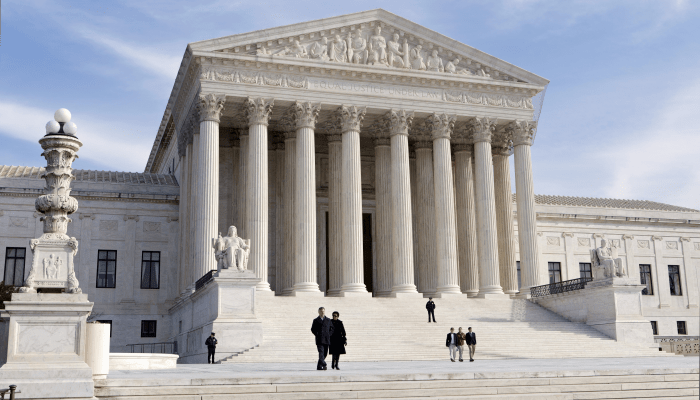
Photo credit: Andrew Glass, Supreme Court established as nation’s highest tribunal, Sept. 24, 1789, Politico (Sept. 24, 2018), https://www.politico.com/story/2018/09/24/this-day-september-24-1789-830087

Authored by Hannah Wood

Justice Kavanaugh’s concurrence in Dobbs v. Jackson Women’s Health Organization poised that the question of whether a state may “bar a resident of that State from traveling to another State to obtain an abortion” is not “especially difficult as a constitutional matter.”[1] For Justice Kavanaugh, the answer was simply “no” based on the “constitutional right to interstate travel.”[2] Yet, many states across the nation have introduced legislation to prosecute those who travel across state lines to obtain an abortion.

The Supreme Court’s decision in Dobbs triggered a nationwide explosion of legislation concerning access to abortions and reproductive care.[3] Anticipating the Dobbs opinion, thirteen states readied “trigger laws” to criminalize abortions as soon as Roe v. Wade was overturned.[4] And, contrary to Justice Kavanaugh’s view of the protections regarding interstate travel, some states,  including Alabama, through these laws, are considering prosecuting individuals who travel outside their state to obtain a legal abortion.[5]

For example, Alabama’s Human Life Protection Act bans abortion at any stage of development, with no exceptions for rape or incest.[6] In response to the Act, organizations in Alabama designed to help women travel to obtain legal abortions, began to worry if their activity would subject them to criminal liability.[7] In addressing this, Attorney General Steve Marshall declared, “if someone was promoting themselves out as a funder of abortions out of state, that is potentially criminally actionable.”[8] While Marshall made clear that pregnant women could drive across “state lines and seek . . . an abortion in another place,” organizations and individuals who aid in such an act are fair game for criminal prosecution under conspiracy and accessory laws.[9]   

Marshall’s statement motivated the Yellowhammer Fund, a non-profit organization providing aid to Alabamians for travel to obtain legal abortion care, to file suit against Marshall in his official capacity as Attorney General.[10] The Yellowhammer Fund’s complaint sought a legal ruling that the State of Alabama cannot prosecute individuals or organizations for providing financial, appointment, or travel assistance to Alabama residents who seek a legal abortion in another state.[11] In the complaint, the Yellowhammer Fund raised declaratory and injunctive claims, including the right to expression, association, travel, and freedom from extraterritorial application of state law.[12] Additionally, in their Motion for Summary Judgment, the Yellowhammer Fund argued that Alabama’s abortion ban cannot apply outside of the state and that violations of Alabama’s conspiracy or accessory laws are only applicable to abortions performed within Alabama.[13] In opposition, Marshall argued that since an abortion performed in Alabama is a crime, “a conspiracy formed in the State to have that same act performed outside the State is illegal.”[14]

Shortly after the parties’ initial arguments, the Department of Justice (DOJ) issued a Statement of Interest supporting the Yellowhammer Fund.[15] In that statement, DOJ rejected Marshall’s argument noting that conspiracy law does not empower a state attorney general to “impede interstate travel,” as it is wholly contrary to the constitutional right to travel.[16] DOJ also explained that “a state cannot bypass constitutional limits on its jurisdictional power by the simple expedient of using its conspiracy laws to purposefully interfere with conduct that other states have chosen to legalize.”[17]

This conclusion was similarly held by the United States District Court for the Middle District of Alabama who denied Marshall’s Motion to Dismiss.[18] The district court found that the Yellowhammer Fund had sufficiently alleged that “Marshall’s threats, if carried out, would violate the right to travel and the freedom of speech.”[19] Specifically, the court found that, “if a State cannot outright prohibit the plaintiff’s clients from traveling to receive lawful out-of-state abortions, it cannot accomplish the same end indirectly by prosecuting those who assist them.”[20] Accordingly, for the foreseeable future, organizations in Alabama may aid women in traveling to obtain legal abortions without fear of prosecution.

However, Alabama is not alone in pursuing such legislation. Bills that criminalize “abortion trafficking,” which targets adults aiding minors in procuring an abortion across state lines, were introduced in Tennessee and Idaho.[21] The recently enacted Tennessee bill criminalizes the “trafficking of a minor” for “procuring an act that would constitute a criminal abortion for [a] pregnant unemancipated minor,” and attempts to avoid right to travel restrictions by including “regardless of where the abortion is to be procured.”[22] Consequently, the law has been criticized by media for vagueness concerning the attempt to avoid the right to travel obstacle and jeopardizing freedom of speech.[23] In Idaho, a nearly identical “abortion trafficking” bill was met with similar criticism.[24] An Idaho judge invalidated the bill with an opinion criticizing “abortion trafficking is not a thing” because the procedure is legal in the other state.[25]

Therefore, with the perceived judicial trend leaning towards refusing to prosecute individuals who travel to obtain legal abortions, in-state prosecutions are coming into focus, and people are anticipating what types of evidence will support such prosecutions. For many, a rational place to start was data that is not protected by doctor-patient confidentiality or electronic data voluntarily given to apps. Online, women, including sociologist Gina Neff, began to advocate for deleting menstrual cycle tracking apps, worrying such data could be a prosecutorial gold mine prompting the tweet “delete those fertility apps now.”[26] This fear was well founded, as it is not uncommon for app companies to sell or provide information willingly to law enforcement.[27]

However, digital information stored in apps is not the only type of medical information at risk, as private medical records are also obtainable. Following Dobbs, many began investigating the extent of doctor-patient confidentiality and the Health Insurance Portability and Accountability Act’s (“HIPAA”) protection of medical records.[28] Commenting on this, Kayte Spector-Bagdady, a professor of bioethics and law at the University of Michigan, stated, “people think HIPAA protects a lot more health information than it actually does.”[29] HIPAA contains several exceptions regarding private health information, including disclosures required for law enforcement investigations or judicial proceedings.[30] However, some scholars, such as Cynthia Conti-Cook, a civil rights lawyer, have stressed the fears surrounding medical records and data are less concerning than evidence already used in criminal trials.[31] Cook points to the more obvious (and incriminating) evidence, like “the text to your sister that says, ‘Expletive, I’m pregnant,’” and the “search history for abortion pills or the visitation of websites that have information about abortion.”[32]

Accordingly, the prosecutorial landscape is simultaneously familiar and unknown, with each day bringing new legislation and judicial decisions. For now, though, it seems judges across the nation agree with Justice Kavanaugh’s proposition that whether a state may “bar a resident of that State from traveling to another State to obtain an abortion” is “not especially difficult as a constitutional matter.”[33] The resounding judicial response, just as Justice Kavanaugh predicted, is “no” based on the “constitutional right to interstate travel.”[34]


[1] 587 U.S. 215, 346 (2022) (J. Kavanaugh, Dissenting).

[2] Dobbs, 587 U.S. at 346.

[3] See Risa Kaufman et. al., Global impacts of Dobbs v. Jackson Women’s Health Organization and abortion regression in the United States, Nat’l Libr. of Med. 1, 1 (2022) https://www.ncbi.nlm.nih.gov/pmc/articles/PMC9673802/pdf/ZRHM_30_2135574.pdf (“In the immediate aftermath of the decision, states have rushed to eliminate abortion access, and the legal landscape has been chaotic, with the status of abortion rights changing daily.”)

[4] Jesus Jiménez & Nicholas Bogel-Burroughs, What are abortion trigger laws and which states have them? New York Times (2022), https://www.nytimes.com/2022/06/25/us/trigger-laws-abortion-states-roe.html

[5] Josh Moon, Alabama AG: State may prosecute those who assist in out-of-state abortions, Alabama Pol. Rep. (2022), https://www.alreporter.com/2022/09/15/alabama-ag-state-may-prosecute-those-who-assist-in-out-of-state-abortions/.

[6] Ala. Code § 26-23H-4; Alabama attorney says the state can prosecute those who help women travel for abortions, AP News (Aug. 31, 2023), https://apnews.com/article/alabama-abortion-steve-marshall-2157a7d0bfad02aad1ca41e61fe4de33 (“[Steve Marshall]’s office wrote that the Alabama Legislature categorized abortion as among the highest wrongs, ‘comparing it to murder’.”).

[7] See Alander Rocha, Health care providers sue Alabama officials over threats of prosecution in abortion aid, Louisiana Illuminator (Aug. 1, 2023), https://lailluminator.com/2023/08/01/health-care-providers-sue-alabama-officials-over-threats-of-prosecution-in-abortion-aid/ (“[B]anning abortion in Alabama seems to not have been enough, and those in power want to muzzle providers like me to prevent us from sharing information with our pregnant patients about the options they have.”).

[8] Josh Moon, Alabama AG: State may prosecute those who assist in out-of-state abortions, Alabama Pol. Rep. (2022), https://www.alreporter.com/2022/09/15/alabama-ag-state-may-prosecute-those-who-assist-in-out-of-state-abortions/.

[9] Id.

[10] Kim Chandler, Alabama health care providers sue over threat of prosecution for abortion help, AP News (July 31, 2023), https://apnews.com/article/abortion-alabama-lawsuit-9ed07274058a5fd79b5ba936b00a8380

[11] Id.

[12] Complaint at 29-36, Yellowhammer Fund v. Marshall, No. 2:23-CV-450, 2024 WL 1999546, *1 (M.D. Ala. May 6, 2024).

[13] Motion for Summary Judgment at 10, Yellowhammer Fund v. Marshall, No. 2:23-CV-450, 2024 WL 1999546, *1 (M.D. Ala. May 6, 2024).

[14] Motion to Dismiss at 2, Yellowhammer Fund v. Marshall, No. 2:23-CV-450, 2024 WL 1999546, *1 (M.D. Ala. May 6, 2024).

[15] DOJ Statement of Interest at 1-3, Yellowhammer Fund v. Marshall, No. 2:23-CV-450, 2024 WL 1999546, *1 (M.D. Ala. May 6, 2024).

[16] Id.

[17] Id.

[18] Yellowhammer Fund v. Marshall, No. 2:23-CV-450, 2024 WL 1999546, at *23-24 (M.D. Ala. May 6, 2024).

[19] Yellowhammer Fund, No. 2:23-CV-450, 2024 WL 1999546,at *23.

[20] Id. at *13.

[21] H.R. 1895, 113th Leg., (Tn. 2024); S.R. 1871 113th Leg., (Tn. 2024); Alanna Mayham, Idaho criminalizes helping minors to obtain abortions, Courthouse News Serv. (April 6, 2023), https://www.courthousenews.com/idaho-criminalizes-helping-minors-to-obtain-abortions/ (House Bill 242 – also called the “abortion trafficking” law – makes it illegal for any adult to assist a minor in obtaining abortion medication or a lawful abortion out of state without their parent’s consent.”).

[22] Id.  

[23] See Angele Lathan, Concerns over free speech grow as abortion travel ban heads to Tennessee governor’s desk, The Tennessean (May 16, 2024), https://www.tennessean.com/story/news/politics/2024/05/16/free-speech-concerns-grow-tennessee-abortion-travel-ban-bill/73374657007/ (“[T]he criminal offense in [Tennessee’s] version applies to a much broader array of activity, and I think contributes to an even more concerning sense of vagueness.”); Catherine Sweeney, Feds want to shield medical records as Tennessee proposes travel bans for minor’s reproductive care, Nashville Pub. Radio (April 18, 2024), https://wpln.org/post/feds-want-to-shield-medical-records-as-tennessee-proposes-travel-bans-for-minors-reproductive-care/ (“We’ve never seen a court interpret ‘recruit or harbor’… we’re creating a mess around [] things that are pretty constitutionally protected … [t]ypically the government doesn’t regulate our conversations.”).

[24] Mary Anne Pazanowski, Idaho Can’t Enforce Abortion “Trafficking” Ban During Appeal, Bloomberg Law (Jan. 5, 2024), https://news.bloomberglaw.com/litigation/idaho-cant-enforce-abortion-trafficking-ban-during-appeal

[25] Id.; Memorandum Decision and Order, at 57, Matsumoto v. Labrador, No. 1:23-CV-000323, 2023 WL 7388852, at *23 (D. Idaho Nov. 8, 2023).

[26] See Kashmir Hill, Deleting Your Period Tracker Won’t Protect You, New York Times (June 30, 2022), https://www.nytimes.com/2022/06/30/technology/period-tracker-privacy-abortion.html (“When a draft of the court’s [Dobbs] decision was first leaked in May, and then  when the ruling became official last week, people focused on these digital trails, specifically the information that millions of women share about their menstrual cycle on period tracker apps. The knee-jerk advice was simple and direct: Delete them all. Immediately.”).

[27] Rina Torchinsky, How period tracking apps and data privacy fit into a post-Roe v. Wade climate, National Pub. Radio (June 24, 2022), https://www.npr.org/2022/05/10/1097482967/roe-v-wade-supreme-court-abortion-period-apps (“It’s not uncommon for apps to cooperate law enforcement during criminal investigations.”).

[28] Eric Boodman, et. al, HIPPA won’t protect you if prosecutors want your reproductive health record, STAT (June 24, 2022), https://www.statnews.com/2022/06/24/hipaa-wont-protect-you-if-prosecutors-want-your-reproductive-health-records/.

[29] Id.

[30] Id.

[31] See Kashmir Hill, Deleting Your Period Tracker Won’t Protect You, New York Times (June 30, 2022), https://www.nytimes.com/2022/06/30/technology/period-tracker-privacy-abortion.html.

[32] Id.

[33] Dobbs v. Jackson Women’s Health Organization, 587 U.S. 215, 346 (2022) (J. Kavanaugh, Dissenting).

[34] Dobbs, 587 U.S. at 346.

“I Speak for the Trees, for the Trees have No Tongues.”[1]

Dr. Seuss, The Lorax (1971)

Authored by Synclair B. Goyer

Compensatory damages are one of the most common forms of civil remedies awarded in cases involving torts, especially for cases where real property has been damaged.  However, there is contention across jurisdictions regarding how courts, juries, and attorneys should properly value damage to real property and agricultural fixtures like trees, shrubs, fruit, and crops.[2] Four methods of calculating these compensatory damages have gained popularity.  These methods include: the difference in value to the land; the value of the trees, shrubs, fruit, or crops destroyed or damaged; the crop loss (i.e. the value the trees, shrubs, fruit, or crops could have had at market had they made it to maturity without injury); and the replacement or restoration cost of the trees, shrubs, fruit, or crops.[3]

The calculation for compensatory damages for injuries to real property typically follows a straightforward set of general rules. These rules are problematic when applied to trees, shrubs, fruit, or crops.[4]  For general damage to real property, courts determine whether the damage is permanent (the property is so damaged as it cannot be restored) or whether the damage is temporary (the property can be restored).[5]  In cases of permanent damage, the tortfeasor is liable for the difference in the value of the property before and after the damage.[6]  In cases of temporary damage, the tortfeasor is liable for restoration or repair costs.[7]  However, applying this general rule to trees, shrubs, fruit, or crops is problematic because it can be challenging to determine if certain damages should be classified as permanent or temporary.  For example, when a tree, shrub, fruit, or crop is destroyed, is the loss of said plant life the permanent damage or the damage to the real estate which will recover in time.[8]  As such, courts developed four separate calculations for compensatory damages to be analyzed on a case-by-case basis.[9]

While some jurisdictions are more set in a method that the courts of that jurisdiction prefer, many jurisdictions leave it to the attorneys to present evidence on the appropriate method to be used and allow the jurors to decide which calculation they believe to be the best.[10] This creates excellent opportunities for attorneys to argue for what is best for their client, and as such, attorneys need to know all they can about the different calculation methods, what jurisdictions lean towards which methods, and which method is going to bring about the most favorable result for their client.  While courts recently have been leaning more towards accepting the difference in the value of land as the dominant calculation for compensatory damages, in many cases, the damage or injury may not significantly impact the value of the property as a whole.  Therefore, it is often in the best interest of the client for an attorney to argue for the value of the injured trees, shrubs, fruit, or crops or their replacement cost.

Many states have shown their support behind the difference in value of the land calculation of compensatory damages.[11] Under this calculation method, evidence is presented on the value of the land just before the damage and on the value of the land just after the damage.[12] In these cases, it is recommended that attorneys focus their evidentiary presentation on expert witnesses who can testify as to the value of the property before and after the damage.[13] It is also important to note that even though many states have shown a tendency to lean towards the difference in value of the land calculation, courts do not strictly adhere to this rule. Almost all courts make allowances for attorneys to argue that their specific case involved damage to trees, shrubs, fruit, or crop of unique intrinsic value or revenue-generating value.[14]

The second most popular calculation of compensatory damages for damaged trees, shrubs, fruit, or crops is the intrinsic value of the plant life before the injury.[15] Courts have held that when trees, shrubs, fruit, or crops are destroyed and have a distinct value of definite measurement, the value of the tree, shrub, fruit, or crop destroyed is the best measure of damages.[16] It has been further reasoned that if the plant life destroyed has a value which can be accurately measured and ascertained without reference to the value of the soil on which it grew, the recovery should be for the value of the plant destroyed and not for the difference in the value of the land before and after such destruction.[17] Here, attorneys have the burden of evidencing that the damaged plant life is distinct from the land, can be individually valued, and what that individual value is.[18] Expert testimony once again is likely to be the most persuasive evidence.

The third method of calculating compensatory damages is the crop loss value. This method involves testimony regarding the value that the trees, shrubs, fruit, or crop would have earned at market.[19] Under this method, expert testimony remains the best source of evidence regarding how much the damaged plant life would have gone for absent the injury; however, it can be difficult to find individuals qualified to be experts.[20] As such, testimony regarding damages often will primarily come from the plaintiff regarding historical data for their sales or how much they got for their similar but undamaged produce.[21] Courts will also entertain testimony from local sellers, for example grocery store managers, department of agriculture employees, etc. Note here, due to the lack of expert qualification, courts and juries often will not take these testimonies at face value and will most likely determine the proper amount of compensatory damages to be between the values evidenced by each party.[22] Knowing this, it is recommended that plaintiff’s attorneys gather a large group of witnesses who can testify regarding the market value of the tree, shrub, fruit, or crop had it not been damaged. It is also recommended that plaintiff’s attorneys enter into evidence their client’s historical records on sale figures. These two sources of evidence and testimony will sway a court and jury the most.

The fourth and final method of calculating compensatory damages is the replacement cost of the damaged tree, shrub, fruit, or crop. Landowners have the right to enjoy their property according to their own personal tastes and as such, should be compensated for the costs to restore their property to the condition it was in prior to the damage.[23] Where the destruction of the tree, shrub, fruit, or crop is a temporary injury to the land and the plant life may also be replaced in a comparatively brief time, the most appropriate compensation is the replacement cost of the tree, shrub, fruit, or crop.[24] When attempting to convince a court or jury to accept the replacement cost as the appropriate method of compensatory damages, attorneys should focus on presenting evidence on the unique value their particular client has placed on the destroyed plant life, and on the relatively temporary damage done and physical ease of replacement.[25] Personal testimony likely represents the best form of evidence; however, attorneys should be prepared for counter testimony attempting to show that the particular damaged plant life is just one of many and holds no true unique value to the property of the landowner.

Overall, courts have decided that the most appropriate measure for compensatory damages is that which compensates the owner for all the detriment proximately caused and that there is no fixed rule for the measurement of such damages.[26] Once a court or jury has determined that the defendant is liable for the damage to the tree, shrub, fruit, or crop in question, the courts and juries want to award whatever compensatory damages will most fairly place the plaintiff in a position equal to which they were in prior to the injury. Therefore, whichever measure is most appropriate to compensate the injured party for the loss sustained in the particular case, is the one which should be used.[27] All four of the above-described methods of calculating compensatory damages have the chance to fairly compensate an injured landowner, but it will be up to the attorney to advocate for the method that provides the greatest value to their client. Deciding which method should be advocated for will depend on the various factors described above including whether the damage inflicted affects the property as a whole, whether the damaged trees, shrubs, fruit, or crops can be independently valued, the temporary or permanent nature of the damage, and the unique intrinsic value the damaged plants have with the landowner. Each method likely will result in disparaging monetary differences; therefore it is important to consider all of these factors and the precedential case law of any particular jurisdiction.


[1] Dr. Seuss, The Lorax (1971).

[2] Kristine Cordier Karnezis, Measure of damages for destruction of or injury to fruit, nut, or other productive trees, 90 A.L.R. 3d 800 (1979).

[3] Id.

[4} Evenson v. Lilley, 295 Kan. 43, 47 (Kan. 2012).

[5] Id.

[6] Id.

[7] Id.

[8] Id.

[9] See generally, Karnezis, supra note 2 (describing the four primary calculation methods across multiple jurisdictions).

[10] Id. at 7.

[11] Karnezis, supra note 2 at 7.

[12] Withers v. Ferrero Const. Co., 320 A.2d 576, 552 (Md. Ct. Spec. App. 1974).

[13] See Missouri & N.A.R. Co. v. Phillips, 133 S.W. 191, 191-92 (Ark. 1910) (holding that testimony regarding value of trees was proper for the jury to make a determination on damages).

[14] Evenson, 295 Kan. 43, at 50.

[15] Karnezis, supra note 2 at 15-17.

[16] Barker v. Missouri Pac. Ry. Co., 145 P. 829, 830-31 (Kan. 1915).

[17] Whitbeck v. New York Cent. R. Co., 36 Barb. 644, 645-46 (N.Y. Gen. Term 1862).

[18] Karnezis, supra note 2 at 15-17; Whitbeck, 36 Barb. 644 at 645-46.

[19] Wm. G. Roe &Co. v. Armour & Co., 414 F.2d 862, 871-72 (5th Cir. 1969).

[20] Augustine v. Dickenson, 406 So. 2d 306, 308 (La. Ct. App. 1981).

[21] Id.

[22] Id. at 308-09.

[23] Samson Const. Co. v. Brusowankin, 147 A.2d 430, 435 (Md. 1958).

[24] Steckman v. Quincy, 165 S.W. 1122, 1124 (Mo. Ct. App. 1914).

[25] Samson, supra note 23 at 435.

[26] Baker v. Ramirez, 235 Cal. Rptr. 857, 865 (Cal. Ct. App. 1987).

[27] Id.

Excessive or Trifling: When are Employers Required to Provide Reasonable Accommodations for Employees’ Religious Practices.

Photo:  Jocelyne Cesari, Radicalization and Religion: How it Happens?, Politics Today, https://politicstoday.org/radicalization-and-religion-how-it-happens/ (Mar. 4, 2021) (using a stock photo from Getty Images).

Authored by Drake T. Conway

The Civil Rights Act of 1964 prohibits employers from discriminating against their employees due to their religious beliefs.[1]  To conform to the law, employers must provide their employees with reasonable accommodation, provided that it does not create undue hardship for the business.[2]   But what is an undue hardship?  The answer to that question has been subject to a host of litigation, which created an erroneous precedent that was remedied by the recent Supreme Court decision Groff v. DeJoy.[3]  To understand the importance of Groff v. DeJoy, an analysis of statutory law, administrative law, and prior case law is necessary.

42 U.S.C. § 200e-2(a)(1) is clear on what it prohibits; namely, it restricts an employer from failing to provide reasonable accommodations for their employees’ religious practices that do not create undue hardship for the employer.[4] The Equal Employment Opportunity Commission’s (“EEOC”) interpretation of § 200e-2(a)(1) mirrors the statute’s own language in requiring the accommodation to not create undue hardship.[5] Therefore, both the statute and the EEOC’s interpretation expressly state that an employer can only reject a reasonable religious accommodation when an employer is faced with an undue hardship.[6]

In Trans World Airlines, Inc. v. Hardison, the United States Supreme Court applied § 200e-2(a)(1). The appellee, Hardison, requested an accommodation to observe the Sabbath.[7]  For the most part, the Court “sidestepped” 42 U.S.C. § 200e-2(a)(1) due to a seniority issue.[8]  Nevertheless, in the limited amount the Court did discuss § 200e-2(a)(1), they opined that undue hardships meant something akin to “substantial burdens.”[9] However, one sentence within the opinion stated, “[t]o require TWA to bear more than a de minimis cost in order to give Hardison Saturdays off is an undue hardship.”[10]  The term “de minimis,” when translated, most closely means something that is “very small” or “trifling.”[11] Because of this single sentence, many courts adopted a de minimis test that formed an insurmountable hurdle for plaintiffs seeking religious accommodations.[12]

The Hardison test was the leading precedent between 1977 and 2023.  During this period, attorneys who filed suit seeking religious accommodations for their clients were limited to accommodations that cost the employer little to nothing.[13] This strict standard forced those attorneys to balance whether seeking such minimal accommodations was of worth to the client, considering any accommodation exceeding a minor burden was often denied.  The complicated accommodations process resulted in a few cases being decided in a plaintiff’s favor, primarily those related to religious dress.[14]  This is mainly due to the fact that wearing something such as a Hijab or Kippah does not impose additional costs on an employer.

Consider this example: an employer is a large company that produces many types of widgets.  Due to the location of their facility, the employer builds an on-site cafeteria to facilitate easier lunches for their employees.  The cafeteria does not serve any kosher meals, but the cafeteria can order a kosher meal for the same price as non-kosher meals.  These kosher meals, however, require a particular oven that would ultimately cost the employer $100.  Under the Hardison test, this would have created more than a de minimis cost to the employer. Therefore, a court would have rejected any plaintiff who sought a similar religious accommodation at their place of employment.[15]  Luckily for plaintiffs, the Supreme Court remedied this strict standard in Groff v. DeJoy.

In 2019, Groff filed suit because the post office where he was employed would not give him Sundays off so that he could observe the Sabbath.[16]  Groff’s suit failed both in the district court and the Third Circuit Court of Appeals because Groff was unable to show that his accommodation would pose merely a de minimis cost to the post office.[17] The United States Supreme Court granted certiorari.

In Groff, the Supreme Court followed a two-step process to resolve this matter.  First, they examined whether the de minimis test created in Hardison was erroneous.[18]  Second, they determined the proper test to be applied instead of the improper de minimis test.[19]   The Supreme Court swiftly found that the de minimis test created in Hardison was erroneous.[20]  In fact, neither party attempted to defend Hardison’s de minimis test as a correct statement of law in oral arguments.[21]  After deciding that the de minimis test was improper, the Supreme Court had to identify the correct test to supplant the erroneous de minimis test.[22] 

Identifying the correct test was not a challenging task for the Supreme Court.  The Court simply used dictionaries to define “undue” and “hardship.”[23]  When defining these terms, the Court found “undue” to mean “excessive or unjustified” and “hardship” to mean something akin to “more severe than a mere burden.”[24] Therefore, the Court opined that an “undue hardship” is something that creates an excessive or unjustified burden on an employer’s business.[25]  For example, it is not enough to show that an employee’s religious accommodation would create a mere additional cost (a de minimis cost); rather, an employer must show that an employee’s religious accommodation would cause them “substantial additional cost or substantial expenditure.” [26]

As a result of the Court’s decision in Groff, the example situation above will have a much different result.   In the hypothetical case, the kosher meals do not cost the employer any extra money, but the oven will cost the employer a hundred dollars.  Under the de minimis test, a court would likely find that the kosher meals do not create an undue hardship because the meals did not create extra cost to the employer.[27]  However, because the oven would cost the employer $100, the court would have to reject this accommodation because the cost of the oven ultimately created an undue hardship.[28] Since the de minimis has been overturned, attorneys may now successfully argue for religious accommodations that may cost employers money.[29]   Plaintiff(s) religious accommodations are now judged based on whether or not they will cause an employer substantial expenditure.[30]  In this hypothetical, neither accommodation would create a substantial expenditure because a $100 oven is unlikely to constitute a substantial expenditure on a big corporation. This hypothetical case illustrates how Groff v. DeJoy allows plaintiffs to bring successful suits for religious accommodations because companies now face a tougher test to refuse religious accommodations to their employees.[31]


[1] 42 U.S.C § 2000e-2(a)(1).

[2] Id.

[3] 143 S. Ct. 2279 (2023)

[4] See 42 U.S.C § 2000e-2(a)(1) (“unable to reasonably accommodate . . . without undue hardship on the conduct of the employer business.”).

[5] 29 C.F.R. § 1605.1.

[6] See 42 U.S.C. § 200e-2(a)(1); 29 C.F.R. § 1605.1.; see also Groff, 143 S. Ct at 2294 (defining the term “undue hardship”).

[7] 432 U.S. 63, 67 (1977).

[8] Hardison, 432 U.S. at 79.

[9] See Groff, 142 S. Ct. at 2294 (discussing how in Hardison, a majority of the opinion talked about substantial expenses).

[10] Hardison, 432 U.S. at 84.

[11]  Groff, 143 S. Ct. at 2294-95

[12]Id. at 2291-92 (“Although this line would later be viewed by many lower courts as the authoritative interpretation of the statutory term ‘undue hardship,’ it is doubtful that it was meant to take on that large of a role.”).

[13] Hardison, 432 U.S. at 84 (explaining that an accommodation could be denied if it made more than a de minimis cost). 

[14] See Selected List of Pending and Resolved and Resolved Cases Alleging Religious and National Origin Discrimination Involving the Muslim, Sikh, Arab, Middle Eastern and South Asian Communities, U.S. Equal Emp’t Comm’n, last updated Sep. 8, 2021, https://www.eeoc.gov/selected-list-pending-and-resolved-cases-alleging-religious-and-national-origin-discrimination (listing numerous cases involving religious dress before the decision of Groff).

[15] See id.

[16] Groff, 143 S. Ct. at 2286-87.

[17] Id. at 2287.

[18] Id. at 2295.

[19] Id.

[20] Id.

[21] Id.

[22] Id. at 2294-95.

[23] Id.

[24] Id.

[25]Id.  

[26] Compare. id. with Hardison, 432 U.S. at 67. (showing that Groff’s test is a harder test to meet to reject accommodations).

[27] See Hardison, 432 U.S. at 84.  

[28] See id.

[29] See id. 2295 (rejecting the Hardison de minimis test).

[30]  See Groff, 143 S. Ct. at 2295.

[31] See id.

How Google’s Antitrust Cases Could Shape the Future of Antitrust Litigation

Sarah Grillo, Illustration of a gavel resting on a Google logo, in Sara Fischer, Exclusive: Google files motion to dismiss Gannett’s ad tech lawsuit, Axios (2023), https://www.axios.com/2023/09/08/google-gannett-antitrust-lawsuit-motion-dismiss (last visited Apr 11, 2024).

Authored by Alexander Gulas

Could Google become the new Standard Oil?[1] The United States Department of Justice and numerous state attorneys general seem to think so, evident by a recent string of antitrust lawsuits filed against the tech giant, arguing that the company is a monopoly in its current form. Google has undoubtedly placed itself in a leveraged position of power over the past twenty years due to its multifaceted domination of the technology sector and partnerships with other large corporations. From the Google Play app store that comes pre-downloaded on most Android phones, to the near-ubiquitous Google search engine, to Google AdSense’s stranglehold on internet advertising, Google has absorbed huge market shares in the technology sector in ways that many believe violate antitrust laws, and whether Google wins or loses these cases, their outcomes are sure to have a massive effect on United States antitrust litigation in the future.

The first of three major U.S. antitrust lawsuits filed against Google, Utah et al. v. Google LLC, arose in 2021 when 36 states and the District of Columbia brought action against Google for anticompetitive policies regarding the Google application market, Google Play Store.[2] The complaint alleged that Google, which acquired the Android mobile operating system in 2005, imposed the use of its Google Play app store through anticompetitive means such as taking up to 30% of the proceeds from Google Play Store sales, disincentivizing competition from other similar app stores, and pre-installing the Google Play Store on select android devices as the only practical means to obtain apps on those devices.[3] As a result, Google Play Store distributed over 90% of all applications on the Android platform, while no other competing app store possessed more than 5% of the market.[4] These anti-competitive strategies and their clearly monopolistic results painted a very negative picture of Google’s approach to the distribution of Android applications. Consequentially, Google decided to settle the lawsuit.[5]

As per the settlement agreement, Google was forced to pay $700 million to consumers and the states and temporarily change their Play Store policies to allow competition from other app stores.[6] This outcome was indicative of Google’s culpability in engaging in anticompetitive practices, and, according to Connecticut Attorney General William Tong, served as “a loud and clear message to Big Tech” that attorneys general were “prepared to use the full weight of [their] collective authority to ensure free and fair access to the digital marketplace . . . .”[7] The attorney general’s warning would not ring hollow, as the U.S. Department of Justice has since filed two separate ongoing lawsuits against Google for anticompetitive business practices: one regarding the Google Search Engine and the other pertaining to Google’s digital internet advertising technology.[8]

The case pertaining to Google’s search engine was filed by the Department of Justice in 2020, which accused Google of monopolizing the search engine market.[9] The suit alleges that Google’s agreements with Apple and Mozilla, which make Google Search the default web browsers on these respective platforms, violate antitrust laws due to the exclusive nature of the agreements.[10] In response, Google alleges that its browser was not actually exclusive and won the competition to become the default browser for Apple and Mozilla based on the “merits as established and judged by its customers . . . .”[11] However, this case is further complicated by the fact that Google’s agreements with Apple and Mozilla also provide the companies with advertising revenue as compensation for making Google Search their default web browser.[12] This factor ties into the other ongoing Department of Justice antitrust lawsuit against Google for their monopolization of advertising technologies.[13]

This 2023 lawsuit alleges that Google has subverted competition in digital advertising technologies through serial acquisitions and anticompetitive auction manipulation[14]. As a result of these practices, Google now owns a 90% market share of website publisher’s ad servers, half of the advertisement exchange market share, and most of the market for buy-side demand platforms.[15] These huge market shares are indicative of Google’s stranglehold on the digital advertising market, and this stranglehold has allowed Google to promulgate anti-competitive policies such as price gouging and forcing the adoption of their advertising toolkit.[16]

While both antitrust cases against Google are currently ongoing and have unclear resolutions, their outcomes will likely signal a seismic shift in United States antitrust litigation moving forward. If Google is to prevail in these lawsuits, some believe it would be indicative of the fact that the “technology ecosystem has outpaced antitrust law.”[17] In the opposite, a DOJ victory could lead to assertions that “antitrust law is being applied and interpreted far too broadly.”[18] Either outcome will undoubtedly have far-reaching impacts on other companies in the technology sector, as it is already a market that has a high barrier of entry due to the high capital requirements, rapid advancement, and constantly evolving technologies associated with it.[19] As such, other conglomerates such as Microsoft and Apple could likely see similar future litigation if Google loses these antitrust cases.

However, if the Department of Justice loses these lawsuits, it could set a precedent that makes it extremely difficult to topple technology-based monopolies moving forward, as Google’s approach of creating multiple discrete businesses to control different areas in the technology sector has become the default strategy for huge tech empires.[20] The Department of Justice has recognized the anticompetitive dangers this approach may pose and has already filed suit against other tech giants for the monopolization of other markets in the technology sector.[21] Therefore, some believe that only fundamental changes to United States antitrust laws can solve the creation of more tech monopolies if the DOJ loses its ongoing lawsuits.[22]

With this in mind, The Department of Justice’s string of antitrust cases against Google may mark a turning point for antitrust litigation in the United States. For years the technology sector has seen unfettered growth, shielded by the complicated nature of their businesses. This growth seems to be coming to a head, with the United States taking increasing exception to the ever-growing centralization of power within the technology sector. As such, the results of Google’s ongoing antitrust litigation may serve as an indicator of how the United States will regulate monopolies in a time where they have become omnipresent.


[1] See Standard Oil Co. of New Jersey v. United States, 221 U.S. 1, 81, 31 S. Ct. 502, 524, 55 L. Ed. 619 (1911) (holding that the company formerly known as Standard Oil, a major 20th century oil conglomerate owned by the Rockefeller family, violated the Sherman Antitrust Act due to anticompetitive practices and its formation of a monopoly).

[2] See State of Utah et al v. Google LLC et al, No. 3:21-cv-05227 (N.D. Cal. July 7, 2021).

[3] See Compl., ¶¶ 2, 3, 4, 9, 10, 62, Utah v. Google, No. 3:21-cv-05227 (N.D. Cal.).

[4] See id. ¶ 10.

[5] Google to pay $700 million in settlement over Google Play Store lawsuit: AG, NBC Connecticut (Dec. 19, 2023 4:49 PM), https://www.nbcconnecticut.com/news/local/google-to-pay-700-million-in-settlement-over-google-play-store-lawsuit-ag/3175319/

[6] See id. (requiring Google to pay $630 million in restitution to consumers who made purchases on the Google Play Store and $70 million to the states for their sovereign claims, while also prohibiting Google from entering contracts requiring the Play Store to be the exclusive, pre-loaded app store on device home screens, reduce warnings regarding the download of third-party applications, and submit compliance to an independent monitor for at least five years).

[7] Id.

[8] See Press Release, Department of Justice, Justice Department Sues Google for Monopolizing Digital Advertising Technologies (Jan. 24, 2023), https://www.justice.gov/opa/pr/justice-department-sues-google-monopolizing-digital-advertising-technologies [hereinafter DOJ Google Press Release]; see also John Villasenor, A primer on some key issues in U.S. v. google, Brookings (2023), https://www.brookings.edu/articles/a-primer-on-some-key-issues-in-u-s-v-google/ (last visited Apr. 11, 2024).

[9] See Villasenor, supra note 8.

[10] See id. (indicating that these agreements may be exclusionary to other browsers).

[11] Id.

[12] See id. (indicating that Google’s interconnected operations support each other).

[13] See DOJ Google Press Release, supra note 8.

[14] See id.

[15] See id.

[16] See id.

[17] See Villasenor, supra note 8.

[18] Id.

[19] See Tech talk: Overcoming market entry barriers with access to technology, FasterCapital (2024), https://fastercapital.com/content/Tech-Talk–Overcoming-Market-Entry-Barriers-with-Access-to-Technology.html#:~:text=The%20tech%20industry%20is%20characterized,necessary%20technical%20expertise%20or%20understanding. (last visited Apr. 11, 2024) (outlining the barriers of entry in the tech industry).

[20] See Challenging Big Tech, SOMO (2024), https://www.somo.nl/our-work/sectors/big-tech/#:~:text=They%20have%20relied%20on%20and,for%20different%20communities%20to%20interact. (highlighting how big tech companies rely on network effects and immense data collection to ensure consumers must use their products).

[21] See Press Release, Department of Justice, Justice Department Sues Apple for Monopolizing Smartphone Markets (Mar. 21, 2024),https://www.justice.gov/opa/pr/justice-department-sues-apple-monopolizing-smartphone-markets (“Apple’s Broad-Based, Exclusionary Conduct Makes It Harder for Americans to Switch Smartphones, Undermines Innovation for Apps, Products, and Services, and Imposes Extraordinary Costs on Developers, Businesses, and Consumers”).

[22] See AI Now Institute, Antitrust and competition: It’s time for structural reforms to big tech, AI Now Institute (2023), https://ainowinstitute.org/publication/antitrust-and-competition (last visited Apr. 11, 2024).

Knowing How to Count Money and Ride the Bus: The Bare Minimum of Transition Services for Students with Disabilities and How to Effectively Advocate for More.

Photo Credit: Mallory Gaines, The Board of Trustees Mission to Improve Education, (Nov. 30, 2023), E.TENN., https://easttennessean.com/2023/11/30/the-board-of-trustees-mission-to-improve-education/

Authored by Jacob Powell

In D.J. through O.W. v. Connecticut State Board of Education, D.J. was a 21-year-old student with a disability who was about to graduate high school and lose access to special education services. [1]After realizing that D.J. had matriculated from grade to grade without learning basic skills, such as knowing how to count money or use public transportation, D.J.’s parents sued school officials to stop them from terminating D.J.’s services.[2]  Under Connecticut state law, schools were not required to provide services to special education students once a student had reached the age of 21.[3]  At the same time, however, state law permitted schools to provide similar services to non-disabled students until the age of 22.[4]  D.J.’s parents filed a putative class action suit, arguing that D.J. – and other special education students between the ages of 21 and 22 – were entitled under the Individuals with Disabilities Act (“IDEA”) to postsecondary services until age 22, just like his non-disabled peers.[5]

In response, the Defendant filed a Motion for Summary Judgment, arguing that D.J. had no standing to bring the suit because he had already earned the requisite credits to be awarded a high school diploma, which terminated his right to a free and appropriate public education (“FAPE”) under the IDEA.[6]  The IDEA defines a FAPE as “special education and related services” that are “specially designed . . . to meet the unique needs of a child with a disability . . . .”[7] It is important to note that the awarding of a standard high school diploma terminates a student’s right to a FAPE under the IDEA.[8] Here, although the Plaintiffs eventually moved to substitute D.J. with a different class member to cure the potential standing defect,[9] the district court ordered an evidentiary hearing to determine whether D.J. had ever accepted a diploma in the first place. After the hearing, the court concluded that when D.J. was initially offered his diploma by school officials, his parents refused to accept it.[10]  And because they refused to allow the school to award D.J. his diploma, the court found that D.J.’s entitlement to a FAPE, including his entitlement to postsecondary services, remained intact.[11]

In part, the court relied on the exception found in 34 C.F.R. § 300.102 of the IDEA, which states that students who “have graduated from high school but have not been awarded a regular high school diploma” remain eligible for a FAPE.[12] In essence, the court’s ruling meant that a special education student’s right to a FAPE was extinguished not on the number of credits earned but rather upon the student’s physical receipt of the diploma.[13]  

Existing research shows that students who lack the necessary skills to be independent and self-sufficient after graduation generally exhibit poorer post-graduation employment outcomes when compared to their non-disabled peers.[14]  In fact, in February 2024, a survey report from the U.S. Department of Labor revealed that more than 65 percent of people without a disability were actively employed.[15]  But for people with a disability – only 22 percent reported employment.[16] Why is this important? Well, take, for example, D.J., who had completed the number of credits required to graduate but, at 21 years of age, could not count money and did not know how to use public transportation.[17]  It is evident that D.J. lacked the basic skills required for a simple visit to the grocery store, much less the skills necessary to gain and sustain full-time employment. The additional services at issue in this case were to increase D.J.’s ability to gain and sustain employment after graduation. Therefore, the additional services would have had not only a personal, social benefit for D.J., but also an economic benefit for the workforce writ large. 

Not only are postsecondary transition services necessary to prepare students like D.J. for the workforce, but they also help students transition into college, and, ideally, into independent living.[18]  But how are effective transition goals implemented and maintained? As a component of special education services, transition goals must be included in the student’s individualized education program (“IEP”).[19]  An IEP is a written statement detailing a student’s present level of academic performance, including short-term and long-term goals for improvement, as well as the services required to reach those goals.[20]  In 2017, the Supreme Court broadened the scope of the IEP in Endrew F. v. Douglas County School District, requiring schools to focus on more than just grade-level advancement as a metric for success.[21]  Instead, the Court unanimously held that an IEP must be “reasonably calculated to enable a child to make progress appropriate in light of the child’s circumstances” because every child deserves the right to meet “challenging objectives.”[22]  Therefore, the requirement to provide “challenging objectives” would entail more than offering the bare minimum transition services for students. As the Court put it, “[w]hen all is said and done, a student offered an educational program providing ‘merely more than de minimis’ progress from year to year can hardly be said to have been offered an education at all.”[23]

Since Endrew F., schools have an obligation to create IEPs that are holistically tailored to the needs of the student, addressing not only a student’s academic progress, but social, emotional, and behavioral progress, too.[24]  The cessation of services – i.e., a FAPE – therefore should not hinge on whether a student has successfully advanced from grade to grade, or like in D.J.’s situation, whether the student has completed enough credits, but instead, whether the student has made appropriate progress toward his stated IEP goals.[25]  In other words, school officials should strive to provide services that not only promote graduation but also prepare the student to participate in post-graduation employment or educational experiences.[26]

In the context of transition services, the ruling in D.J.’s case comports with the decision in Endrew F. because D.J. had not made appropriate progress before graduation. Ultimately D.J. was given additional time to master important life skills because the court relied on the implicit right to diploma deferral carved out in in § 300.102 of the IDEA. If transition goals contained in the IEP have not been met, then parents, disability advocates, and attorneys are empowered by § 300.102 to argue for diploma deferral and extend the right to special education services. This is true especially when a school is attempting to graduate a student who has advanced from grade to grade and has completed the required credits for graduation.

In all, D.J.’s case highlights why transition services are important: because they teach skills and “promote successful post-school employment or education” opportunities for students with disabilities.[27]  And in most cases, students with disabilities are not asking for extraordinary accommodations from school officials. In fact, like D.J., they may simply want to learn how to count money or ride a bus.


[1] D.J. through O.W. v. Conn. State Bd. of Educ., No. 3:16-CV-01197 (CSH), 2019 WL 1499377 (D. Conn. Apr. 5, 2019), aff’d sub nom. A.R. v. Conn. State Bd. of Educ., 5 F.4th 155, 160 (2d Cir. 2021).

[2]Id.

[3]Id. at 158.

[4]Id.

[5]Id. at 158-59.

[6]Id.

[7]20 U.S.C. § 1401(29). 

[8]34 C.F.R. § 300.102(a)(3)(i).

[9]A.R., 5 F.4th at 158-59.

[10]Id. at 161-62.

[11]Id. at 162-63.

[12]34 C.F.R. § 300.102(a)(3)(ii).

[13]See id.; A.R., 5 F.4th at 162.

[14]Inst. of Educ. Scis., NCSER 2011-3005, The Post-High School Outcomes of Young Adults With Disabilities (2011), https://ies.ed.gov/ncser/pubs/20113005/pdf/20113005.pdf.

[15]Bureau of Labor Stats., U.S. Dep’t of Lab., USDL-24-0349, Persons with a disability: labor force characteristics – 2023 (Feb. 23, 2024), https://www.bls.gov/news.release/pdf/disabl.pdf.

[16] Id.

[17]See A.R., 5 F.4th at 162.

[18]34 C.F.R. § 300.320(b)(1) (Transition services are “[a]ppropriate measurable postsecondary goals based upon age appropriate transition assessments related to training, education, employment, and, where appropriate, independent living skills . . . .”).

[19]Id. § 300.320.

[20]Id. § 300.320(a)(1)-(b)(1) (“IEP means a written statement for each child . . . that includes present levels of academic achievement and functional performance . . . [and] appropriate measurable postsecondary goals . . . .”).

[21]580 U.S. 386, 400 (2017).

[22]Endrew F., 580 U.S. at 388, 399.

[23] Id. at 402–03.

[24]See id. at 403–04; see alsoH.W. by & through Jennie W v. Comal Indep. Sch. Dist., 32 F.4th 454, 468 (5th Cir. 2022) (holding that Endrew F. favors an “overall academic record-based review . . . that should be conducted in a fact-intensive, individualized, [and] holistic manner”); L.J. by N.N.J. v. Sch. Bd. of Broward Cnty., 927 F.3d 1203, 1214 (11th Cir. 2019) (“[R]eviewing courts should not rely too heavily on actual educational progress . . . [i]t is merely one piece of evidence courts may use in assessing whether a school failed to implement substantial or significant provisions of the IEP.”).

[25] See Endrew F., 580 U.S. at 388, 399.

[26] See id.

[27]20 U.S.C. § 1400(c)(14).