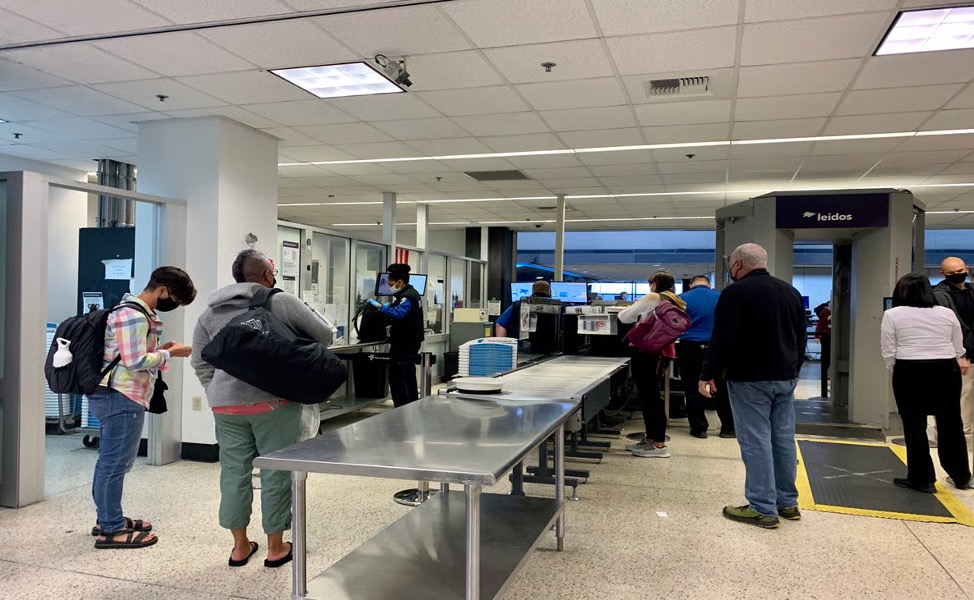
The line between national security and personal liberty is nowhere more tense than at an airport security checkpoint. Every day, millions of Americans submit to intrusive searches as a condition of travel. For two decades, a critical legal question hung over these interactions: If a Transportation Security Officer (TSO) crosses the line from routine screening to committing an intentional tort, like assaulting a passenger or falsely imprisoning a traveler, does the victim have a state-level remedy? Or does the government’s sovereign immunity shield it from liability?
For years, the answer depended heavily on where the plane, so to speak, landed. But a remarkable judicial consensus has recently emerged, culminating in the Eleventh Circuit’s 2025 decision in Koletas v. United States.[1] Just as the courthouse doors seemed to swing open for aggrieved travelers, however, the Supreme Court’s ruling in Martin v. United States placed a new, sophisticated lock on the gate.[2]
The controversy centers on the Federal Tort Claims Act (FTCA). While the Act generally immunizes the United States government from liability for intentional torts like battery or false imprisonment, the “law enforcement proviso” of 28 U.S.C. § 2680(h) re-waives that immunity for acts committed by “investigative or law enforcement officers.”[3] The statute defines these officers through a disjunctive structure: they must be empowered by law to execute searches, seize evidence, or make arrests for violations of federal law.
The government has historically argued that TSOs are “screeners,” not officers.[4] Relying on the Aviation and Transportation Security Act (ATSA), the government contended in Corbett v. TSA that TSOs conduct “administrative” screenings rather than criminal investigations, and therefore do not “execute searches” within the meaning of the FTCA proviso.[5] For years, this “administrative search” distinction successfully barred lawsuits.
The jurisprudential tide turned with the Third Circuit’s 2019 en banc decision in Pellegrino v. TSA.[6] The court rejected the government’s distinction between administrative and investigatory searches, holding that a TSO’s physical examination of a passenger is undeniably a “search” under the plain meaning of the statute.[7] This ruling triggered a domino effect across the federal judiciary. Between 2020 and 2024, the Eighth Circuit in Iverson v. United States, the Fourth Circuit in Osmon v. United States, the Ninth Circuit in Leuthauser v. United States, and the Tenth Circuit in Mengert v. United States all adopted the textualist view that TSOs are officers because they are empowered to execute searches for violations of federal law.[8] The government’s warnings that this would “open the floodgates” to liability were consistently rejected in favor of the statute’s plain text.
The circuit split effectively ended in 2025 with the Eleventh Circuit’s decision in Koletas v. United States.[9] Overturning the reasoning of its prior Corbett decision, the court joined its five sister circuits.[10] The Koletas court held that the statutory definition of “officer” unambiguously encompasses TSOs, whose primary duty is to search passengers for prohibited items—acts that constitute searches for violations of federal law.[11] With Koletas, the debate over TSO status is largely settled: TSOs are law enforcement officers under the FTCA.
Just as plaintiffs secured victory on the “officer” status question, the Supreme Court shifted the battlefield. In the 2025 case Martin v. United States, the Court addressed the interaction between the law enforcement proviso and the FTCA’s “discretionary function exception.”[12]
The discretionary function exception immunizes the government from claims based on acts involving an element of judgment or choice grounded in public policy.[13] Consequentley, if an officer committed an intentional tort, the government could not hide behind the discretionary function exception. In a unanimous decision, the Supreme Court vacated that holding.[14] Justice Gorsuch, writing for the Court, clarified that the law enforcement proviso overrides only the intentional tort exception in subsection (h). It does not categorically bar the application of the discretionary function exception in subsection (a).[15]
The implications of Martin for TSO litigation are significant. While Koletas ensures that the government can no longer dismiss cases simply by claiming TSOs are not “officers,” Martin confirms that the government retains a powerful second line of defense. A plaintiff must now clear two hurdles: the “status” prong (that a TSO is an “investigative or law enforcement officer) and the “conduct” prong (that a TSO’s specific actions were not “discretionary”).
This shifts the focus of litigation from the identity of the screener to the nature of their conduct. To survive dismissal, a traveler must allege that the TSO’s misconduct violated a specific, mandatory directive (such as a TSA Standard Operating Procedure) or the Constitution itself. If the TSO was merely exercising judgment, albeit even poor judgment, about how to secure a checkpoint, the discretionary function exception may still shield the government from liability.
Thus, the “administrative employee” defense is dead. The consensus across the Third, Fourth, Eighth, Ninth, Tenth, and Eleventh Circuits establishes that TSOs are law enforcement officers under the FTCA. However, the Supreme Court’s decision in Martin ensures that this classification is not a golden ticket to recovery. The courthouse doors are open, but the path to justice remains heavily fortified by the discretionary function exception. Future litigation will likely turn on the specific factual question of whether a TSO’s abusive conduct crossed the line from discretionary judgment to a violation of mandatory federal policy or the Constitution.
[4]See Corbett v. Transp. Sec. Admin., 568 F. App’x 690 (11th Cir. 2014) (holding TSOs are not “officers” under the FTCA because they perform administrative screenings).
[8]Iverson v. United States, 973 F.3d 843 (8th Cir. 2020); Osmon v. United States, 66 F.4th 144 (4th Cir. 2023); Leuthauser v. United States, 71 F.4th 1189 (9th Cir. 2023); Mengert v. United States, 120 F.4th 696 (10th Cir. 2024).
The Supreme Court’s forthcoming decision in Trump v. Slaughter has the potential to become one of the most consequential separation of powers rulings in modern administrative law.[1] The case asks whether Congress may continue to protect members of independent agencies, such as the Federal Trade Commission, from presidential removal except for cause. The Court heard oral argument in December 2025 and has not yet issued an opinion. Depending on how broadly the Court rules, the decision could either reaffirm nearly a century of precedent or significantly reshape the structure of the federal administrative state.
Congress created the Federal Trade Commission in 1914 as an independent, multimember agency charged with regulating unfair methods of competition and consumer protection.[2] Commissioners serve fixed seven-year terms and may be removed by the President only for inefficiency, neglect of duty, or malfeasance in office.[3] The Supreme Court upheld this structure in Humphrey’s Executor v. United States in 1935.[4] That decision has long served as the doctrinal foundation for the modern administrative state by recognizing that Congress may impose for cause removal protections on officials serving in independent agencies. Over time, the decision has been treated as a cornerstone for agencies whose members serve fixed terms and are insulated from day-to-day political control.
In March 2025, President Donald Trump removed FTC Commissioner Rebecca Kelly Slaughter without alleging any statutory cause.[5] The termination message stated that her continued service was inconsistent with the administration’s priorities.[6] Slaughter filed suit, arguing that the removal violated the FTC Act and longstanding Supreme Court precedent.[7] The U.S. District Court for the District of Columbia agreed and ordered her reinstatement, concluding that the President failed to provide the statutorily required cause for removal.[8] After emergency appeals and stays, the Supreme Court granted certiorari and allowed the case to proceed on an expedited timeline.[9] The case now presents a fundamental issue about the structure of the federal government and the balance of authority between Congress and the President.
The government’s argument rests on a strong reading of Article II.[10] It contends that the Constitution vests all executive power in the President and that the removal of executive officers is an essential component of that authority. The Solicitor General urged the Court to overrule Humphrey’s Executor, describing it as an outlier that conflicts with more recent separation of powers decisions.[11] The government emphasizes that the FTC exercises core executive functions such as investigation, enforcement, rulemaking, and litigation. Because FTC commissioners wield executive power, the President must have the ability to remove them at will. The administration frames the issue as one of democratic accountability, arguing that agency officials who exercise significant governmental authority should ultimately be answerable to the President, who is accountable to voters.[12]
The government’s position also builds on the Court’s recent trajectory. Decisions involving the Public Company Accounting Oversight Board and the Consumer Financial Protection Bureau have narrowed the scope of permissible removal protections and treated Humphrey’s Executor as an exception rather than the rule.[13] If the Court continues along that path, it could further expand presidential control over administrative agencies.
Slaughter’s position relies heavily on precedent and historical practice.[14] For nearly ninety years, Humphrey’s Executor has permitted Congress to create independent multimember agencies with for-cause removal protections.[15] The district court emphasized that this precedent remains controlling unless the Supreme Court expressly overrules it. Slaughter also argues that Congress has broad authority under Article I and the Necessary and Proper Clause to structure federal agencies.[16] If Congress can create offices and define their duties, it should be able to determine the conditions under which those officers may be removed.
Supporters of independent agencies argue that insulation from direct political pressure is necessary for agencies that perform quasi-judicial and quasi-legislative functions. The FTC was designed to be bipartisan and expert driven. Multi-member commissions are intended to encourage deliberation, compromise, and stability in policymaking. They are also meant to prevent abrupt policy swings that might occur if leadership changed immediately with each new administration. Allowing at-will presidential removal could undermine these structural goals and transform independent commissions into more explicitly political bodies.
There are also broader institutional concerns. Many federal agencies rely on the same framework established by Humphrey’s Executor. A decision expanding presidential removal authority could affect agencies such as the National Labor Relations Board, the Equal Employment Opportunity Commission, and other regulatory bodies that operate with multimember leadership protected by for-cause removal provisions.[17] Frequent leadership changes could affect regulatory stability, enforcement priorities, and compliance expectations across multiple industries.
Recent commentary also emphasizes the real-world consequences of the Court’s potential ruling.[18] Some observers note that disputes over appointments and removals already affect agency functioning. Confirmation blockades, leadership vacancies, and political disputes have at times left agencies without a quorum or without clear leadership. Expanding presidential removal power could intensify these dynamics by allowing Presidents to remove holdover officials while facing delays in confirming replacements. In that scenario, agencies might operate without full leadership or with reduced capacity, potentially affecting their ability to implement congressional mandates.
At the same time, others argue that stronger presidential control could allow elected administrations to implement their policy agendas more effectively.[19] From that perspective, removal protections can prevent newly elected Presidents from directing agencies consistent with the policies on which they campaigned. The case, therefore, reflects a deeper debate about whether independent agencies enhance stability and expertise or whether they undermine democratic accountability.
The Court could resolve the case in several ways. One possibility is that it reaffirms Humphrey’s Executor and upholds the FTC’s removal protections. Under this approach, the justices would likely distinguish recent cases involving single director agencies and maintain that multimember commissions remain constitutional. This outcome would preserve the current structure of independent agencies and maintain limits on presidential removal authority in this context. It would also signal stability and continuity in administrative law.
A second possibility is that the Court narrows but does not overrule Humphrey’s Executor. The justices might uphold the FTC’s structure while clarifying limits on when Congress may restrict removal. The Court could adopt a functional approach that evaluates whether an agency primarily exercises executive, legislative, or adjudicative functions. This incremental path would likely invite additional litigation because agencies that exercise substantial executive authority could face future challenges. The administrative state would remain intact but subject to increased scrutiny.
The most sweeping outcome would be for the Court to hold that Congress cannot impose for-cause removal protections on principal officers who exercise executive power. Such a decision would effectively overrule Humphrey’s Executor and allow the President to remove FTC commissioners at will. The impact would be significant. Independent agencies across the federal government could be affected, and presidential control over regulatory bodies would expand. Congress might need to redesign agency structures to comply with the Court’s ruling. This result would represent a major shift toward a stronger unitary executive theory and could reshape administrative governance for years to come.
The case highlights an ongoing constitutional tension between presidential control and congressional authority to structure agencies. Recent Supreme Court decisions show increasing skepticism toward broad removal protections, yet several justices expressed concern during oral argument about the consequences of sweeping changes. The Court’s decision will likely determine not only the future of the FTC but also the stability of independent agencies more broadly. A narrow ruling could preserve the existing framework, while a broad ruling could transform it.
Trump v. Slaughter ultimately asks who controls the administrative state. A decision reaffirming existing precedent would preserve nearly a century of law. A decision narrowing or overruling that precedent could expand presidential authority and alter the balance of power between Congress and the executive branch. Whatever the outcome, the Court’s ruling will shape the structure of federal agencies and the scope of presidential power for years to come.
Recent proposed bills signal a potential shift in how Alabama analyzes the “best interests of the child” standard against growing equitable parental rights for custody determinations.[1] Alabama’s policy has a long-standing principle of prioritizing what is in the child’s best interests, including ensuring “frequent and continuing contact” with parents who act in their child’s best interests.[2] Courts must consider joint custody in every case, but retain broad discretion to decide custody splits in any manner that it deems, including awarding sole legal and physical custody, based on the evidence presented and what the court considers to be in the child’s best interest.[3] Although joint custody may be ordered without the consent of both parents, a presumption that joint custody is in the child’s best interest is only created if both parents request it at the initial custody proceeding.[4] Joint custody must then be granted unless the court is able to make “specific findings” as to why they deviated.[5] In all other cases, there is no presumption in favor of either parent at the outset of the case.[6] The current state policy explicitly states that joint custody does not mandate equal physical custody time, leaving the final decision of custody divisions to the court’s discretion.[7]
Criticism of the current standard has led to the introduction of multiple bills in the Alabama Legislature.[8] The most recent bill is House Bill 147, commonly named as the Best Interest of the Child Protection Act.[9] Most significantly, it seeks to create a rebuttable presumption that “joint custody is in the best interest of the child, except in cases of domestic or family abuse.”[10] The proposed bill also adds new language to the policy of the state by emphasizing the “importance of family and the fundamental rights of parents and children” and that social science research has found “consistent and maximized contact with parents” to be in a child’s best interest.[11] When making custody determinations, courts would be encouraged to consider this broadened policy of the state.[12]
Courts currently do not have an obligation to explain their reasons for deviating from awarding joint custody, except in cases where both parents have requested it.[13] This has fueled critiques that a lack of transparency from the courts regarding their reasoning for deviations from joint custody arrangements exposes the children to established negative risks that are associated with having limited contact with one parent.[14] When the court is making its determination of what custody arrangement is in the child’s best interest, the newly proposed presumption for joint custody at the outset must be overcome by a “preponderance of the evidence” to support an award of unequal custody time.[15] Under the bill, the court must enter an order explaining its reasoning, the facts and findings supporting the deviation, and a parenting plan that still “maximizes the time each parent has with the child” that ensures the welfare of the child.[16] The bill also expands the list of discretionary factors that should be considered by the court when awarding any custody arrangement other than joint custody.[17] Previous versions of the bill have been debated by the legal community about its possible consequences, both directly and indirectly.
Mobile County Circuit Judge Michael Sherman had raised concerns about the impacts of the bill and expressed how the bill prioritizes parents’ rights over judges being able to effectively protect the children involved in custody battles.[18] Sherman asserted that the presumption would unintentionally create more conflict between parents due to the presumption disregarding the child’s pre-existing bonds with either parent.[19] He also warned that false domestic violence claims are already used by parents to gain an advantage in custody fights.[20] By creating this new presumption, it would thus lead to more false domestic violence claims being filed because domestic violence could be used as an exception to overcome the joint custody presumption.[21] Sherman expressed concerns about inadvertently making parents’ faults publicly available if a judge is required to document their specific findings when awarding non-joint custody.[22] In support of the bill, Hunter Weathers of the College Republican Federation of Alabama argued that the new presumption would still let judges make alternate custody arrangements, but that it must be done under the “presumption of evidence,” and that requiring the findings of fact to be available could be helpful for the judge in any subsequent custody modifications.[23]
The proposed bill attempts to remedy some portions of Alabama’s child custody laws that are considered to be vague by offering specific definitions and uniform guidelines.[24] It would define “frequent and substantial contact” in joint custody situations to mean that the “child has equal or approximately equal time with both parents.”[25] Under current law, parents are only required to submit a parenting plan, which covers matters “relevant to the care and custody of the child,” when they are both requesting joint custody.[26] This bill would automatically require both parents to submit a parenting plan specifying the amount of time that the child would spend with each parent and if there would be any periods of time-sharing.[27] Deviations in the parenting plans would be authorized by the court in cases where domestic or family abuse has been established.[28] The court would also be authorized to establish a parenting plan that safeguards the child’s well-being in cases of domestic or family abuse or when the parents cannot agree on a plan.[29] The bill also introduces new punishments and remedies, such as penalties against a parent who files a motion for temporary relief in bad faith or if they violate a time-sharing schedule without good cause.[30] The Best Interest of the Child Protection Act would create a new default of equal parenting time, with the burden shifting towards requiring evidence to justify alternative custody arrangements.[31]
Revisions in favor of a joint custody presumption have also been shown through another proposed bill, House Bill 18, also known as the Good Dad Act, which would create a rebuttable presumption that joint custody is in the best interest of the child when there is a signed voluntary acknowledgement of paternity from the single mother and father.[32] This acknowledgement would extend “all rights and duties of a parent on the acknowledged father.”[33] Joint custody would be presumed if a parent lives within forty miles of the child and provides that neither parent may remove the child from the state without permission from the other parent or from the court.[34] Like House Bill 147, courts are to consider the same statutory factors when determining whether joint custody or a deviation is in the child’s best interest.[35] State Representative Patrick Sellers, the sponsor of the bill, explains that his push for a joint custody presumption is fueled by his experiences seeing single fathers struggle to be awarded time in a system that typically favors the mother having the majority of custody.[36] He also emphasizes the importance of the father’s presence in his child’s life and the detrimental effects upon the child when that is denied.[37] Both House Bills 147 and 18 have exemplified this enduring trend as they have been introduced under similarly drafted versions over recent years, but were all ultimately struck down.[38] These proposals reflect a combined effort for Alabama to revisit its child custody laws.
Alabama representatives continue to push for the legislature to redefine custody determinations in family law by advocating for uniform guidelines, increased transparency of a judge’s decision-making, and more equitable rights for both parents at the outset of the case.[39] Although there are strong arguments both for and against these changes, the best interest of the child must remain as the guiding principle upon which custody is determined.
Recalcitrant witnesses present challenges for federal prosecutors at three key stages: during the pre-indictment investigation, the pre-trial interview, and the trial itself. Building a case and securing convictions often require prosecutors to compel reluctant witnesses to testify, despite their loyalty to or fear of the defendant or his associates. Additionally, some witnesses believe they can refuse to participate in the criminal justice process and ignore grand jury and trial subpoenas. Once the trial begins, some witnesses may become hostile or alter their testimony. This Article discusses methods available to persuade these witnesses to testify and, once they do, ensure they tell the truth.
In major conspiracy cases, accomplices often turn into prosecution witnesses because they face lengthy sentences and are motivated by the chance to reduce their sentences through cooperation. However, sometimes potential sentence reductions are not enough to convince witnesses to testify. Some street gangs and drug trafficking organizations have rules that forbid members from snitching—cooperating with law enforcement—and those who testify against their accomplices may face retaliation against themselves or their families.
Sometimes, lower-level members of a criminal organization who have pleaded guilty or been convicted at trial and who understand the organization’s inner workings refuse to testify, even when granted immunity. They often choose not to testify, not only out of fear of retaliation, but also because of loyalty or family ties to the people under investigation.
Another challenging group of witnesses includes those who are not connected to the criminal organization and choose not to participate in the criminal justice process for their own reasons. They often cite fear of retaliation, indifference, or a desire to avoid the stress of a jury trial. Sometimes, they are victims or witnesses caught in the wrong place at the wrong time who prefer not to get involved and resent the disruption to their lives.
In short, witnesses can pose challenges from investigation through trial. This Article proposes solutions to those issues. It explains legal tools like material witness warrants and civil and criminal contempt sanctions used to handle resistant witnesses at each stage of a federal case. The Article clarifies the differences between civil and criminal contempt, advises on when to use each remedy, and discusses their limitations. It also recommends steps to ensure that reluctant, subpoenaed witnesses appear in the grand jury or the trial court.
The Article examines witnesses who invoke the Fifth Amendment privilege against self-incrimination and the considerations prosecutors should weigh before granting statutory immunity. It also proposes strategies for handling witnesses who, without legal risk, invoke the Fifth Amendment to avoid testifying before the grand jury.
Finally, the Article discusses the rules of evidence concerning hostile witnesses who testify at trial and then suddenly and intentionally refuse to reveal the incriminating information they previously shared. It will cover the benefits of presenting witnesses before the federal grand jury to protect the case against potential changes in witness testimony based on the advantages of the Turncoat Witness provision for prior inconsistent statements over unsworn statements.
Photo Credit: Supreme Court of the United States – Washington DC USA, https://supreme.justia.com/ (last visited Feb. 2, 2026).
Authored by: Arielle H. Foster
For nearly thirty years, the Antiterrorism and Effective Death Penalty Act of 1996 (“AEDPA”) has functioned as a formidable procedural obstacle, shielding criminal convictions from judicial review under the guise of finality.[1] While the Supreme Court has spent much of the last decade reinforcing these barriers for state prisoners, its recent decision in Bowe v. United States indicates a critical breach in the gatekeeping wall, a breach that appears to be built on textualism, rather than judicial policy.[2] In a 5-4 ruling, the Court clarified that federal prisoners are not subject to the “same-claim” bars that ultimately lock the courthouse doors for their state counterparts.[3] For the trial advocate, Bowe is more than a technical victory within post-conviction procedures; it is also a vital reminder that the specific linguistic choices of Congress can in fact preserve a “second bite at the apple” for thorough practitioners.
Michael S. Bowe, the petitioner, found himself caught in the rapidly evolving federal sentencing process. Bowe was serving a 24-year sentence following a 2008 guilty plea, a term that was anchored by a mandatory 10-year consecutive “stacking” penalty under 18 U.S.C. § 924(c) for using a firearm during an “attempted Hobbs Act robbery.”[4] As the Court narrowed the definition of “crime of violence” in cases like United States v. Davis and United States v. Taylor, Bowe sought to challenge his sentence, arguing that the underlying conduct of his crime no longer supported that firearm sentencing enhancement.[5] However, the Eleventh Circuit acted as an impenetrable gatekeeper, applying the “same-claim” bar from 28 U.S.C. § 2244(b)(1), a provision that usually mandates the dismissal of claims that were already presented in a prior petition.[6] The Eleventh Circuit’s logic prioritized the gatekeeping functions of the AEDPA, suggesting that the statutory interest in finality precludes defendants from reopening sentences even when the underlying legal landscape undergoes a significant transformation.[7]
The Supreme Court’s reversal hinged on a precise, textualist distinction between two categories of defendants: (1) state prisoners filing “applications” under § 2254; and (2) federal prisoners filing “motions” under § 2255.[8] The Court started by addressing its own power to hear the case, more specifically, whether the “certiorari bar” found in § 2244(b)(3)(E) applied to federal prisoners.[9] Invoking the “clear statement” rule, the Court refused to permit an implicit stripping of its appellate jurisdiction, noting that Congress must speak with unmistakable clarity when it intends to bar the Court from reviewing a lower court’s gatekeeping decision.[10] The Court observed that because the bar is located within a statutory section specifically governing state prisoner applications, those same restrictions do not extend to federal motions by implication.[11]
On the merits, the Court held that the strict “same-claim” bar, which mandates dismissal of repeat claims, is similarly limited by design.[12] Justice Sotomayor’s opinion emphasized that § 2255(h), the gatekeeping provision for federal prisoners, incorporates only the procedures for certification, not the substantive bars found in § 2244.[13] As the Court noted, differences in statutory language are presumed to convey differences in meaning; Congress chose to create a more flexible path for federal prisoners, and the judiciary must respect its design.[14] This separation has allowed habeas law to adapt to new interpretations of criminal predicates without collapsing the established constitutional frameworks intended to protect individual liberty.[15]
For a trial lawyer, Bowe illustrates the need for a long-term strategy from the very first day of an initial appointment. This decision underscores why advocates must aggressively litigate the “categorical approach” during initial sentencing, even when the current circuit law seems to be unsettled.[16] Because a federal prisoner can return to court if a new, retroactive rule emerges, a well-preserved record at trial ensures the client is in a beneficial position when future seismic shifts occur. An advocate’s failure to object to a predicate offense today may ultimately be the only thing preventing a successful Bowe motion in the future. Furthermore, the Court’s distinction between “applications” and “motions” provides a masterclass on approaching and analyzing these statutory interpretations. When facing a procedural bar, an advocate should look for linguistic mismatches between the state and federal chapters of the code to ensure that a client’s rights are not being limited by extra-statutory judicial expansion or implication.
Ultimately, Bowe is a rejection of the “one-size-fits-all” approach to AEDPA. It reaffirms that in the federal system, the pursuit of justice continues to be a dynamic process, provided that the advocate is thorough enough to preserve such claims. Encouraging this type of textualist oversight allows the law to remain narrow by design, while addressing the reality that emerging legal definitions frequently require flexible constitutional responses, rather than definitive ones.[17]As the legal landscape continues to adapt to new interpretations of terms like “violence” and “harm,” Bowe ensures that the gates of the federal courts remain narrowly, but significantly open and accessible.
[1] Antiterrorism and Effective Death Penalty Act of 1996, Pub. L. No. 104-132, 110 Stat. 1214, 1214 (1996).
[4] 18 U.S.C. §924(c)(1)(A); Bowe, 146 S. Ct. at 453.
[5]See United States v. Davis, 588 U.S. 445, 448 (2019) (holding that the “residual clause” in 18 U.S.C. § 924(c)(3)(B), which defined “crime of violence” based on a “substantial risk” of physical force, was unconstitutionally vague under the Due Process Clause); United States v. Taylor, 596 U.S. 845, 853 (2022) (clarifying that attempted Hobbs Act robbery does not qualify as a “crime of violence” under the “elements clause” of § 924(c)(3)(A) because the government does not have to prove that the defendant used, attempted to use, or threatened to use physical force to secure a conviction for an attempt).
[6] 28 U.S.C. § 2244(b)(1); See In re Bowe, No. 24-11704, 2024 WL 4038107, at *3 (11th Cir. Jun. 27, 2024) (holding that 28 U.S.C. § 2244(b)(1)’s mandate to dismiss a claim presented in a prior application applies to federal prisoners seeking to file a successive § 2255 motion).
[7]See In re Bowe, 2024 WL 4038107, at *3 (denying authorization for a successive § 2255 motion by applying the §2244(b)(1) “same-claim” bar, thereby precluding relief based on the intervening decisions in Davis and Taylor).
[8]Compare 28 U.S.C. § 2254 (using the term “application” to describe the procedural vehicle for state prisoners seeking federal habeas relief) with 28 U.S.C. § 2255 (utilizing the term “motion” for federal prisoners and establishing a distinct statutory framework for sentencing challenges); seeBowe, 146 S. Ct. at 455-56 (emphasizing that these linguistic choices are not interchangeable and reflect a structural intent to treat federal motions and state applications differently).
[9] 28 U.S.C. § 2244(b)(3)(E) (“The grant or denial of an authorization by a court of appeals to file a second or successive application shall not be appealable and shall not be the subject of a petition for rehearing or for writ of certiorari.”); Bowe, 146 S. Ct. at 455-56 (holding that the “certiorari bar” applies only to state prisoners’ applications under § 2254 and does not strip the Supreme Court of jurisdiction to review gatekeeping decisions involving federal prisoners’ § 2255 motions).
[15]Cf. Arielle Foster, Narrow by Design: Why Carpenter Should Not Extend to Forensic Genetic Genealogy at 8(Jan. 5, 2026) (unpublished manuscript) (on file with author) (discussing how the separation of constitutional frameworks allows the law to adapt to new technologies without collapsing established judicial structures).
[16]SeeTaylor, 596 U.S. at 850 (applying a categorical approach to Hobbs Act robbery).
[17]Cf. Narrow by Design, at 8 (discussing the need for flexible responses to evolving legal and scientific capabilities).
What if the Court blows the whistle only to find the game’s already over? That’s the paradox underlying the Boy Scouts of America settlement.
The United States Supreme Court’s denial of certiorari in the Boy Scouts case highlights a clash of timing and finality.[1] Even after its 2024 decision in Purdue Pharma rejecting nonconsensual third-party releases, the Court declined to review a plea by a small group of sexual-abuse victims whose claims were released without their consent.[2] For the victims, the plan doesn’t bring closure; it reads as forced finality. To see why, let’s start with the basics of bankruptcy.
Bankruptcy Basics
Chapter 11 is the federal bankruptcy system’s tool for managing overwhelming liabilities while permitting an organization to keep operating.[3] Once the debtor files, the automatic stay is triggered, acting as a pause button that halts lawsuits, collections, evictions, repossessions, etc.[4]
The debtor will then propose a plan in an effort to consolidate large groups of creditors into a single process with the goal of a court-approved resolution.[5] In bankruptcy cases with mass tort claimants, the plan often creates a settlement trust funded by multiple contributors to compensate victims.[6] This offers many advantages because it can help avoid thousands of separate lawsuits that each have different complexities, timelines, and expenses.[7] Instead, bankruptcy offers one collective process with the goal of distributing value efficiently, consistently, and as equitably as possible.[8] But the same “binding” power that makes bankruptcy effective is also where the controversy lives.
The Release Problem
The story is familiar for the typical chapter 11 bankruptcy. The debtor files a petition, creditors vote in classes, the court confirms a plan, and the debtor gets a discharge.[9] The discharge eliminates many prepetition claims against the debtor and bars any later pursuit of them.[10]
A third-party release goes further. It essentially insulates certain non-debtors – owners, affiliates, local councils, chartering organizations – because the plan releases them too.[11] Supporters maintain that without the releases, the real money does not materialize.[12] Since non-debtors can generally achieve “global peace” through these tools, they are more willing to contribute to the trust in exchange for broad releases.[13] On the other hand, critics see a more unsettling reality – in particular, concerning nonconsensual third-party releases. Opponents maintain that such releases violate the Bankruptcy Code, bankruptcy policy, as well as the constitutional right to due process.[14]
In the sexual-abuse context, the objection isn’t merely about money. Many victims want accountability, discovery, and their day in court against specific organizations rather than compensation through a trust.[15] As a result, broad releases are viewed as negotiated bulk deals for immunity instead of true justice.[16] The fight over who has the power to impose releases on nonconsenting creditors reached the Supreme Court in Purdue Pharma.
Purdue: the Supreme Court Changes the Rule
The Purdue bankruptcy was rooted in a familiar mass-tort structure. In short, the proposed plan sought to resolve massive opioid liability through contributions tied to broad releases.[17] However, the plan was controversial as it sought releases for the Sackler family, non-debtors, over the objections of non-consenting claimants.[18]
In June of 2024, the Supreme Court held that bankruptcy courts generally lack authority under the Bankruptcy Code to enforce nonconsensual third-party releases.[19] The decision was effectively a major reset button.[20] Put simply, if you don’t file for bankruptcy, a bankruptcy court may not force people to release claims against you without their consent.[21] Following this reset, many are left scratching their heads. If Purdue closed the door on nonconsensual third-party releases, why didn’t that kill the Boy Scouts plan?
Boy Scouts: A Deal That Survives Anyway
Boy Scouts of America filed for chapter 11 bankruptcy in the face of thousands of sexual-abuse claims made over multiple decades.[22] The confirmed plan included a settlement trust as well as protections for certain non-debtors who contributed funds.[23] Such non-debtors included local councils, chartered organizations and other affiliated bodies within the Scouting ecosystem.[24]
On one side, plan proponents emphasized the advantages of settlement in the mass-tort setting. These advantages include speed, certainty, and money now.[25] Without settlement, it would have taken the victims years, maybe even decades of litigation to achieve justice.[26] They argued the trust could deliver quick, equitable compensation and help avoid ruinous costs of fighting thousands of different cases across jurisdictions.[27]
On the flip side, objectors like the Lujan Claimants raised fairness concerns. They argued that since harm is profound and personal, it could not be rectified through a lump-sum payout.[28] Despite compensation from a trust, losing the right to sue felt like a loss of agency and an inability to hold certain parties accountable.[29] To the plan opponents, it felt like a victim fairness problem; the settlement was financially meaningful but emotionally destabilizing when it extinguished claims against non-debtors without consent.[30]
The Boy Scouts plan didn’t survive because Purdue didn’t matter, it survived because timing and finality mattered more.
Finality Over New Rules
Often, the Supreme Court declining to review a case is misunderstood. Denial of certiorari isn’t a stamp of approval.[31] It is usually just the Court’s refusal to take up the issue.[32] With that said, the practical effect can be just as powerful.[33] For instance, if a lower court ruling remains in place, the settlement remains in place.
For the non-consenting victims, this is where finality takes over. Bankruptcy is built on the idea that at some point, a confirmed plan becomes stable enough that unwinding it would generate more harm than good.[34] Once a plan has been substantially implemented to where money is moving, the trust is up and running, and distributions are underway, courts are generally hesitant to pull the rug out.[35] This isn’t because the plan is perfect but has more to do with the systemic chaos that would ensue in the alternative.[36] This can come in the form of clawbacks, delays, and fresh rounds of litigation, as well as the risk that those waiting for distributions are pushed into limbo.[37]
The bottom line: Purdue reshaped the doctrine going forward, but Boy Scouts was “final enough” that the system chose stability over reopening the fight.[38] Although the law moved, the settlement did not.[39]
This is the timing trap.[40] In mass-tort bankruptcies, finality can often win.[41] This is not because fairness is irrelevant but has more to do with a system that favors certainty.[42] That certainty would be undermined by unwinding a plan that had already distributed funds to roughly 80,000 victims.[43] Once a deal as big as Boy Scouts is in motion, courts are reluctant to stop it.
What’s Still In the Air After Purdue and Boy Scouts?
The story doesn’t end with a closed courthouse door. Instead, it merely changes where the next challenge will happen. A few questions at the forefront of the conversation:
What counts as real consent after Purdue? If nonconsensual releases are generally off the table, do plans pivot to opt-in structures or rely on voting mechanics functioning like consent for most?[44] Do the hard questions stay in the margins?[45]
Will parties find loopholes in different settlement structures to mimic the releases? Despite a label change, global peace will likely be pursued through creative drafting.[46] Expect more channeling mechanisms and settlement structures designed to recreate release-like protection without using the term.
Is Congress up to bat for creating a broader mass-tort pathway? Asbestos already has its own statutory framework, while other mass-tort bankruptcies do not.[47] If courts no longer have authority under the code to impose the nonconsensual releases, pressure increases for a legislative solution.
Conclusion
In the end, Boy Scouts shows what happens when the rulebook changes after the last play. Purdue narrowed the power to impose nonconsensual third-party releases going forward, but finality kept an already-implemented plan on the field. As a result, some victims see it as resolution while others feel coerced closure. Such tension doesn’t seem to be going anywhere unless Congress steps in with a clearer framework. Until then, the system will keep facing a tough question: how much peace can bankruptcy buy, and who gets to decide the price?
[1] Lujan Claimants v. Boy Scouts of Am., No. 25-490, 2026 WL 79599, at *1 (U.S. Jan. 12, 2026) (denying the petition for writ of certiorari).
[2]Id.; Harrington v. Purdue Pharma L. P., 603 U.S. 204, 226 (2024) (holding that in a chapter 11 reorganization, the Code does not authorize an injunction and release that would practically extinguish claims against a nondebtor without the affected claimants’ consent).
[6] Luke A. Barefoot et. al, Discharge of Mass Tort Liability, Due Process & Illusory Finality in Chapter 11, Bloomberg Law, (August 2022), https://www.bloomberglaw.com/ bankruptcy-professional-discharge (explaining the defined set of eligibility and valuation criteria for claimants).
[22] In re Boy Scouts of Am. & Delaware BSA, LLC, 650 B.R. 87, 104 (D. Del. 2023), aff’d in part, rev’d in part, dismissed in part sub nom. In re Boy Scouts of Am., 137 F.4th 126 (3d Cir. 2025).


 American Journal of Trial Advocacy