Recalcitrant witnesses present challenges for federal prosecutors at three key stages: during the pre-indictment investigation, the pre-trial interview, and the trial itself. Building a case and securing convictions often require prosecutors to compel reluctant witnesses to testify, despite their loyalty to or fear of the defendant or his associates. Additionally, some witnesses believe they can refuse to participate in the criminal justice process and ignore grand jury and trial subpoenas. Once the trial begins, some witnesses may become hostile or alter their testimony. This Article discusses methods available to persuade these witnesses to testify and, once they do, ensure they tell the truth.
In major conspiracy cases, accomplices often turn into prosecution witnesses because they face lengthy sentences and are motivated by the chance to reduce their sentences through cooperation. However, sometimes potential sentence reductions are not enough to convince witnesses to testify. Some street gangs and drug trafficking organizations have rules that forbid members from snitching—cooperating with law enforcement—and those who testify against their accomplices may face retaliation against themselves or their families.
Sometimes, lower-level members of a criminal organization who have pleaded guilty or been convicted at trial and who understand the organization’s inner workings refuse to testify, even when granted immunity. They often choose not to testify, not only out of fear of retaliation, but also because of loyalty or family ties to the people under investigation.
Another challenging group of witnesses includes those who are not connected to the criminal organization and choose not to participate in the criminal justice process for their own reasons. They often cite fear of retaliation, indifference, or a desire to avoid the stress of a jury trial. Sometimes, they are victims or witnesses caught in the wrong place at the wrong time who prefer not to get involved and resent the disruption to their lives.
In short, witnesses can pose challenges from investigation through trial. This Article proposes solutions to those issues. It explains legal tools like material witness warrants and civil and criminal contempt sanctions used to handle resistant witnesses at each stage of a federal case. The Article clarifies the differences between civil and criminal contempt, advises on when to use each remedy, and discusses their limitations. It also recommends steps to ensure that reluctant, subpoenaed witnesses appear in the grand jury or the trial court.
The Article examines witnesses who invoke the Fifth Amendment privilege against self-incrimination and the considerations prosecutors should weigh before granting statutory immunity. It also proposes strategies for handling witnesses who, without legal risk, invoke the Fifth Amendment to avoid testifying before the grand jury.
Finally, the Article discusses the rules of evidence concerning hostile witnesses who testify at trial and then suddenly and intentionally refuse to reveal the incriminating information they previously shared. It will cover the benefits of presenting witnesses before the federal grand jury to protect the case against potential changes in witness testimony based on the advantages of the Turncoat Witness provision for prior inconsistent statements over unsworn statements.
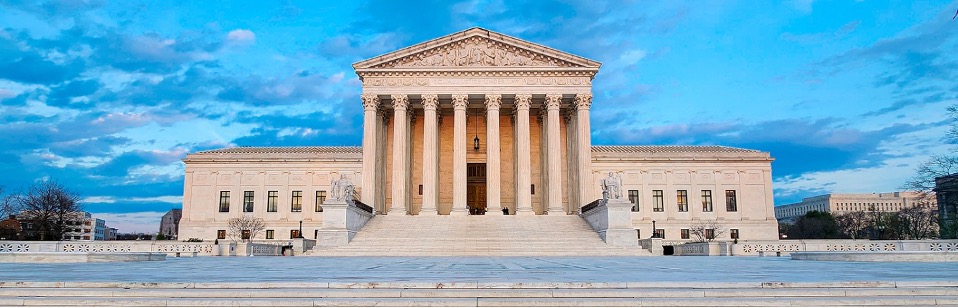
Photo Credit: Supreme Court of the United States – Washington DC USA, https://supreme.justia.com/ (last visited Feb. 2, 2026).
Authored by: Arielle H. Foster
For nearly thirty years, the Antiterrorism and Effective Death Penalty Act of 1996 (“AEDPA”) has functioned as a formidable procedural obstacle, shielding criminal convictions from judicial review under the guise of finality.[1] While the Supreme Court has spent much of the last decade reinforcing these barriers for state prisoners, its recent decision in Bowe v. United States indicates a critical breach in the gatekeeping wall, a breach that appears to be built on textualism, rather than judicial policy.[2] In a 5-4 ruling, the Court clarified that federal prisoners are not subject to the “same-claim” bars that ultimately lock the courthouse doors for their state counterparts.[3] For the trial advocate, Bowe is more than a technical victory within post-conviction procedures; it is also a vital reminder that the specific linguistic choices of Congress can in fact preserve a “second bite at the apple” for thorough practitioners.
Michael S. Bowe, the petitioner, found himself caught in the rapidly evolving federal sentencing process. Bowe was serving a 24-year sentence following a 2008 guilty plea, a term that was anchored by a mandatory 10-year consecutive “stacking” penalty under 18 U.S.C. § 924(c) for using a firearm during an “attempted Hobbs Act robbery.”[4] As the Court narrowed the definition of “crime of violence” in cases like United States v. Davis and United States v. Taylor, Bowe sought to challenge his sentence, arguing that the underlying conduct of his crime no longer supported that firearm sentencing enhancement.[5] However, the Eleventh Circuit acted as an impenetrable gatekeeper, applying the “same-claim” bar from 28 U.S.C. § 2244(b)(1), a provision that usually mandates the dismissal of claims that were already presented in a prior petition.[6] The Eleventh Circuit’s logic prioritized the gatekeeping functions of the AEDPA, suggesting that the statutory interest in finality precludes defendants from reopening sentences even when the underlying legal landscape undergoes a significant transformation.[7]
The Supreme Court’s reversal hinged on a precise, textualist distinction between two categories of defendants: (1) state prisoners filing “applications” under § 2254; and (2) federal prisoners filing “motions” under § 2255.[8] The Court started by addressing its own power to hear the case, more specifically, whether the “certiorari bar” found in § 2244(b)(3)(E) applied to federal prisoners.[9] Invoking the “clear statement” rule, the Court refused to permit an implicit stripping of its appellate jurisdiction, noting that Congress must speak with unmistakable clarity when it intends to bar the Court from reviewing a lower court’s gatekeeping decision.[10] The Court observed that because the bar is located within a statutory section specifically governing state prisoner applications, those same restrictions do not extend to federal motions by implication.[11]
On the merits, the Court held that the strict “same-claim” bar, which mandates dismissal of repeat claims, is similarly limited by design.[12] Justice Sotomayor’s opinion emphasized that § 2255(h), the gatekeeping provision for federal prisoners, incorporates only the procedures for certification, not the substantive bars found in § 2244.[13] As the Court noted, differences in statutory language are presumed to convey differences in meaning; Congress chose to create a more flexible path for federal prisoners, and the judiciary must respect its design.[14] This separation has allowed habeas law to adapt to new interpretations of criminal predicates without collapsing the established constitutional frameworks intended to protect individual liberty.[15]
For a trial lawyer, Bowe illustrates the need for a long-term strategy from the very first day of an initial appointment. This decision underscores why advocates must aggressively litigate the “categorical approach” during initial sentencing, even when the current circuit law seems to be unsettled.[16] Because a federal prisoner can return to court if a new, retroactive rule emerges, a well-preserved record at trial ensures the client is in a beneficial position when future seismic shifts occur. An advocate’s failure to object to a predicate offense today may ultimately be the only thing preventing a successful Bowe motion in the future. Furthermore, the Court’s distinction between “applications” and “motions” provides a masterclass on approaching and analyzing these statutory interpretations. When facing a procedural bar, an advocate should look for linguistic mismatches between the state and federal chapters of the code to ensure that a client’s rights are not being limited by extra-statutory judicial expansion or implication.
Ultimately, Bowe is a rejection of the “one-size-fits-all” approach to AEDPA. It reaffirms that in the federal system, the pursuit of justice continues to be a dynamic process, provided that the advocate is thorough enough to preserve such claims. Encouraging this type of textualist oversight allows the law to remain narrow by design, while addressing the reality that emerging legal definitions frequently require flexible constitutional responses, rather than definitive ones.[17]As the legal landscape continues to adapt to new interpretations of terms like “violence” and “harm,” Bowe ensures that the gates of the federal courts remain narrowly, but significantly open and accessible.
[1] Antiterrorism and Effective Death Penalty Act of 1996, Pub. L. No. 104-132, 110 Stat. 1214, 1214 (1996).
[4] 18 U.S.C. §924(c)(1)(A); Bowe, 146 S. Ct. at 453.
[5]See United States v. Davis, 588 U.S. 445, 448 (2019) (holding that the “residual clause” in 18 U.S.C. § 924(c)(3)(B), which defined “crime of violence” based on a “substantial risk” of physical force, was unconstitutionally vague under the Due Process Clause); United States v. Taylor, 596 U.S. 845, 853 (2022) (clarifying that attempted Hobbs Act robbery does not qualify as a “crime of violence” under the “elements clause” of § 924(c)(3)(A) because the government does not have to prove that the defendant used, attempted to use, or threatened to use physical force to secure a conviction for an attempt).
[6] 28 U.S.C. § 2244(b)(1); See In re Bowe, No. 24-11704, 2024 WL 4038107, at *3 (11th Cir. Jun. 27, 2024) (holding that 28 U.S.C. § 2244(b)(1)’s mandate to dismiss a claim presented in a prior application applies to federal prisoners seeking to file a successive § 2255 motion).
[7]See In re Bowe, 2024 WL 4038107, at *3 (denying authorization for a successive § 2255 motion by applying the §2244(b)(1) “same-claim” bar, thereby precluding relief based on the intervening decisions in Davis and Taylor).
[8]Compare 28 U.S.C. § 2254 (using the term “application” to describe the procedural vehicle for state prisoners seeking federal habeas relief) with 28 U.S.C. § 2255 (utilizing the term “motion” for federal prisoners and establishing a distinct statutory framework for sentencing challenges); seeBowe, 146 S. Ct. at 455-56 (emphasizing that these linguistic choices are not interchangeable and reflect a structural intent to treat federal motions and state applications differently).
[9] 28 U.S.C. § 2244(b)(3)(E) (“The grant or denial of an authorization by a court of appeals to file a second or successive application shall not be appealable and shall not be the subject of a petition for rehearing or for writ of certiorari.”); Bowe, 146 S. Ct. at 455-56 (holding that the “certiorari bar” applies only to state prisoners’ applications under § 2254 and does not strip the Supreme Court of jurisdiction to review gatekeeping decisions involving federal prisoners’ § 2255 motions).
[15]Cf. Arielle Foster, Narrow by Design: Why Carpenter Should Not Extend to Forensic Genetic Genealogy at 8(Jan. 5, 2026) (unpublished manuscript) (on file with author) (discussing how the separation of constitutional frameworks allows the law to adapt to new technologies without collapsing established judicial structures).
[16]SeeTaylor, 596 U.S. at 850 (applying a categorical approach to Hobbs Act robbery).
[17]Cf. Narrow by Design, at 8 (discussing the need for flexible responses to evolving legal and scientific capabilities).
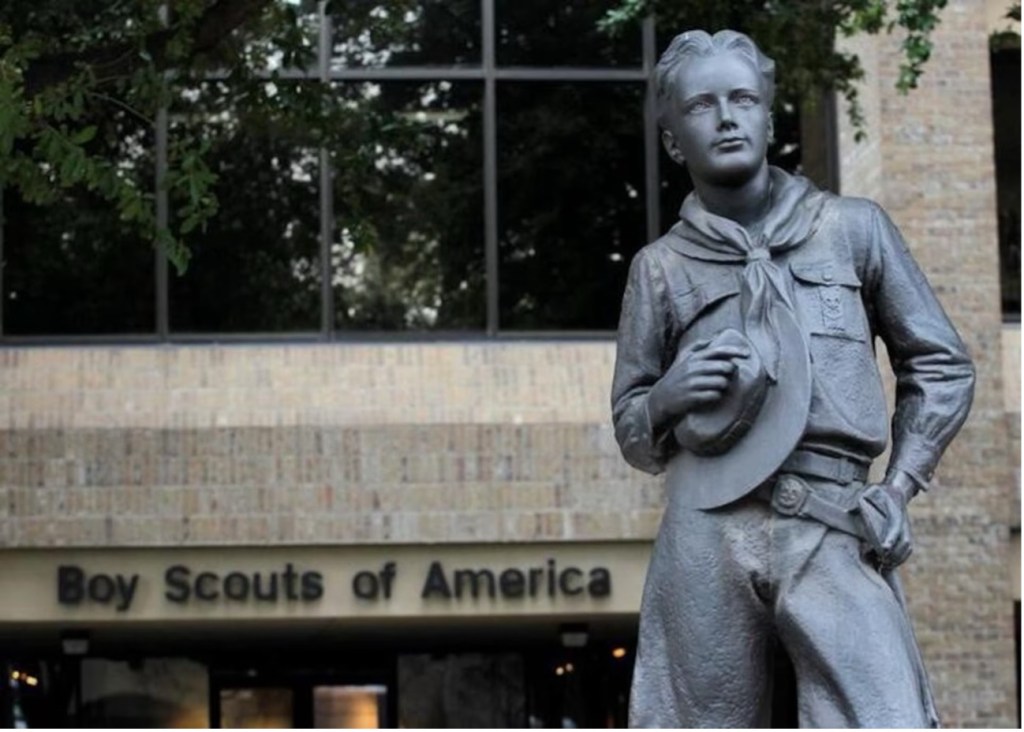
What if the Court blows the whistle only to find the game’s already over? That’s the paradox underlying the Boy Scouts of America settlement.
The United States Supreme Court’s denial of certiorari in the Boy Scouts case highlights a clash of timing and finality.[1] Even after its 2024 decision in Purdue Pharma rejecting nonconsensual third-party releases, the Court declined to review a plea by a small group of sexual-abuse victims whose claims were released without their consent.[2] For the victims, the plan doesn’t bring closure; it reads as forced finality. To see why, let’s start with the basics of bankruptcy.
Bankruptcy Basics
Chapter 11 is the federal bankruptcy system’s tool for managing overwhelming liabilities while permitting an organization to keep operating.[3] Once the debtor files, the automatic stay is triggered, acting as a pause button that halts lawsuits, collections, evictions, repossessions, etc.[4]
The debtor will then propose a plan in an effort to consolidate large groups of creditors into a single process with the goal of a court-approved resolution.[5] In bankruptcy cases with mass tort claimants, the plan often creates a settlement trust funded by multiple contributors to compensate victims.[6] This offers many advantages because it can help avoid thousands of separate lawsuits that each have different complexities, timelines, and expenses.[7] Instead, bankruptcy offers one collective process with the goal of distributing value efficiently, consistently, and as equitably as possible.[8] But the same “binding” power that makes bankruptcy effective is also where the controversy lives.
The Release Problem
The story is familiar for the typical chapter 11 bankruptcy. The debtor files a petition, creditors vote in classes, the court confirms a plan, and the debtor gets a discharge.[9] The discharge eliminates many prepetition claims against the debtor and bars any later pursuit of them.[10]
A third-party release goes further. It essentially insulates certain non-debtors – owners, affiliates, local councils, chartering organizations – because the plan releases them too.[11] Supporters maintain that without the releases, the real money does not materialize.[12] Since non-debtors can generally achieve “global peace” through these tools, they are more willing to contribute to the trust in exchange for broad releases.[13] On the other hand, critics see a more unsettling reality – in particular, concerning nonconsensual third-party releases. Opponents maintain that such releases violate the Bankruptcy Code, bankruptcy policy, as well as the constitutional right to due process.[14]
In the sexual-abuse context, the objection isn’t merely about money. Many victims want accountability, discovery, and their day in court against specific organizations rather than compensation through a trust.[15] As a result, broad releases are viewed as negotiated bulk deals for immunity instead of true justice.[16] The fight over who has the power to impose releases on nonconsenting creditors reached the Supreme Court in Purdue Pharma.
Purdue: the Supreme Court Changes the Rule
The Purdue bankruptcy was rooted in a familiar mass-tort structure. In short, the proposed plan sought to resolve massive opioid liability through contributions tied to broad releases.[17] However, the plan was controversial as it sought releases for the Sackler family, non-debtors, over the objections of non-consenting claimants.[18]
In June of 2024, the Supreme Court held that bankruptcy courts generally lack authority under the Bankruptcy Code to enforce nonconsensual third-party releases.[19] The decision was effectively a major reset button.[20] Put simply, if you don’t file for bankruptcy, a bankruptcy court may not force people to release claims against you without their consent.[21] Following this reset, many are left scratching their heads. If Purdue closed the door on nonconsensual third-party releases, why didn’t that kill the Boy Scouts plan?
Boy Scouts: A Deal That Survives Anyway
Boy Scouts of America filed for chapter 11 bankruptcy in the face of thousands of sexual-abuse claims made over multiple decades.[22] The confirmed plan included a settlement trust as well as protections for certain non-debtors who contributed funds.[23] Such non-debtors included local councils, chartered organizations and other affiliated bodies within the Scouting ecosystem.[24]
On one side, plan proponents emphasized the advantages of settlement in the mass-tort setting. These advantages include speed, certainty, and money now.[25] Without settlement, it would have taken the victims years, maybe even decades of litigation to achieve justice.[26] They argued the trust could deliver quick, equitable compensation and help avoid ruinous costs of fighting thousands of different cases across jurisdictions.[27]
On the flip side, objectors like the Lujan Claimants raised fairness concerns. They argued that since harm is profound and personal, it could not be rectified through a lump-sum payout.[28] Despite compensation from a trust, losing the right to sue felt like a loss of agency and an inability to hold certain parties accountable.[29] To the plan opponents, it felt like a victim fairness problem; the settlement was financially meaningful but emotionally destabilizing when it extinguished claims against non-debtors without consent.[30]
The Boy Scouts plan didn’t survive because Purdue didn’t matter, it survived because timing and finality mattered more.
Finality Over New Rules
Often, the Supreme Court declining to review a case is misunderstood. Denial of certiorari isn’t a stamp of approval.[31] It is usually just the Court’s refusal to take up the issue.[32] With that said, the practical effect can be just as powerful.[33] For instance, if a lower court ruling remains in place, the settlement remains in place.
For the non-consenting victims, this is where finality takes over. Bankruptcy is built on the idea that at some point, a confirmed plan becomes stable enough that unwinding it would generate more harm than good.[34] Once a plan has been substantially implemented to where money is moving, the trust is up and running, and distributions are underway, courts are generally hesitant to pull the rug out.[35] This isn’t because the plan is perfect but has more to do with the systemic chaos that would ensue in the alternative.[36] This can come in the form of clawbacks, delays, and fresh rounds of litigation, as well as the risk that those waiting for distributions are pushed into limbo.[37]
The bottom line: Purdue reshaped the doctrine going forward, but Boy Scouts was “final enough” that the system chose stability over reopening the fight.[38] Although the law moved, the settlement did not.[39]
This is the timing trap.[40] In mass-tort bankruptcies, finality can often win.[41] This is not because fairness is irrelevant but has more to do with a system that favors certainty.[42] That certainty would be undermined by unwinding a plan that had already distributed funds to roughly 80,000 victims.[43] Once a deal as big as Boy Scouts is in motion, courts are reluctant to stop it.
What’s Still In the Air After Purdue and Boy Scouts?
The story doesn’t end with a closed courthouse door. Instead, it merely changes where the next challenge will happen. A few questions at the forefront of the conversation:
What counts as real consent after Purdue? If nonconsensual releases are generally off the table, do plans pivot to opt-in structures or rely on voting mechanics functioning like consent for most?[44] Do the hard questions stay in the margins?[45]
Will parties find loopholes in different settlement structures to mimic the releases? Despite a label change, global peace will likely be pursued through creative drafting.[46] Expect more channeling mechanisms and settlement structures designed to recreate release-like protection without using the term.
Is Congress up to bat for creating a broader mass-tort pathway? Asbestos already has its own statutory framework, while other mass-tort bankruptcies do not.[47] If courts no longer have authority under the code to impose the nonconsensual releases, pressure increases for a legislative solution.
Conclusion
In the end, Boy Scouts shows what happens when the rulebook changes after the last play. Purdue narrowed the power to impose nonconsensual third-party releases going forward, but finality kept an already-implemented plan on the field. As a result, some victims see it as resolution while others feel coerced closure. Such tension doesn’t seem to be going anywhere unless Congress steps in with a clearer framework. Until then, the system will keep facing a tough question: how much peace can bankruptcy buy, and who gets to decide the price?
[1] Lujan Claimants v. Boy Scouts of Am., No. 25-490, 2026 WL 79599, at *1 (U.S. Jan. 12, 2026) (denying the petition for writ of certiorari).
[2]Id.; Harrington v. Purdue Pharma L. P., 603 U.S. 204, 226 (2024) (holding that in a chapter 11 reorganization, the Code does not authorize an injunction and release that would practically extinguish claims against a nondebtor without the affected claimants’ consent).
[6] Luke A. Barefoot et. al, Discharge of Mass Tort Liability, Due Process & Illusory Finality in Chapter 11, Bloomberg Law, (August 2022), https://www.bloomberglaw.com/ bankruptcy-professional-discharge (explaining the defined set of eligibility and valuation criteria for claimants).
[22] In re Boy Scouts of Am. & Delaware BSA, LLC, 650 B.R. 87, 104 (D. Del. 2023), aff’d in part, rev’d in part, dismissed in part sub nom. In re Boy Scouts of Am., 137 F.4th 126 (3d Cir. 2025).
In 2006, the United States Supreme Court held that police officers with an “objectively reasonably basis for believing” someone inside a home requires emergency assistance, may enter without a warrant.[1] Roughly twenty years later, the Court provided some clarity on the emergency aid exception.[2]
In Case v. Montana, William Case called his ex-girlfriend, J.H., and threatened suicide while methodically detailing his next steps before going silent.[3] Prior to the silence, however, J.H. heard clicking and popping, from which she assumed Case had shot himself. [4] J.H. called the police and drove to Case’s home where three police officers met her.[5] The police officers were aware of Case’s alcohol abuse, mental health issues, previously threated and attempted suicides, and the details of his call with J.H.[6] Under these circumstances, the police officers requested the chief of police.[7]
During the forty minutes it took for the chief to arrive, the officers “circled the house looking for signs of injury or danger” and attempted to get a response from Case by knocking and yelling.[8] While they did not see Case, they did see “empty beer cans, an empty handgun holster, and a notepad with a writing on it.”[9] Once the chief arrived, the officers weighed the implications of entering, both for themselves and for Case.[10] While the officers considered the possibility of the situation escalating because of their entrance, the circumstances suggested “that Case had already shot himself” and may be injured inside of the home.[11]
Meanwhile, Case was inside the home “hiding in the closet of a bedroom upstairs.”[12] Once an officer entered, Case abruptly opened the closet and appeared while holding what appeared to be a gun.”[13] Case was shot, had first aid administered, and later recovered at a nearby hospital.[14] In the home, “the officers found a handgun in a laundry basket next to the place where Case had stood.”[15]
Case was charged with “assaulting a police officer” but moved to suppress evidence by arguing his Fourth Amendment rights were violated when the police officers entered his home without a warrant.[16]
In welcoming yet another exception to the protections provided by the Fourth Amendment, the Court recognized the “sanctity of the home” by noting the police officers’ entry grants “no basis to search the premises beyond what is reasonably needed to deal with the emergency while maintaining the officers’ safety.”[17] However, this emergency aid exception only requires the officers have an “objectively reasonably basis,” not probable cause, that there’s an emergency.[18]
Justice Sotomayor highlighted the distinction between police officers entering to deal with an emergency as opposed to entering under other circumstances.[19] Justice Sotomayor stated the “manner . . . and their subsequent conduct” must also be reasonable when entering someone’s home to deal with an emergency.[20] Accordingly, what may lead officers to have an objectively reasonably basis for believing someone needs emergency assistance will vary depending on the circumstances of each situation.[21] As Justice Sotomayor illustrated, alternative de-escalation methods may be a more appropriate approach when the officers’ entry is more likely to escalate the situation, particularly in situations where someone is experiencing a mental health crisis.[22]
Justice Gorsuch defended the Court’s decision by emphasizing two key points.[23] First, the exception grants police officers entry to address the emergency, not to “search a home more broadly.”[24] Additionally, Justice Gorsuch emphasized the long-standing belief “that property rights give way to concern for human safety.”[25]
Overall, the Court’s objective standard aims to limit the breath of the emergency aid exception. However, just like many others, this exception is subject to abuse. Previously, some courts required a showing of probable cause for the exception to be implicated.[26] Despite clarifying a lower objectively reasonable standard applies, the Court’s decision carefully leaves ample room for states to impose greater limitations.
[1] Brigham City v. Stuart, 547 U.S. 398, 400 (2006).
[2]See generally Case v. Montana, 146 S. Ct. 500 (2026) (“An officer may enter a home without a warrant if he has ‘an objectively reasonable basis for believing that an occupant is seriously injured or imminently threatened with such injury.’”).
[26]See id. at 505 (“[C]ourts have differed on whether police officers entering a home to provide emergency aid need ‘probable cause’ to believe that an occupant is in peril.”).
In 1974, Employee Retirement Income Security Act (“ERISA”) was enacted, which provides comprehensive regulation for private pension plans surrounding funding, management, and benefit provision standards.[1] Following the enactment of ERISA, the Multiemployer Pension Plan Amendments Act (“MPPAA”) was passed by Congress and signed into law by the President on September 26, 1980.[2] As part of ERISA, the MPPAA established withdrawal liability giving multiemployer pension funds the financial stability they previously lacked.[3] The Act reduced their risk of insolvency in the event of an employer’s withdrawal ensuring retirees receive a pension.[4] As a result of the MPPAA, if an employer withdraws from a multiemployer plan, it incurs “withdrawal liability” in the form of “a fixed and certain debt to the pension plan” determined by the plan’s actuary.[5] MPPAA provisions provide how to calculate withdrawal liability.[6] Withdrawal liability can be calculated either based on the “proportionate share of the plan’s unfunded vested benefits,” or the amount of the plan’s underfunding, “as of the end of the plan year preceding the plan year in which the employer withdraws” under 29 U.S.C. § 1391.[7]
In M & K Employee Solutions, LLC v. Trustees of the IAM National Pension Fund, at various points throughout 2018, four employers, M & K Employee Solutions, LLC (“M&K”), Ohio Magnetics, Inc., Phillips Liquidating Trust, and Toyota Logistics Services, Inc. (collectively “the Employers”) withdrew from the IAM National Pension Fund (“Fund”).[8] The Fund, a multi-employer pension plan, supplies retirement benefits to employees who are covered by collective bargaining agreements with labor union, International Association of Machinists and Aerospace Workers.[9] At the relevant time period, the Fund used actuary consulting firm, Cheiron to calculate withdrawal liability.[10] For the 2018 Plan Year, Cheiron used December 31, 2017, the end of the regular calendar year to calculate the employees’ withdrawal liability, or the amount of money each company owed for withdrawing from the fund.[11] However, when the Employers received their withdrawal liability, they realized that Cheiron changed various methods and assumptions for calculating withdrawal liability for employers withdrawing during the 2018 Plan Year.[12] After the Employers each received their withdrawal liability from the Fund, they commenced separate arbitration actions to challenge whether their calculations were correct under ERISA and the MPPAA.[13] The arbitrators of each suit found that the Fund’s actuary’s erred in their calculations by using the wrong assumptions.[14] Following these conclusions, the Fund initiated separate lawsuits challenging the arbitration awards in favor of employers regarding their liability for withdrawing from the plan.[15] These actions were consolidated for the appeal.[16]
On appeal, the D.C. Circuit affirmed both district court rulings that the arbitrators erred in finding that actuaries cannot adopt actuary assumptions after the relevant measurement date when calculating withdrawal liability.[17] The D.C. Circuit concluded that actuaries are allowed to use information that becomes available after the withdrawal measurement date, if the resulting assumptions are applied as of the measurement date.[18] However, not all circuits agree. Contrarily, the Second Circuit held that withdrawal-liability interest rate assumptions are locked in as of the last day of the plan year preceding withdrawal and, unless modified by the measurement date, automatically roll over from the prior plan year.[19] The circuit split creates real uncertainty for employers, who may face dramatically different withdrawal liability depending on which court’s rule governs. The amount at stake can be substantial, particularly for larger plans or partial withdrawals.[20]
For M&K, the Fund assessed a withdrawal liability assessment of $6,158,482.[21] While for Ohio Magnetics, Inc., the Fund assessed a withdrawal liability of $447,475.[22] In assessing withdrawal liability for each entity, Cheiron did not base the actuarial assumptions that were in effect in the previous year on December 31, 2017.[23] But instead, the actuary used January 2018 assumptions which reflected a change from the assumptions in effect.[24] The Employers disputed the liability, contending that it was improper for Cheiron to use these new assumptions, which were adopted after the December 31, 2017, measurement date to calculate their withdrawal liability.[25] The dispute over the calculations, with different courts reaching contrary conclusions, raised a question for the Supreme Court: whether actuaries are required to base the computation on the withdrawal liability assumptions based on those most recently adopted before the end of the year, or different “actuarial assumptions that were adopted after, but based on information available as of, the end of the year” under the 29 U.S.C. § 1391’s instruction to compute withdrawal liability “as of the end of the plan year.”[26]
As codified in 29 U.S.C. § 1393(a)(1), an actuary’s “best estimate” must be based on assumptions that are “reasonable” and consider the plan’s experience and reasonable expectations.[27] A “best estimate” requires an actuary to look at the multiemployer actuarial community, and this practice includes the use of expected return interest rates, market observation interest rates, and techniques that blend these interest rates.[28] If the Court rules in favor of the petitioners, employers could face withdrawal liability based on interest rates higher than they planned, but if it rules for the respondents, actuaries would be limited to prior-year assumptions, restricting their discretion.[29] Supporters of the respondent-employers contend that a “bright-line rule is essential to preserv[ing] integrity and fairness.”[30] However, supporters of the petitioner, find that instead a “bright-line rule” will do the opposite because employers who remain after others withdraw would be liable for all shifting interest rates risks, market declines, unstable industries, and an underfunded pension plan.[31] Considering this dilemma, the Supreme Court’s upcoming decision will be closely watched by employers, pension funds, and actuaries, particularly given the Justices’ concerns about confining interest rate assumptions to the previous plan year.[32]
The Trustees of the Fund, as petitioners, presented their arguments before the Supreme Court on January 20, 2026, and now await a final decision that could change MPPAA withdrawal liability in all jurisdictions.[33] At oral argument, the petitioners argued that under the MPPAA, actuaries are allowed to calculate withdrawal liability based on the Fund’s new assumptions based on the current year.[34] Contrarily, the respondents argued that calculating the withdrawal liability “as of” the valuation date requires the actuary to use the Fund’s previous year assumptions.[35] Justices Kavanaugh and Jackson took concern with the respondent’s argument that the MPPAA’s “as of” requirement refers to the use of previous year assumptions.[36] The Justices discussed that the respondent’s argued interpretation fails to consider unforeseeable events and circumstances that may take place during the current year that were not previously considered, like COVID-19.[37] The Justices shared concern with undermining an actuary’s ability to give his or her “best estimate” of liability as required by the MPPAA[38] suggests that a “bright-line” rule may not be likely to come from the Supreme Court’s decision.
[17]Id. at 323; Trs. of Iam Nat’l Pension Fund v. M & K Emp. Sols., LLC, No. 1:21-CV-02152-RCL, 2022 WL 4534998, at *18 (D.D.C. Sept. 28, 2022) (“The presence of an anti-retroactivity provision in the section dealing with plan rules and amendments, and the absence of one in the section dealing with actuarial assumptions, suggests that anti-retroactivity was purposefully omitted in the latter.”); Trs. of IAM Nat’l Pension Fund v. Ohio Magnetics, Inc., 656 F. Supp. 3d 112, 136-37 (D.D.C. 2023) (“In sum, the MPPAA’s text reflects a balance struck by Congress between the competing considerations of actuarial flexibility and fairness to employers, and it is not for this Court to rewrite that legislative balance.”).
[18]Trs. of IAM Nat’l Pension Fund, 92 F.4th at 322-23.
[19] Nat’l Ret. Fund On Behalf of Legacy Plan of Nat’l Ret. Fund v. Metz Culinary Mgmt., Inc., 946 F.3d 146, 152 (2d Cir. 2020).
[20]Trs. of IAM Nat’l Pension Fund, 92 F.4th 316 at 320.
The Fifth Amendment of the United States Constitution prohibits a person from being tried twice for the same offense, a principle known as double jeopardy.[1] This concept is commonly understood in the context of a person not having to physically stand trial twice for the same offense, but the question is trickier when a statute mandates that a convicted criminal be charged with two charges stemming from the same offense. The Supreme Court was asked to address this question in Barrett v. United States and ruled that Congress did not allow for there to be a conviction of both 18 U.S.C. § 924(c)(1)(A)(i) and (j) from a single act.[2]
Dwayne Barrett, the defendant, was initially convicted for a series of robberies under the Hobbs Act robbery and other counts relating to his firearm usage during the commission of the robbery.[3] During the robbery, one of his partners killed a person.[4] Barrett was then charged and convicted of seven different offenses, including a violation of 18 U.S.C. § 924(c)(1)(A)(i) for possessing a gun during the commission of a violent offense and a separate offense under 18 U.S.C. § 924(j), which resulted in a sentence of 90 years.[5]
Prior to the current case, Barrett initially appealed to the Supreme Court to mitigate his charges, but the case was remanded to the Second Circuit to reconsider under the standard established in United States v. Davis and Lora v. United States.[6] Relevant in Barrett, Lora held “that subsection (j) does not incorporate subsection (c)’s consecutive-sentence mandate.”[7] These decisions guided the Second Circuit’s decision to vacate one of his convictions under 18 U.S.C. § 924(c), which reduced his overall sentence to 50 years.[8] However, the Second Circuit instructed the district court to convict Barrett under 18 U.S.C. § 924(c) and (j) under the same set of facts.[9] Barrett appealed this decision, and a writ of certiorari was granted because of the existence of a circuit split.[10] On limited review, the Court agreed to opine whether a person who violates 18 U.S.C. § 924(c)(1)(A)(i) and § 924(j) in a single action can only be convicted of one or two offenses.[11]
In a 9-0 decision, authored by Justice Jackson, the Supreme Court unanimously ruled that Congress did not intend for Barrett to be convicted of 18 U.S.C. § 924(c)(1)(A)(i) and § 924(j) for a single action.[12] The Court started with the presumption in Blockburger v. United States that “Congress ordinarily does not intend to punish the same offense under two different statutes.”[13] Then, looking at the history of Section 924(c), it was clear that the statute creates a separate offense for a person to carry a weapon during the commission of a crime of violence or drug trafficking crimes, but it opened up questions of whether it could displace or replace the original offense.[14] However, in 1971, Congress clarified that Section 924 was for additional punishments to the original sentence and that the sentences shall be served consecutively.[15] While the question regarding subsection (c) has been clarified, the question remains whether subsection (j) further allows an additional layer of punishment.[16]
Subsection (j) was added “decades after subsection (c)” in 1994 under to further punish offenders who killed people in violation of section 924(c).[17] Subsection (j) also allowed for maximum penalties instead of mandatory minimums.[18] Although subsection (c) did not allow for the death penalty that subsection (j) allows.[19] The subsection is another tool prosecutors have in their toolboxes to prosecute offenders to get the death penalty for more offenders.[20]
Before addressing Barrett’s constitutional claim of double jeopardy, the Court first engaged in a statutory interpretation. It noted that the term “same offense” is defined as “the lesser included offense to the greater offense.”[21]After resolving this question, the Court then analyzed whether Congress intended to “authorize multiple convictions for one act that violates both § 924(c)(1)(A)(i) and § 924(j).”[22]
Furthermore, the Court considered whether Congress intended to displace the Blockburger standard. As a threshold matter, Congress is presumed to know the Blockburger standard before writing the statute. Looking at the language of the statute, Congress upheld the idea of Blockburger by incorporating its language throughout the statute; thus, it was clear evidence that Congress meant to incorporate Blockburger’s language.[23] Therefore, Congress’s silence on the double conviction leads to the presumption that it did not mean to override the Blockburger presumption.[24] Additionally, the government’s “textual evidence” of the consecutive sentence clause was unpersuasive because it confuses sentencing for punishment, and subsections (c) and (j) meant to address different causes of action.[25]
Next, the Court also dispelled the argument that the structure and operation of the statute contribute to the government’s understanding of the statute. Although subsection (c)(1) has mandatory minimums and subsection (j) deals with maximums, it is the minimum punishment plus the punishment under subsection (j).[26] Using textual analysis and prior case law, the Court determined that the difference in language does not beat the overall presumption that “[s]ubsection (j) shares subsection (c)’s elements but not its sentencing scheme.”[27]
Finally, the government’s position on Section 924 lacked support in the legislative history. The legislative history of the statute does provide for double-conviction standards, but there was evidence that Congress intended cumulative punishments.[28] Because the legislative history did not suggest that meaning, the Court ruled that Congress likely did not intend to authorize a violation of both offenses stemming from a single offense.[29]
In a concurrence in part, Justice Gorsuch agreed with the majority’s overall ruling, but he disagreed with part IV(c), or the legislative history portion of the majority opinion.[30] Justice Gorsch acknowledges the complexity of the case, given that the conviction stemmed from a single, not multiple, proceedings.[31] Justice Gorsuch agreed that the Blockburger presumption has not been overturned, but he presents a warning that the ambiguity of double jeopardy needs to be addressed.[32] Justice Gorsuch suggested that the first of two solutions would be that “the same offense” means different things in different contexts, meaning that in the successive-prosecution to be the same offense if they fail the Blockburger test, and the same offense in a concurrent-prosecution if it fails the Blockburger standard, and Congress has had no clear intentions otherwise.[33] The second solution would provide a full stop if the Blockburger test fails.[34]
Overall, the ruling by the Supreme Court reversed and remanded the Second Circuit’s sentence to conform with its ruling. This decision is not only a win for Barrett, but it leaves open several questions about the overall meaning of double jeopardy. Until this concept is clarified, we will live in a world where defendants may have their double jeopardy rights violated without knowing it. Hopefully, the Supreme Court will have a case that will serve as the proper vehicle to resolve this ambiguity.
[1] U.S. Const. amend V (“[N]or shall any person be subject to for the same offense to be twice in jeopardy of life or limb . . .”).
[2]See Barrett v. United States, No. 24-5774, 2026 WL 96659, at *12 (U.S. Jan. 14, 2026).
[5]See 18 U.S.C. § 924(c)(1)(A)(i) (“Any person who, during and in relation to any crime of violence or drug trafficking crime . . . uses or carries a firearm, or who, in furtherance of any such crime, possesses a firearm, shall, in addition to the punishment provided for such crime of violence or drug trafficking crime (i) be sentenced to a term of imprisonment of not less than 5 years; (ii) if the firearm is brandished, be sentenced to a term of imprisonment of not less than 7 years; and(iii) if the firearm is discharged, be sentenced to a term of imprisonment of not less than 10 years.”); 18 U.S.C. § 924(j) (“A person who, in the course of a violation of subsection (c), causes the death of a person through the use of a firearm, shall . . . be punished by death or by imprisonment for nay terms of years or for life”); Barrett, 2026 WL 96659 at *3.
[6]See Barrett v. United States, 588 U.S. 918 (2019) (vacating Barrett’s count two charge of using a firearm in committing Hobbs Act robbery conspiracy).
[7]See Lora v. United States, 599 U.S. 453 (2023); see also Barrett, 2026 WL 96659 at *4.
[16]See id. at *6 (stating that 18 U.S.C. § 924(j) uses the same language from the federal murder statutes of 18 U.S.C. §§ 1111(b) &1112(b)).
[17] 18 U.S.C. § 924(j) (“A person who, in the course of a violation of subsection (c), causes the death of a person through the use of a firearm, shall (1) if the killing is a murder (as defined in section 1111), be punished by death or by imprisonment for any term of years or for life. . .”); see also Barrett, 2026 WL 96659 at *6.
The Alabama Medical Liability Act (“AMLA”) requires plaintiffs to amend their complaint “timely upon ascertainment of new or different acts or omissions upon which his claim is based; provided, however, that any such amendment must be made at least 90 days before trial.”[1] In Ex Parte Taylor, the Alabama Supreme Court addressed a defendant’s motion to strike on the grounds that the plaintiff’s complaint was not amended “timely” in accordance with the AMLA.[2] The Court’s holding places plaintiffs on notice to amend their complaint as quickly as possible so they do not endanger their ability to plead newly discovered facts.
On August 24, 2016, Dr. Jeff Segrest performed a vein ablation on Sandra Phillips’s right leg.[3] Mrs. Phillips developed an infection and was referred to Dr. Steven Taylor, who performed three irrigation and debridement (“I & D”) procedures on her.[4] These procedures took place on October 26, 2016, December 1, 2016, and January 30, 2017.[5] On March 28, 2017, Dr. Taylor found and removed a 4” x 4” piece of gauze from Mrs. Phillips’s wound, which had been left in her wound on a previous, unknown date.[6] Mrs. Phillips filed suit against Dr. Taylor in Shelby County Circuit Court on July 9, 2018, alleging malpractice under the AMLA.[7]
Mrs. Phillips’s complaint alleged that Dr. Taylor, not Dr. Segrest, performed the vein ablation on September 21, 2016, not August 24, 2016.[8] Further, it was alleged that a “sponge” was left inside Mrs. Phillips during the vein ablation and was later found by a nurse during an appointment to remove a wound vacuum.[9] The failure to remove the sponge was said to have been the cause of “physical and emotional trauma” to Mrs. Phillips that included “chronic and prolonged medical care . . . including . . . fever and infection.”[10] Dr. Taylor answered the complaint, denying all material allegations.[11]
In February of 2020, Dr. Taylor filed a motion for summary judgment in which he argued that no such vein ablation took place on September 21, 2016, and that no “sponge” was found in Mrs. Phillips.[12] He included his own interrogatory and requests for admission answers, which repeatedly stated that the claimed “incident made the basis of this litigation,” the September 21, 2016 vein ablation, did not occur to his knowledge.[13] Instead, Dr. Taylor admitted to finding a 4” x 4” piece of gauze on March 28, 2017, which he thought was left from a wound dressing, not a surgical procedure.[14] On March 26, 2020, Mrs. Phillips filed a motion asking for an extension to conduct more discovery before summary judgment was ruled on.[15] In this motion, she contended that Dr. Taylor’s deposition had still not been taken and was the result of the defense not timely producing necessary documents.[16] In her motion, Mrs. Phillips continued to reference a “vein ablation procedure on her right leg” on September 21, 2016.[17]
In response to Mrs. Phillips’s motion, Dr. Taylor argued that the documents Mrs. Phillips was referencing were her own medical records that she and her counsel had access to “before this lawsuit was filed.”[18] The COVID-19 pandemic pushed the summary judgment hearing to April 19, 2022. In this hearing, Mrs. Phillips’s counsel admitted that the medical records showed Dr. Taylor did not perform a vein ablation surgery on Mrs. Phillips, but argued there was “substantial evidence” that gauze, not a sponge, was left inside her during Dr. Taylor’s post-operative care.[19] Dr. Taylor’s counsel responded by saying that Mrs. Phillips’ counsel was “talking about a lawsuit that does not exist.”[20] He argued that because the complaint alleged in both of its Counts under the AMLA that the September 21, 2016, surgery was the basis for the lawsuit, it was not pleaded sufficiently under the AMLA’s pleading requirement.[21] The circuit court denied Dr. Taylor’s motion for summary judgment; however, Mrs. Phillips did not amend her complaint and took Dr. Taylor’s deposition in June of 2023.[22]
On September 23, 2024, Dr. Taylor renewed his motion for summary judgment, arguing that the undisputed facts still showed that Dr. Taylor had not performed any surgery on September 21, 2016, on Mrs. Phillips, nor was any sponge ever found inside her.[23] On November 12, 2024, the circuit court held another hearing on the motion, where Mrs. Phillips’s counsel admitted to still not having amended the complaint to address the issues of dates and procedures done by Dr. Taylor.[24] Her counsel argued this was a simple “scriveners’ error” at the outset of the case, and Dr. Taylor knew exactly what he was defending the entire time.[25] The circuit court denied Dr. Taylor’s motion for summary judgment and allowed Mrs. Phillips fourteen days “to correct the date in the Complaint based on a clerical error of counsel.”[26]
On November 26, 2024, over 6 years after filing suit, Mrs. Phillips filed her first amended complaint, which corrected the alleged September 21 surgery to the correct date of the October 26th procedure done by Dr. Taylor.[27] Dr. Taylor filed a motion to “dismiss and or strike” Mrs. Phillips’s first amended complaint, arguing that under the AMLA and Rule 15 of the Alabama Rules of Civil Procedure, it caused undue delay.[28] Mrs. Phillips filed a response arguing Dr. Taylor could not show “actual prejudice” or “undue delay.”[29] The motion to dismiss and or strike was denied by the circuit court, and Dr. Taylor petitioned for a writ of mandamus, asking the Alabama Supreme Court to grant his motion to strike Mrs. Phillips’s first amended complaint.[30]
The Court found that Mrs. Phillips’s amendment was not timely filed as a result of her failure to comply with the AMLA pleading standards, nor did good cause exist to grant her leave to amend.[31] The court cited directly to the AMLA, which states a plaintiff has a duty to “amend his complaint timely upon ascertainment of new or different acts or omissions upon which his claim is based.”[32] It was also noted that the statute provides defendants with the ability to further protect their rights by limiting discovery to only acts or omissions that are pleaded with particularity.[33] The Court was not convinced at all by the “scriveners’ error” argument put forward by Mrs. Phillips and instead found that she clearly failed to satisfy her pleading duties under the AMLA.[34] The discussion then shifted to whether the circuit court was correct in granting leave to Mrs. Phillips under Rule 15(a). Under Rule 15(a), amendments “may be disallowed by the court . . . upon a motion to strike from an adverse party,” specifically when allowing an amendment would create actual prejudice or undue delay.[35] Undue delay was the focus of the Court’s further discussion.
The Court noted that well-established Alabama law held that one example of undue delay is “filing an amendment when the party has had sufficient opportunity to discover the facts necessary to file the amendment earlier.”[36] This would be sufficient grounds for a trial court to deny an amendment.[37] Finally, the Court held that showing prejudice was not necessary when the party attempting to amend showed “truly inordinate and unexplained delay,” and ultimately that Mrs. Phillips had exhibited that kind of delay, along with undue delay regarding Rule 15.[38] The Court granted the petition and issued the writ requiring the circuit court to grant Dr. Taylor’s motion to strike.[39]
The implications of this ruling, while not earth-shattering, are significant for plaintiffs in medical malpractice actions in Alabama. Even though this case is a bit extreme with the time elapsed between Mrs. Phillips’s knowledge of the error and her first amended complaint, it still creates a “no man’s land” for plaintiffs. The court declined to establish a bright-line rule regarding what exactly “timely” would be; they instead made clear this would be a fact-specific application.[40] The ruling will certainly result in plaintiffs taking care to first plead the facts as accurately as possible, but also to amend their complaint as soon as possible when new facts come to light.
Plaintiffs across the state will now ask: How long is too long to amend when a new fact comes out? Is three months of knowing a fact too long? Two months? One month? The other consideration plaintiffs must now contemplate is the likelihood of a flood of motions to strike pleadings based on this ruling from the Court. It will surely take at least a few years for the Court to further clarify its holding here and create a clearer picture. Regardless, the best rule for medical malpractice plaintiffs to live by for now? Plead ‘em if you got ‘em.
[31]See id. at *17 (“Nevertheless, as hereinafter discussed and based on the circumstances before us, we cannot conclude that Phillips’s amendment was timely filed in light of her failure to satisfy her obligations under § 6-5-551 or that good cause would have existed to grant Phillips leave to amend.”).
[33]See id. (“And, in § 6-5-551 the legislature has granted a defendant a right to protect his or her interest, for purposes of discovery or for trial, by limiting a plaintiff to the pleaded acts or omissions rather than “any other act or omission.”); Ex Parte Huntsville Emergency Med. Serv., Inc., 372 So. 3d 538, 546 (Ala. 2022) (“Section 6-5-551 permits discovery related to acts or omissions specifically alleged in the complaint, but it prohibits discovery ‘with regard to any other act or omission’ not properly alleged.”).
[34]See id. (“We will not be distracted by any belated ‘scrivener’s error’ excuse.”).
[36]Id.; See Stallings v. Angelica Uniform Co., 388 So. 2d 942, 947 (Ala. 1980) (“An unexplained undue delay in filing an amendment when the party has had sufficient opportunity to discover the facts necessary to file the amendment earlier is also sufficient grounds upon which to deny the amendment.”).
[38]See Taylor, 2025 WL 3120230 at *19 (“Because the materials before us clearly establish ‘[t]ruly inordinate and unexplained delay’ by Phillips regarding the filing of her first amended complaint, i.e., undue delay for purposes of Rule 15(a), especially in light of Dr. Taylor’s timely and repeated assertion of the requirements of § 6-5-551 we conclude that the circuit court exceeded its discretion by denying Dr. Taylor’s motion to strike.”)
[39]Id. (“The circuit court is directed to vacate its order granting Phillips leave to amend her complaint and to grant the motion to strike Phillips’s first amended complaint.”).
[40]See id. (“In addressing the issue of undue delay in relation to § 6-5-551, we wish to be clear. The issue is fact specific.”).
An employee’s request for religious accommodations is required to be rooted in a “bona fide religious belief,”[1] not simply an employee’s personal preference according to the Ninth Circuit in a 2025 case involving the COVID-19 vaccine.[2]
In that decision, the Ninth Circuit affirmed the district court’s dismissal for failure to state a claim of an employment discrimination action brought under Title VII and Oregon’s parallel state law.[3] The Court held that in 2021, an employee who worked at a hospital in Oregon, failed to plead a bona fide religious belief that conflicted with her employer’s policy.[4] This policy implemented the Oregon Health Authority’s administrative rule which required healthcare workers to be vaccinated against COVID-19, absent an approved exemption.[5]
The employer did approve the plaintiff’s initial request for a religious exemption from vaccination, and as part of this accommodation, the plaintiff was required to wear personal protective equipment while in the office and to test weekly for COVID-19 antigens.[6] The plaintiff then sought further accommodation to be exempted from the weekly antigen testing due to research she found that led her to believe the antigen testing contained carcinogenic materials which she claimed violated her religious beliefs.[7] The employer denied further accommodations to avoid this testing and later terminated her employment.[8]
The Ninth Circuit has held that, for a claim of religious discrimination, a plaintiff must begin by pleading “a prima facie case of failure to accommodate her religion.”[9] If the plaintiff meets this burden, then the employer must show the refusal to accommodate the religion was justified.[10] The plaintiff demonstrates a prima facie case of discrimination by showing she had a bona fide religious belief, the practice of this belief conflicted with one or more of her employment duties, she informed her employer of the belief and conflict, and the employer then threatened to or subjected her with discriminatory treatment because of the inability to fulfill the job requirements.[11] When an employee requests an accommodation, they are required to show sufficient facts that the accommodation request comes directly from a bona fide religious belief.[12]
The EEOC has refined Title VII and other caselaw to mean an employee’s request for an exemption from the COVID-19 vaccine can be denied if “the employee’s objection . . . is not religious in nature.”[13] Thus, a plaintiff does not state a prima facie case if the belief motivating the request for accommodation is not actually religious.[14] The Ninth Circuit has also not yet endorsed a test for determining whether a belief is religious or secular, instead often relying on the First Amendment doctrine for guidance on assessing a plaintiff’s religious assertions.[15]
Courts are not required to accept entirely conclusory assertions of a plaintiff’s religious beliefs.[16] It is often necessary to inquire into the religious or secular nature of a belief in order to prevent religious labels from becoming free to ignore any obligation imposed on them.[17] Still, courts have struggled to draw this line.[18] However, courts are not allowed to substitute their own judgment in place of the believers,[19] and they must also not judge the reasonableness under the disguise of the claim’s sufficiency.[20]
Overlap between religious and secular bases for a belief poses issues. In the constitutional context, and supported by the EEOC, a belief that is grounded in simultaneous religious and secular considerations is “presumably protected.”[21] Thus, a plaintiff, by asserting a general religious idea and simply connecting that principle with her personal medical judgment, does not state a claim for religious accommodation.
Here, the Court held that the district court does not need to examine the reasonableness or sincerity of a belief, but need only determine if a plaintiff has given enough facts to show that her belief is actually religious rather than purely secular.[22] Because of this, the Ninth Circuit held that the plaintiff’s complaint was not sufficient to show a bona fide religious belief that was in conflict with her former employer’s testing requirement.[23] The Court decided that her belief that the antigen testing swab was carcinogenic was personal and secular rather than actually religious.[24]
They also concluded that the plaintiff’s proposed standard would result in “unmanageable expansion” of Title VII protections.[25] If her assertions in this case were enough for a prima facie claim for a religious exemption, the bounds on typically secular preferences that an employee could define as religious and require an employer to accommodate would be greatly expanded.
This conclusion differed from the majority approach held by other circuits, including the Sixth, Seventh, and Eighth Circuits.[26] Joining the Third Circuit, this Court declined to adopt a more lenient approach which allows a complaint to survive with only conclusory statements about the religious nature of a particular belief.[27] They concluded the plaintiff did not state a claim for religious accommodation since she only asserted a general religious principle and linked it to her personal and medical judgment that she confirmed through personal prayer.[28]
In the dissent, Judge VanDyke wrote that the majority in this opinion adopted a flawed analysis that tries to distinguish a category of purely secular claims only incidentally linked to a general religious principle from a category of “truly religious” claims.[29] He wrote that he would have followed the majority of circuits and assumed as true the plaintiff’s allegation that she requested a religious accommodation from the COVID-19 testing requirement; after her employer denied that request, she was ultimately terminated for refusing to undergo testing.[30] He claims that as pled, her religious beliefs clearly constituted a fundamental element of her objection to antigen testing.[31]
This decision signals that, at least in the Ninth Circuit, employees seeking religious accommodations must plead more than a generalized religious principle coupled with personal or scientific objections. Plaintiffs will need to clearly show how a challenged workplace requirement directly conflicts with a bona fide religious belief, rather than a personal judgment informed by research, health concerns, or individual conscience. For employers, particularly in regulated industries such as healthcare, the ruling gives greater certainty at the pleading stage and may encourage dismissal of accommodation claims that do not clearly state a religious foundation. At the same time, the decision deepens an existing circuit split, increasing the likelihood of inconsistent outcomes for similarly situated employees depending on jurisdiction and raising the need for future Supreme Court review to clarify the pleading standard for Title VII religious accommodation claims.
[1] Heller v. EBB Auto Co., 8 F.3d 1433, 1438 (9th Cir. 1993).
[12]See Tiano v. Dillard Dep’t Stores, Inc., 139 F.3d 679, 682–83 (9th Cir. 1998) (holding that the timing of an employee’s religious pilgrimage was a matter of personal preference instead of a bona fide religious belief).
[15] Keene v. City and Cnty. of San Francisco, No. 22-16567, 2023 WL 3451687, at *2 (9th Cir. May 15, 2023).
[16]Bolden-Hardge, 63 F.4th at 1223 (relying on Oklevueha Native Am. Church of Haw., Inc. v. Lynch, 828 F.3d 1012, 1016–17 (9th Cir. 2016)).
[17]See e.g., Wisconsin v. Yoder, 406 U.S. 205, 215–16 (1972) (explaining that “purely secular considerations” will not merit constitutional religious protections).
[18]See Callahan v. Woods, 658 F.2d 679, 687 (9th Cir. 1981) (“A secular experience can stimulate a spiritual response; lives are not so compartmentalized that one can readily keep the two separate.”).
[19]SeeHeller, 8 F.3d at 1438 (“[I]t is no business of courts to say . . . what is a religious practice or activity.”).
[20]Id.; Thomas, 450 U.S. at 714 (discussing how the question of whether a belief is religious should not “turn upon a judicial perception of the particular belief or practice in question; religious beliefs need not be acceptable, logical, consistent, or comprehensible to others in order to merit First Amendment protection.”).
[26]See e.g., Lucky v. Landmark Med. Of Mich., 103 F.4th 1241, 1243 (6th Cir. 2024) (holding a plaintiff is not required to explain tenant of their religion prohibits vaccinations, and only requires facts “supporting an inference that her refusal to be vaccinated . . . was an ‘aspect’ of her ‘religious observance’ or ‘practice’ or ‘belief.’”); Passarella v. Aspirus, Inc., 108 F.4th 1005, 1007 (7th Cir. 2024) (“Courts should not undertake to dissect religious beliefs . . . because [they] are not articulated with the clarity and precision that a more sophisticated person might employ.”). Ringhofer v. Mayo Clinic, Ambulance, 102 F.4th 894, 902 (8th Cir. 2024) (concluding that by connecting an objection to “specific religious principles,” a plaintiff satisfies the burden at the pleading stage).
[27]See McDowell v. Bayhealth Med. Ctr., Inc., No. 24-1157, 2024 WL 4799870, at *3 (3d Cir. Nov. 15, 2024) (holding that a “general moral commandment” drawn from religion cannot change a medical objection into a religious objection).
The tax code allows the Internal Revenue Service (“IRS”) the ability to levy a taxpayer’s property if they are liable for a tax they are refusing or unable to pay.[1] Before a levy can be placed on their property, the taxpayer has the right to request a collection due process hearing to raise relevant issues regarding the unpaid tax or proposed levy.[2] An IRS appeals officer will consider the issues raised by taxpayers when making their determination.[3] If the taxpayer disagrees with the determination, they have 30 days to petition the Tax Court to review the appeals officer’s determination.[4] After the Tax Court’s decision, the taxpayer can appeal to a federal court of appeals.[5]
These are the procedural and administrative actions that Jennifer Zuch undertook trying to dispute the debt the IRS claimed she owed.[6] In 2012, both Zuch and her husband filed separate tax returns for the year 2010.[7] Although Zuch’s individual tax return indicated no tax liability, her husband’s separately filed return showed an outstanding balance.[8] After her husband submitted an offer in compromise, the IRS gave them a credit and settled his debts using estimated tax payments Zuch and her husband had previously paid to the IRS.[9]
Subsequently, Zuch amended her 2010 tax return to include additional income that had not been included on her original return.[10] The inclusion of previously unreported income increased her reported tax liability.[11] However, Zuch asserted that she was entitled to a refund on the grounds that the credit from prior payments made by both her and her husband to the IRS exceeded the tax liability due after her amended 2010 return.[12]
Because the IRS already credited the previous payments to her husband’s liability, they notified Zuch of their intent to levy her property.[13] At the requested collection due process hearing, Zuch’s arguments were denied.[14] Following this denial, she sought a different outcome at the Tax Court. The Tax Court sent the case back to the Office of Appeals, which again upheld the levy, so the case continued in the Tax Court.[15] Over the span of many years, while the case was being tried, Zuch kept filing tax returns that resulted in overpayments triggering a refund; however, instead of the refunds going to Zuch, the IRS credited all the refunded money to Zuch’s unpaid tax that is being disputed in Tax Court.[16]
Now that Zuch’s unpaid tax amount is zero, the IRS filed to dismiss the hearing for the levy on her property because, without a balance due, there is no justification for a levy, thus no Tax Court jurisdiction.[17] Zuch argued that the Tax Court still had jurisdiction because she raised the dispute of the allocation of her husband’s credit under the levy action.[18] The Tax Court ruled it lost its jurisdiction, but the Third Circuit Court of Appeals held that the issue was not moot because Zuch was authorized to raise the issue of the misplaced credit, as it is a “challenge to the existence or amount of the underlying tax liability.”[19]
The Supreme Court of the United States (“SCOTUS”) heard this case on Writ of Certiorari from the Third Circuit Court of Appeals. Justice Barrett delivered the opinion of the Court, ruling that the Tax Court lost its jurisdiction when there was no basis for the levy.[20] SCOTUS identified that “the Tax Court is a court of limited jurisdiction,”[21] and the tax code allows the Tax Court to have jurisdiction “to ‘review’ a ‘determination’ made by an appeals officer in a collection due process hearing.”[22] Thus, the issue before the court is what “determination” encompasses under § 6330(d)(1).[23]
To determine whether a “determination” only pertains to a decision regarding the levy or a decision on all issues raised at the collection due process hearing, SCOTUS looks to § 6330(c)(3).[24] This section of the tax code lays out considerations for when the appeals officer is making a determination, importantly, here, the “issues raised by the taxpayer.”[25] So while the appeals officer was required to consider Zuch’s raised issue regarding the allocation of the credit, the ultimate determination concerned only the levy.[26]
In fact, the rule for challenging a tax liability dispute requires the taxpayer to pay the tax before suing for a refund.[27] To dispute the use of her refund, Zuch would have had to sue, but because the IRS proposed the levy, Zuch was able to raise her issue in her collection due process hearing.[28] SCOTUS is clear on the purpose for a collections due process hearing under § 6330, stating “[t]he taxpayer may only raise issues that pertain to the levy.”[29] Recall that once the IRS used the refunds for Zuch’s tax liability, the proposed levy was dropped.[30] Therefore, the issue that Zuch raised in court regarding the allocation of the credit no longer pertained to a levy.[31]
Beyond the power granted by § 6330 to “enjoin any action or proceeding . . . only in respect of the unpaid tax or proposed levy to which the determination being appealed relates,” the Tax Court has no jurisdiction to provide further relief.[32] Zuch argues that the Tax Court can still grant her relief in the form of a declaration on the allocation of the credit because it was raised as an issue to the levy; however, SCOTUS stands firm in its holding that the Tax Court has no authority when there is no levy.[33]
Thus, the judgment of the Third Circuit was reversed because the Tax Court was correct in its decision to dismiss Zuch’s appeal once there was no levy.[34] The only jurisdiction the Tax Court had in this proceeding was to make a determination on “whether the levy could (or could not) go forward.”[35] While making the initial determination, the Tax Court had to consider Zuch’s allocation issue, but after there was no basis for the levy, “there was no relevant determination for the Tax Court to review.”[36] Justice Gorsuch dissents, emphasizing that the court gave the IRS a “powerful new tool” in its decision, allowing it to avoid accountability while leaving taxpayers like Zuch without a worthwhile way to challenge the IRS.[37]
In Cavalleri v. Hermes International, luxury shoppers brought a class action challenging the sales practices of Hermes International and Hermes of Paris (collectively, “Hermes”).[1] In their complaint, the plaintiffs allege that Hermes requires customers to purchase other Hermes products to qualify for a famed Birkin bag, which plaintiffs argue constitutes an unlawful tying arrangement under the Sherman Act Sections 1 and 2,[2] as well as several California consumer-protection statutes.[3]
Hermes, founded by harness-maker Thierry Hermes in 1837,[4] has evolved into a global luxury brand, famous for its high-end goods, including leather bags, silk scarves, and shoes, to name a few.[5] The Birkin bag, at the center of this case, is famously expensive, notoriously difficult to purchase, and widely viewed as a “symbol of ultimate luxury.”[6] Plaintiffs Tina Cavalleri and others claimed that Hermes conditioned access to a Birkin on a customer’s willingness to purchase other Hermes products first, a practice they characterized as coercive and anticompetitive.[7] The lawsuit, filed in March of 2024 in the Northern District of California, sought class action status and attempted to frame Hermes’ sales strategy as an antitrust violation.[8]
The court previously dismissed the plaintiffs’ First Amended Complaint with leave to amend, finding the allegations insufficient on several core antitrust elements such as relevant product markets, market power, and antitrust injury.[9] As the court explained, the First Amended Complaint “did not plausibly allege relevant product markets, defendant’s market power within those markets, or an injury that the antitrust laws were intended to prevent.”[10]
Before the court in this instance was the plaintiffs’ Second Amended Complaint.[11] Plaintiffs alleged that Hermes “won’t sell them a famed Birkin bag unless they are ‘deemed worthy’ by buying other Hermes products.”[12] Plaintiffs argued that this conduct constitutes an “unlawful tying arrangement in violation of Sherman Act Section 1 and 2” as well as multiple California laws that the court ultimately declined to exercise supplemental jurisdiction over.[13] Hermes moved to dismiss the case pursuant to Federal Rules of Civil Procedure 8 and Rule 12(b)(6). Ultimately, Judge James Donato dismissed the case with prejudice on September 17, 2025, finding the plaintiffs still failed to “plausibly allege[] that Hermes engaged in anticompetitive conduct with respect to the Birkin bag.”[14] According to the court, the plaintiffs’ second attempt “did not provide any new facts that might have filled in the gaps in the prior complaint and raised plaintiffs’ antitrust theories above a purely speculative level.”[15] In other words, the plaintiffs repeated the same conclusions without supplying the factual basis antitrust pleading standards require.[16]
The court’s analysis focused heavily on tying arrangements.[17] Under antitrust law, a tying arrangement occurs when a seller conditions the sale of one product (the tying product) on the purchase of another distinct product (the tied product).[18] More specifically, a tying arrangement requires proof that: (1) two distinct products are tied, (2) the seller has market power in the tying market, and (3) the arrangement affects a significant volume of commerce in the tied product market.[19] Notably, tying practices are not per se illegal; rather, they require a demonstration of market power and harm to competition.[20] Like the First Amended Complaint, the Second Amended Complaint did not adequately define the relevant market for the Birkin bag nor did it establish Hermes’ market power within that market, relying instead on outdated academic sources and conclusory statements.[21]
While Plaintiffs alleged Hermes conditioned Birkin sales on other purchases, the court emphasized that these claims did not rise “above a purely speculative level.”[22] First, the plaintiffs’ market definition, “elitist luxury handbags in the United States,”[23] was conclusory and unsupported. As the court put it, the plaintiffs complaint “simply described consumer perceptions about product quality and exclusivity from more than a decade ago” which under antitrust law is “a far cry from properly defining a relevant market.”[24] Lastly, the Second Amended Complaint failed to allege competitive harm, which is “another essential element of a tying claim.”[25] The court highlights that plaintiffs attempt to allege that a “kaleidoscope of products” are a part of the tied market, practically everything from clothing and accessories to home décor, but also notes that “[t]he [Second Amended Complaint] is bereft of any facts that might support lumping such a hugely diverse array of non-substitutable products into a single market.”[26] Moreover, the Complaint lacks facts that Hermes illegally restrained the competition for the aforementioned goods.[27] The court concedes that Hermes may be reserving Birkins for their biggest spenders, but it emphasizes that this business practice is not illegal under antitrust law.[28]
The dismissal of this case reinforces a longstanding principle pertaining to pleading: courts require factual, rather than conclusory, allegations.[29] Less than a month after the court dismissed the case, plaintiffs filed a notice of appeal, and the case is now before the Ninth Circuit.[30] This appeal gives the plaintiffs another opportunity to test whether luxury-goods distribution practices like Hermes’s can fit within modern tying doctrine, though the Northern District of California’s reasoning suggests the plaintiffs will face the same challenges on review. In its dismissal, the court made a point to acknowledge the fact that this was the plaintiffs’ “third opportunity to state a plausible Sherman Act claim.”[31] The court went as far as saying plaintiffs had ample notice, yet they still failed to cure the deficiencies within their federal claims.[32] The decision in Cavalleri reinforces that luxury brands may remain somewhat exclusive without automatically triggering antitrust scrutiny, so long as they do not wield market power in a way that harms competition.
[1] Cavalleri v. Hermes Int’l, No. 24-cv-01707-JD, 2025 WL 2662897, at *1 (N.D. Cal. Sept. 17, 2025).
[3]Id. (“[T]his amounts to an unlawful tying arrangement in violation of. . . the California Cartwright Act, Cal. Bus. & Prof. Code §§ 16720 et seq., the California Unfair Competition Law, Bus. & Prof. Code §§ 17200 et seq., the California False Advertising Law, Bus. & Prof. Code §§ 17200 et seq., and California common law.”).
[16]See generally Jefferson Par. Hosp. Dist. No. 2 v. Hyde, 466 U.S. 2 (1984); N. Pac. Ry. Co. v. United States, 352 U.S. 980 (1957); Int’l Salt Co., Inc. v. United States, 332 U.S. 392 (1947); Illinois Tool Works, Inc. v. Indep. Ink, Inc., 547 U.S. 28 (2006).
[29]See generallyJefferson Par. Hosp. Dist. No. 2, 466 U.S. 2; N. Pac. Ry. Co., 352 U.S. 980; Int’l Salt Co., Inc., 332 U.S. 392; Illinois Tool Works, Inc., 547 U.S. 28.
[30]See Notice of Appeal, No. 3:24-cv-01707 (Oct. 7, 2025).






 American Journal of Trial Advocacy