Caniglia v. Strom: Updating the “Community Caretaking” Exception to the Fourth Amendment Warrant Requirement

Photo Credit: https://calolawri.com/attorney/the-fourth-amendment/

Authored By: Gabrielle Humber

Member, American Journal of Trial Advocacy

          The Fourth Amendment gives the people the right “to be secure in their persons, houses, papers, and effects against unreasonable searches and seizures.”[i]  Further, warrants to search these places and objects must be supported by probable cause.[ii]  As such, warrantless searches of one’s home are considered to be “presumptively unreasonable” and police officers are subject to a “greater burden” if they “enter a home . . . without consent.”[iii]  The rationale underlying these protections is that the home is within an individual’s zone of privacy, where one can retreat and be free from unreasonable governmental intrusion. Continue reading “Caniglia v. Strom: Updating the “Community Caretaking” Exception to the Fourth Amendment Warrant Requirement”
Embedded Media and Copyright Infringement- Recent Southern District of New York Ruling Further Builds the Circuit Split on This Question

Photo Credit: https://www.makeuseof.com/tag/confused-copyright-law-online-resources-can-help/ (last visited March 21, 2022).

Authored By: Forrest Hyde

Executive Editor, American Journal of Trial Advocacy

          Recently, a circuit split has been building up between the United States Courts of Appeal for the Second and Ninth Circuits, the two leading copyright appeals courts.[1]  The disagreement centers around what constitutes a “display” for purposes of copyright infringement under the Copyright Act of 1976 (“the Act”) where copyrighted images are shown (or “embedded”) on third-party websites without the copyright owner’s permission.[2]  A split on this issue, discussed in more detail below, could create a “rash of new litigation, and prompt newsrooms and media companies to re-examine their embed policies,” and would also raise a question “central to governing copyright on the internet.”[3]  But first, a quick mention of the Act’s provisions and the controversial test in issue. Continue reading “Embedded Media and Copyright Infringement- Recent Southern District of New York Ruling Further Builds the Circuit Split on This Question”

United States v. Tinker: The Eleventh Circuit’s Standards for Compassionate Releases

Photo Credit: https://www.newyorker.com/podcast/the-new-yorker-radio-hour/the-pandemic-crisis-inside-americas-prisons-and-jails (last visited March 15, 2022).

Authored By: Vina Nguyen

Member, American Journal of Trial Advocacy

          Prisons in the United States are notoriously unhygienic and so overpopulated and close-knit that it almost impossible to maintain a six-foot distance between inmates every day. [1] Thus, when the COVID-19 pandemic started, one of the hugest populations at risk were prisoners. [2] Scared for their lives with this unknown disease, prisoners flooded courts with motions for compassionate releases pursuant 18 U.S.C. § 3585(c)(1)(A). [3] Under the First Step Act, an act whose purpose was to reduce prison populations, defendants could seek a motion for a reduced sentence under 18 U.S.C. §3583(c)(1)(A). [4] Despite finding the COVID-19 pandemic to be an “extraordinary and compelling” circumstance, the vast majority of these motions were denied. Continue reading “United States v. Tinker: The Eleventh Circuit’s Standards for Compassionate Releases”

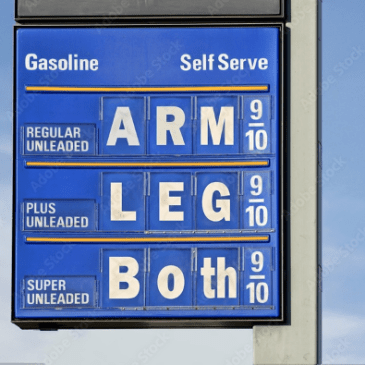
Chilling Winter for Both Oil and Gas Industry and American Households

Photo Credit:  https://stock.adobe.com/search?k=high+gas+prices&asset_id=79929471 (last visited: March 10, 2022).

Authored By: Taylor Sims

Member, American Journal of Trial Advocacy

            Steadily increasing gas prices, looming heating costs—all amidst United States inflation at a 31-year high appear may pose the most ominous winter storm of all this year.[1]  This month, OPEC and its oil-producing allies responded to President Biden’s call for greater energy production on the global front.[2]  Specifically, OPEC retorted that “if the United States believes the world’s economy needs more energy, then it has the capability to increase production itself.”[3]  Now, President Biden finds himself pulled by opposing forces: the necessity for the United States to produce a sufficient oil supply and environmental promises to limit U.S. production of hydrocarbons. Continue reading “Chilling Winter for Both Oil and Gas Industry and American Households”