Where’s My Money?: The Impact of New Overtime Rules

Photo Credit: https://www.insperity.com/blog/comp-time-overtime/

By: Alex Townsley
Editor in Chief, American Journal of Trial Advocacy

           Overtime is an idea that factors crucially into some American workers’ budgets while being completely ignored by almost all workers who do not qualify for it.  But, what is overtime, and, more importantly, who qualifies for it?  The answer to the second question will change again in 2020 when the new Department of Labor rules go into effect.[1]   

Continue reading “Where’s My Money?: The Impact of New Overtime Rules”

Executive Orders: What Is the Scope of Executive Authority?

Photo credit: https://www.sandiegouniontribune.com/news/nation-world/la-na-pol-executive-orders-2017-story.html

By: Justin Keeton
Member, American Journal of Trial Advocacy

What are Executive Orders?

            Under Article II of the United States Constitution, the President is vested with a wide but vague set of prerogatives that falls under the umbrella of executive power.[1] Continue reading “Executive Orders: What Is the Scope of Executive Authority?”

Every Vape You Take: Litigation Is Now as Prevalent as Electronic Cigarettes

Photo Credit: https://www.montgomeryadvertiser.com/story/news/2019/08/07/alabama-woman-sues-e-cigarette-company-juul-over-teen-vaping-targeting/1943606001/

By: Sara Rogan
Research and Writing Editor, American Journal of Trial Advocacy

In 2015, smokers exhaled a sigh of relief with the introduction of the JUUL Labs electronic cigarette, also regarded as “an alternative smoking product.”[1] Continue reading “Every Vape You Take: Litigation Is Now as Prevalent as Electronic Cigarettes”

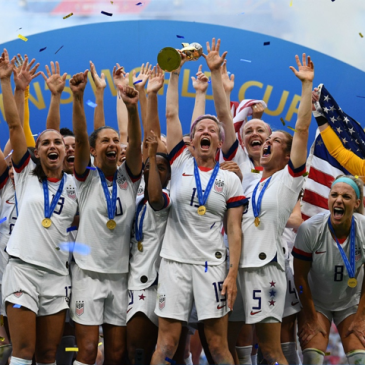
“We’ve Got Four Stars on Our Shirt”: U.S. Women’s National Team Highlighting Ongoing Pay Discrimination

Photo Credit: https://www.sportingnews.com/us/soccer/news/uswnt-vs-netherlands-live-scores-updates-and-highlights-from-usa-2019-world-cup-final/pny0t70idmdt1ibbghffgysm7.

By: Catherine Collins
Member, American Journal of Trial Advocacy

Introduction

            The United States Women’s National Soccer Team (“USWNT” or “women’s team”) has historically dominated in their realm of competition.  As a team employed and compensated by the U.S. Soccer Federation (“Federation”), the players are discontent with how they have been compensated for their achievements by the Federation. Continue reading ““We’ve Got Four Stars on Our Shirt”: U.S. Women’s National Team Highlighting Ongoing Pay Discrimination”

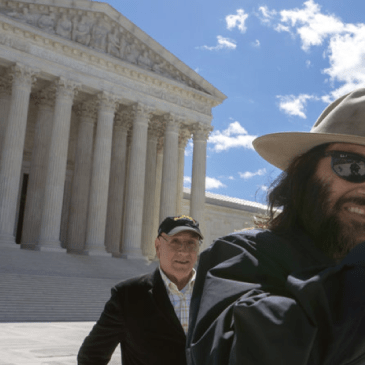
See No Evil, Hear No Evil, Speak No Evil, Register No Evil Trademarks?: How Iancu v. Brunetti Changed Federal Trademark Law

Photo Credit: J. Scott Applewhite, Supreme Court Sides with “Subversive” Clothing Designer in First Amendment Case, The Washington Post (June 24, 2019), https://www.washingtonpost.com/politics/courts_law/supreme-court-sides-with-apparel-maker-who-said-government-violated-first-amendment-by-denying-subversive-clothing-line-trademark/2019/06/24/717eb058-968a-11e9-916d-9c61607d8190_story.html?noredirect=on.

By: Kimberly Massey
Online Editor, American Journal of Trial Advocacy

Introduction

            Trademark registration is one of a few ways trademark owners can receive federal protection for their trademarks.[1]   Continue reading “See No Evil, Hear No Evil, Speak No Evil, Register No Evil Trademarks?: How Iancu v. Brunetti Changed Federal Trademark Law”

Data Security: Protect Client Information Before a Cybersecurity Breach Happens

Photo Credit: https://securecdn.pymnts.com/wpcontent/uploads/2017/11/cybersecurity.jpg.

By: Sara Jessica Farmer
Senior Associate Editor, American Journal of Trial Advocacy

Cybersecurity breaches are a rising concern among law firms globally.  Lawyers are protectors of sensitive information for their clients.  Hackers want access to this sensitive information to sell to the market.[1]  Continue reading “Data Security: Protect Client Information Before a Cybersecurity Breach Happens”

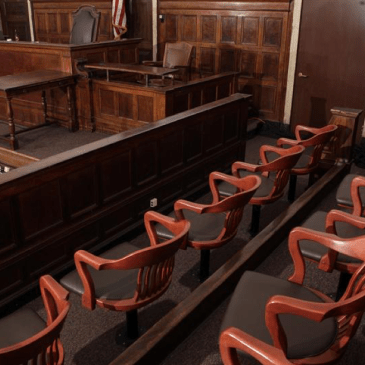
Measure Fails that Could Have Aligned Oregon with the Rest of the Country

Photo Credit: https://suekatz.typepad.com/.a/6a00d8341c7a9753ef01b7c803ecad970b-popup

By: Kaitlyn Chomin
Member, American Journal of Trial Advocacy

In January 2019, a change to the Louisiana Constitution went into effect after Louisiana residents voted to amend the Constitution to no longer allow nonunanimous juries.[1]  This action left Oregon as the only state that allows such verdicts.[2]  Continue reading “Measure Fails that Could Have Aligned Oregon with the Rest of the Country”

Patent Subject Matter Eligibility: Change is Coming

Photo Credit: https://www.ipwatchdog.com/2018/11/23/idea-patent-invention/id=103526/

By: Whitney Lott
Articles Editor, American Journal of Trial Advocacy

Introduction  

For an invention to be patentable, the patent’s claim must be within the subject matter that is patent eligible.  Congress laid out the eligible subject matter for patenting in 35 U.S.C. § 101: “Whoever invents or discovers any new and useful process, machine, manufacture, or composition of matter, or any new and useful improvement thereof, may obtain a patent therefor, subject to the conditions and requirements of this title.”[1] Continue reading “Patent Subject Matter Eligibility: Change is Coming”

SORNA: The Collateral Consequence of Being Charged with a Sex Crime

Photo Credit: https://www.bbc.com/news/av/world-us-canada-33511974/why-are-so-many-americans-behind-bars

By: Brittany Wilson
Member, American Journal of Trial Advocacy

In the United States, public outrage towards sex offenders—a reviled group of individuals commonly viewed as dangerous and capable of reoffending—is what led to the enactment of the sex offender registration and notification laws.[1] Continue reading “SORNA: The Collateral Consequence of Being Charged with a Sex Crime”

Looking Back on Alabama’s 2019 Legislative Session

Photo credit: Legislative Services Agency, http://lsa.state.al.us/

By: Sarah Tindle
Member, American Journal of Trial Advocacy

Many hot topics from medical marijuana to chemical castration were considered by the State of Alabama’s Legislature during the 2019 Legislative Session.  The Legislature met for twenty-eight of its thirty allowed days prior to adjourning sine die[1] on May 31, 2019, thereby ending the 2019 Regular Legislative Session.[2]  Continue reading “Looking Back on Alabama’s 2019 Legislative Session”