Escaping Skynet: How AI Has Impacted Legal Writing & How You Can Best Implement It

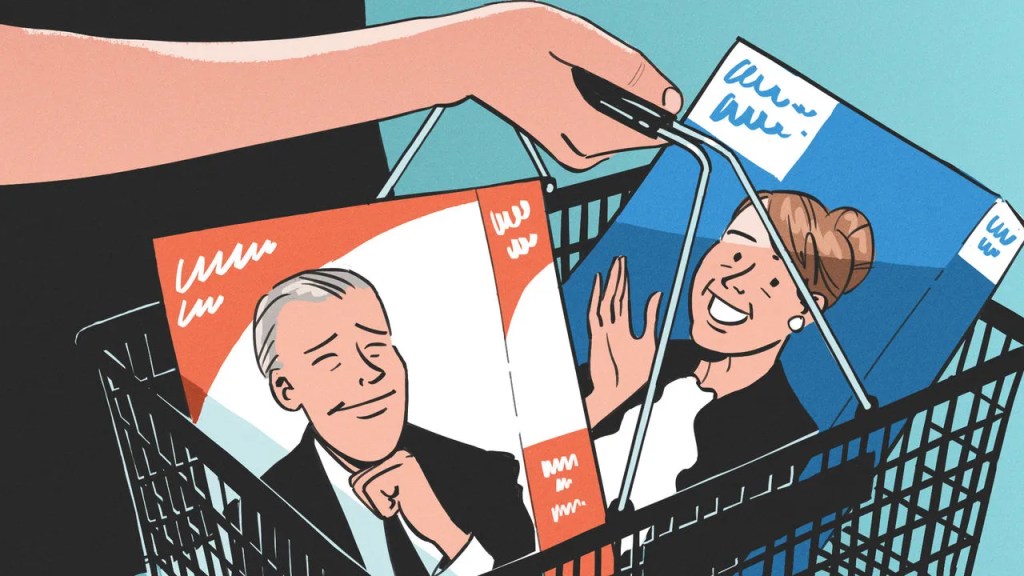
Photo Credit: u/Der_Ist, Terminator lawyer, Reddit (Dec. 6, 2023, 10:21 AM), https://www.reddit.com/r/Terminator/comments/18c7lqy/terminator_lawyer/.

Authored by Dorris (Trey) E. Jernigan III

A scene in the James Cameron 1991 classic, Terminator 2: Judgment Day, where the villain of the movie, an artificial intelligence named Skynet, drops a nuclear bomb over Los Angeles, eviscerating the entire city.[1] It is a fearful, awful (yet iconic) scene meant to show the dangers of AI if we allow it to go too far. Recently, as AI has advanced and become more prevalent in the legal community, that is how many attorneys have felt, fearing the possibility of AI taking over legal jobs. For over two centuries, litigators across America have been combing through cases in books and on the internet, looking to find that golden nugget, that crucial line from a case that could be the turning point in winning the case for their clients. These nuggets are notoriously tricky to find, with hours upon hours of research required to find some of the most on-point cases. As the years have passed, legal research has turned into an art form, with some of the most skilled researchers priding themselves on quick and accurate results. With the introduction of AI, these skills have been brought into the modern age, and many people have access to them through their computers. Whether we like it or not, the AI train is coming, and there is likely nothing that will derail it off the tracks. That is why attorneys and litigators alike must learn to embrace AI rather than fear it, as it brings many positives regarding legal research and writing, and its overall pros far outweigh the cons. Throughout the remainder of this article, I want to briefly mention the background of legal research technologies all the way through the implementation of AI in the legal community today. As the cliché goes, “you can’t know where you are going unless you know where you’ve been.”

The practice of legal research began back in 1765, with Blackstone’s publication of Commentaries on the Laws of England.[2] However, modern case law research did not begin for over one hundred years, when in 1876, John B. West published the Syllabi, which reported on all of the year’s Minnesota Supreme Court Rulings.[3] The publication quickly took off, with other states wanting a similar legal reporting system of their own. All of this commotion culminated in 1879 when West released two innovations that still have massive influence today: the National Reporter System and the Key Number System.[4] The National Reporter System introduced the first nationwide U.S. judicial decision reporting, which changed the game when compared to the often very slow state reporting system. The National Reporter System provided attorneys nationwide access to cases from all U.S. state and federal jurisdictions, allowing them to craft stronger arguments than ever before.[5] The Key Number System was the first indexing system introduced to the legal world. It organized cases by topics and subdivisions, allowing attorneys to access cases relevant to the issues they were facing quickly.[6] The Key Number System revolutionized the world of legal research and writing, so much so that it is still an instrument that lawyers today value highly.

Fast forward approximately one hundred years to the digital era, and the legal research landscape transitioned to resemble the system we use and see today. Throughout the 1960s, state bar associations began evaluating ways to streamline the legal research process by using newly introduced computers.[7] By the time the 70s rolled around, Lexis (now LexisNexis) launched their online platform and changed everything in the world of legal research and writing.[8] Gone were the days of flipping through pages of books and dusty legal tombs; now lawyers everywhere had unheard-of access to even the most recent judicial decisions, and the cherry on top, they were searchable by keywords![9] A few years later, West followed suit, creating Westlaw, and the legal research platform arms race was off and running.[10] Nearly fifty years later, these advancements are still the foundation many attorneys use in their practice daily.

That brief history of legal technologies leads us to today, the era of artificial intelligence (AI). AI has revolutionized legal writing and research by providing unprecedented access to vast amounts of information and enhancing the efficiency and accuracy of legal processes. Through natural language processing algorithms, AI platforms can swiftly sift through immense volumes of legal documents, statutes, and case law to extract relevant information. This capability expedites legal research, enabling lawyers to spend more time analyzing complex issues rather than conducting tedious searches. Moreover, AI-powered tools assist in drafting legal documents by generating structured, coherent, and tailored content based on input parameters. These tools not only save time but also reduce the likelihood of errors. However, while AI streamlines many aspects of legal writing and research, it also presents challenges, such as the need for lawyers to adapt to new technologies and the potential ethical implications of relying solely on algorithmic outputs in decision-making processes. Thus, while AI offers tremendous benefits to the legal profession, it requires careful integration and oversight to maximize its advantages while mitigating risks.

Do you want to know how easy it is to utilize AI in your writing? Well, I used ChatGPT to write the entire preceding paragraph (after the first sentence).[11] As you can see, AI such as ChatGPT, LexisAI, and Westlaw Precision with AI can create well-written content, and I actually agree with all of the positives the AI outlined in the paragraph above. However, many pitfalls come with using AI to write legal briefs and to conduct research, such as data privacy concerns and the danger of attorneys becoming overly reliant on AI, weakening their writing and argumentative skills. Still, the number one issue yet to be ironed out is that AI has been known to make up cases out of thin air.[12] Several attorneys have been quick to rely on the copy-and-pasting of AI-written briefs straight into their court briefs and memoranda, and this reliance has come back to bite them as it did not take long for courts to catch these fabricated cases.[13]

In Mata v. Avianca, the first case involving this issue to gain widespread attention, a young attorney (working under a supervising partner) copied and pasted a ChatGPT written memorandum into a court filing.[14] Quickly after, the opposing party filed a memorandum stating that Plaintiff had not cited any existing authority that supported their proposition and that seven of the purported “decisions” cited by Plaintiff’s counsel could not be located.[15] The court conducted its own search for these clandestine cases and could not locate them either.[16] Upon being confronted about these cases that nobody could find, the supervising partner was shocked to learn that they were not real, as he had not checked the cited case law the young attorney had copied and pasted.[17] When questioned, the young attorney stated that he was “operating under the false perception that [ChatGPT] could not possibly be fabricating cases on its own[]” and that “ChatGPT is finding that case somewhere . . . [m]aybe it’s unpublished . . . [or] appealed . . . [or] access is difficult to get . . . I just never thought it could be made up.”[18] Regardless of what he thought, the court sanctioned him and the supervising partner and fined them $5,000.[19]

Green attorneys are not the only ones susceptible to this sort of blunder, however. Even the most seasoned and famous lawyers (or a non-lawyer, in this case) can get caught in the trap of AI’s fake cases. In 2023, Michael Cohen, Donald Trump’s former lawyer, unknowingly presented his attorney with fake, AI-fabricated cases in an effort to help his attorney out with Cohen’s case, which the attorney later used in a motion filed with the court.[20] Once again, this was a failure by an attorney to double-check the cases supporting  his argument; Cohen asked that the judge give his attorney mercy for the mishap, calling it an “honest mistake” and “a product of inadvertence, not any intent to deceive.”[21] Ultimately, the judge declined to impose sanctions on Cohen and his attorney, calling the incident “embarrassing and unfortunate” while accepting Cohen’s explanation that he did not understand how the AI worked.[22]

While these attorneys may have been caught misusing AI to their detriment, those who have read this article will not make this same blunder. Here are several ways in which you can incorporate artificial intelligence into your research and writing to hopefully improve your writing and save you time, all the while keeping your briefs within the realms of reality.

1.      Check, Double Check, and Triple Check Those Cases.

This one should be easy. Don’t get caught using fake cases like the lawyers above did. Check those cases! It should be as simple as inputting the case it gives you into your search engine of choice. I have also run into the issue of AI giving me real cases, but they are not on the topic I asked for at all. Always be wary of the cases AI is feeding you, and make sure to check them for accuracy.

2.         Consider What Type of Argument AI Can Craft, but Never Copy and Paste That Argument.

Legal AI tools have reached the point where a person can say, “Write me a summary judgment on X issue with Y facts,” and it can craft a pretty decent argument in your favor. However, AI-written pieces are known to be overly wordy and very choppy.[23] That’s where you can come in, humanize the writing, and pick and choose the parts of the argument you want to use, if any. Even if you don’t end up using anything out of the brief the AI wrote, it may still inspire you on the way to structure an argument or may give you ideas on arguments you have not previously thought of. Just remember, you have an obligation to your clients and the courts to ensure that any argument you make is sound in law and logic and that you are not missing out on any arguments that could help your client’s case.[24]

3.      Make Sure to Comply with the ABA Rules of Professional Conduct.

Finally, using artificial intelligence in legal writing comes with a slew of different ethical concerns. The Model Rules of Professional Conduct require that every attorney provides “competent representation to a client,” including understanding “the benefits and risks associated with relevant technology.”[25] Whether you mean to or not, misusing AI can lead to disaster and sanctions for yourself or, at the very least, a tarnished reputation. There are also issues when it comes to client confidentiality, as some AI models run the risk of “reveal[ing] information related to the representation of a client” without the client’s “informed consent,” violating Model Rule 1.6.[26] Many experts have stated that “open source” AI technologies like ChatGPT could violate the duty of confidentiality by including specific case information that is then shared with an “AI trainer.”[27] Do not fret, however, as AI products such as CoCounsel and Harvey contain confidentiality controls to negate these disclosure risks.[28]

Now, this is not an exhaustive list, nor are these all the considerations an attorney should take before dipping their toe into the AI water; however, it is a good start. AI is the way of the future, and while right now, some may think of it as a cheat or an ethical violation, it may soon reach a point where not using it will be an ethical violation, as litigators, trial attorneys, and transactional attorneys alike who do not use AI are putting themselves, and therefore their clients, at a disadvantage. Until that time comes, however, do something the AI cannot do: use your brain. Check those citations. Let the AI be a guide and not a crutch. As John Connor says, “The future is not set. There’s no fate but what we make for ourselves.”[29]


[1] Terminator 2: Judgment Day (Carolco Pictures 1991).

[2] From Dusty Tomes to Artificial Intelligence: The History and Future of Legal Research, Blue J, https://www.bluej.com/blog/from-dusty-tomes-to-artificial-intelligence-the-history-and-future-of-legal-research (last visited Mar. 20, 2024).

[3] Id.

[4] Id.

[5] Id.

[6] Id.

[7] Id.

[8] Id.

[9] Id.

[10] Id.

[11] I used the prompt “Write me a paragraph discussing how AI has changed legal writing and research” and entered it into ChatGPT 3.5 on chat.openai.com.

[12] Benjamin Weiser, Here’s What Happens When Your Lawyer Uses ChatGPT, The New York Times (May 27, 2023), https://www.nytimes.com/2023/05/27/nyregion/avianca-airline-lawsuit-chatgpt.html.

[13] See generally, Mata v. Avianca, 22-cv-1461 (PKC), 2023 WL 4114965 (S.D.N.Y. June 22, 2023); Park v. Kim, 91 F.4th 610 (2nd Cir. 2024); J.G. v. New York City Dep’t of Educ., 23 Civ. 959 (PAE), 2024 WL 728626 (S.D.N.Y. Feb. 22, 2024).

[14] Mata, 2023 WL 4114965, at *2-3.

[15] Id. at *3.

[16] Id.

[17] Id. at *2.

[18] Id. at *3.

[19] See id. at *17 (stating that the $5,000 was “sufficient but not more than necessary to advance the goals of specific and general deterrence”).

[20] Larry Neumeister, Ex-Trump lawyer Michael Cohen says he unwittingly sent AI-generated fake legal cases to his attorney, The Assoc. Press (Dec. 29, 2023, 2:10 PM), https://apnews.com/article/michael-cohen-donald-trump-artificial-intelligence-777ace9cc34aa0e56398fd47a1d6b420.

[21] Id.

[22] Benjamin Weiser, Judge Won’t Punish Michael Cohen for Relying on Artificial Intelligence, The New York Times (March 20, 2024), https://www.nytimes.com/2024/03/20/nyregion/michael-cohen-artificial-intelligence.html.

[23] Ivy B. Grey & Danielle Cosimo, Why AI-Generated Text Sounds Wordy and Choppy, Wordrake, https://www.wordrake.com/blog/wordy-choppy-generative-ai (last visited March 25, 2024).

[24] Kate Rattray, Should Lawyers Use AI for Briefs?, Clio, https://www.clio.com/blog/ai-brief/ (last updated Mar. 8, 2024).

[25] Model Rules of Pro. Conduct r 1.1 cmt. 8 (Am. Bar Ass’n 2012).

[26] William A. Ryan et al., Practical Lessons from the Attorney AI Missteps in Mata v. Avianca, Ass’n of Corp. Couns. (Aug. 8, 2023), https://www.acc.com/resource-library/practical-lessons-attorney-ai-missteps-mata-v-avianca#; Model Rules of Pro. Conduct r 1.6(a) (Am. Bar Ass’n 2012) (“A lawyer shall not reveal information relating to the representation of a client unless the client gives informed consent…”).

[27] Ryan, supra note 26.

[28] Id.

[29] Terminator 2: Judgment Day (Carolco Pictures 1991).

The Legal “Complications” of Copyrighting Choreography: A Broadened Perspective of Creative Rights in Choreographic Works Discussed in Hanagami v. Epic Games, Inc.

A comparison of Kyle Hanagami’s copyrighted choreography, left, with the game Fortnite’s ‘It’s Complicated’ Emote, right (photograph), in Hillel Aron, Ninth Circuit revives choreographer’s lawsuit against Epic Games over Fortnite ‘emote’, Courthouse News Serv. (Nov. 1, 2023), https://www.courthousenews.com/ninth-circuit-revives-choreographers-lawsuit-against-epic-games-over-fortnite-emote/.

Authored by Sophia G. Brough

Choreography is a protectable form of intellectual property; however, proving copyright infringement of choreographic works is becoming more difficult due to the increasingly shortened “performances” in mediums such as social media and online video game platforms.[1] Under the Copyright Act, “pantomimes and choreographic works” that are created after January 1, 1978 and fixed in a tangible medium of expression are protected by federal copyright.[2] Because the recognition of dance in general as a copyrightable work is fairly new, however, choreography copyright is a “largely undefined area of law.” [3] In recent years, Epic Games Inc. (“Epic”) has been subject to a slew of lawsuits accusing the company of stealing creators’ dance moves to make emotes—the game’s term for virtual avatar animations—for players to purchase and use in their popular online game Fortnite.[4] Earlier parties were forced to drop their suits because the U.S. Copyright Office denied registration due to lack of sufficient creative expression, or the judge dismissed most of their claims.[5] However, professional choreographer Kyle Hanagami was able to register a copyright for his choreographic work prior to initiating his suit.[6] Thus, the Ninth Circuit took the opportunity to address the extent of federal copyright protection for choreographic works in Hanagami v. Epic Games, Inc.[7]

The facts of the case resemble those of similar copyright lawsuits filed against Epic.[8] In 2017, Hanagami published a five-minute dance routine video on YouTube, which contained “about 480 counts of choreography, consisting of ninety-six counts repeated by five different groups of dancers.”[9] Around four years later, Epic launched a new emote—ironically named “It’s Complicated”—with their latest season of Fortnite.[10] Hanagami sued for direct and contributory copyright infringement; he claimed that the sixteen-count emote was comprised of the “most recognizable portion” of the choreography that he created and posted in the video, and therefore it infringed his Registered Choreography.[11] Epic moved to dismiss Hanagami’s suit on the grounds of failure to state a copyright claim, arguing that the dance movements allegedly copied by their emote were unprotectable and that the works were not substantially similar.[12] The district court granted Epic’s motion, finding that choreography “is composed of ‘a number of individual poses’ that are not protectable ‘when viewed in isolation.’”[13] While Hanagami maintained that Epic copied the most identifiable portion of his choreography, the district court found that those dance movements, which it referred to as “the Steps,”[14] were unprotectable because they were merely a “small component” of Hanagami’s choreography, and that he was only entitled to copyright protection in the five-minute work as a whole and not individual parts.[15] The district court further reasoned that there were no similar creative elements between Hanagami’s work and Epic’s emote aside from the “unprotected poses,” and concluded that there was no substantial similarity between the two as a matter of law.[16] Hanagami then appealed to the Ninth Circuit, which disagreed with the lower court’s application of the substantial similarity test, holding that Hanagami plausibly alleged the substantial similarity between his choreography and the emote.[17]

The Ninth Circuit began its opinion by reflecting on the history of copyright protection for choreographic works—specifically on how the 1909 Act afforded minute protection to choreographic works. [18] While the 1976 Act codifying “choreographic works” as an individual work of authorship significantly broadened its protection, the court noted that neither the Act nor Congress defined the meaning of the term choreography, and federal courts rarely addressed the matter.[19] Therefore, the court adopted the Compendium of U.S. Copyright Office Practices’ definitions of “choreography” and “dance,” noting that while the Compendium is not binding authority, it defers to the Copyright Office “when its interpretation of a term has the ‘power to persuade.’”[20] The Compendium defines choreography as “the composition and arrangement of a related series of dance movements and patterns organized into a coherent whole.”[21] However, the court also recognized that individual elements of a dance are not copyrightable.[22] Within this context, the court addressed the main issue on appeal: whether the district court correctly applied the “extrinsic test” for assessing substantial similarity.[23]

Unlike many plaintiffs before him, Hanagami owned a valid copyright.[24] As a result, he only had to prove that Epic copied protected elements of his work by plausibly alleging “both (1) copying and (2) unlawful appropriation.”[25] The court clarified that while copying requires the plaintiff to show that the defendant had access to the plaintiff’s work and that the “two works share similarities probative of copying,” unlawful appropriation requires the plaintiff to demonstrate that the works are substantially similar.[26] Since it was undisputed that Hanagami plausibly alleged the “copying” prong, the Ninth Circuit applied its two-part “extrinsic test” to determine unlawful appropriation, which assesses the two work’s objective similarities while solely focusing on “the protectable elements of the plaintiff’s expression.”[27] The court had several qualms with the district court’s application of the test in this case.

First, the court was persuaded by Hanagami’s argument that reducing choreography to a collection of individual “poses” is contrary to how courts analyze other copyrightable works, such as music and photography.[28] Since it is often difficult to break down the protected and unprotected elements of nonverbal works like choreography, the Ninth Circuit uses a “selection and arrangement” approach when evaluating substantial similarity, which protects the “particular way in which the artistic elements form a coherent pattern, synthesis, or design.”[29] Therefore, although individual dance movements are generally unprotected, the original “selection, coordination, and arrangement” of the movements may be protectable.[30] While the court cautions that these types of elements may not be present in every choreographic work, it found that choreography may contain several types of expressive elements beyond poses.[31] Therefore, Hanagami met his burden by plausibly alleging that his creative decisions to select and arrange the choreographic elements were substantially similar to Epic’s in the creation of their emote.[32]

Second, the court rejected the district court’s classification of the “Steps” allegedly copied by Epic’s emote as a “short” and “small component” of Hanagami’s five-minute choreography, thereby rendering it unprotectable.[33] The Ninth Circuit hearkened back to their music copyright analogy and reasoned that although a single music note is unprotected, a “limited arrangement of notes” can be protected.[34] The panel stressed that the “proper inquiry does not turn on the mere length of the copied material” but rather on the significance of the copied portion.[35] The four counts allegedly copied in Epic’s emote were repeated eight times throughout Hanagami’s choreography, and notably during the “chorus and titular lyrics” of the song attendant to the performance.[36] Therefore, Hanagami plausibly alleged that the four-count portion was substantially significant to his choreography as a whole, and therefore, the copying of it would not be considered de minimis.[37]

Furthermore, the Ninth Circuit also rejected the district court’s categorization of the four-count segment as a “simple routine,” asserting that shortness does not automatically translate to simplicity.[38] The Copyright Office does not register copyright for simple routines;[39] however, the court held that Hanagami met his burden by plausibly alleging that the four-count segment was a “complex, fast-paced series of patterns and movements” and observed that the segment alone could satisfy many of the Compendium’s requisite elements for a choreographic work.[40] However, the court emphasized that the question of whether the four-count portion itself could be registered with the Copyright Office is immaterial; the relevant question is “whether Epic unlawfully appropriated that portion from Hanagami’s Registered Choreography,” and the court found that Hanagami plausibly alleged that it did.[41]

The Ninth Circuit’s decision emphasizes the fact that copyright litigation involving choreography and similar works remains a fact-based and “context-driven” area of law.[42] While it would have been interesting to see how the district court responded to the Ninth Circuit’s analysis on remand, Epic and Hanagami agreed to dismiss the lawsuit with prejudice for reasons currently undisclosed to the public.[43] Therefore, since this analysis took place during the pleadings stage, it is unclear whether Hanagami would have met his burden at trial.[44] Hanagami’s lead attorney, David Hect, stated that the Ninth Circuit’s holding “is extremely impactful for the rights of choreographers and other creatives in the age of short-form digital media.”[45] Intellectual property experts have dubbed this decision a “very good development for choreographers,” and also as the courts’ “growing pains” in their quest to determine what is or isn’t protectable in choreographic works.[46] This decision provides useful guidance on the extent of protection available to choreographic works, specifically for cases in which only a part of the registered work is allegedly infringed—a highly relevant topic in light of TikTok and other mediums that rapid-fire creative content to consumers.[47] Thus, Mr. Hect’s statement rings true for the future of creator advocacy in this complex and rapidly expanding digital era.


[1]See generally Stephen Wolfson, Is that TikTok dance meme copyrighted? It’s complicated. . . ., Penn Librs. (Nov. 29, 2023), https://www.library.upenn.edu/news/dance-and-copyright.

[2]17 U.S.C. § 102(a)(4); see also U.S. Copyright Office, Compendium of U.S. Copyright Office Practices § 805 (3d ed. 2021).

[3]Hanagami v. Epic Games, Inc., 85 F.4th 931, 935 (9th Cir. 2023).

[4]See Complaint, Alfonso Ribeiro v. Epic Games, Inc., No. 2:18-cv-10412 (C.D. Cal. filed Dec. 17, 2018) (alleging copyright infringement over unauthorized use of plaintiff’s popular signature dance from Fresh Prince of Bel-Air in the form of a Fortnite emote); Complaint, Anita Redd v. Epic Games, Inc., No. 2:18-cv-10444 (C.D. Cal. filed Dec 17, 2018) (alleging copyright infringement over unauthorized misappropriation of plaintiff’s popular signature dance, the “Floss” in a Fortnite emote); Complaint, Terrence Ferguson v. Epic Games Inc., No. 2:18-cv-10110 (C.D. Cal. filed Dec. 05, 2018) (alleging copyright infringement for unauthorized misappropriation of plaintiff’s creative expression, the “Milly Rock,” in a Fortnite emote); Amended Complaint, Baker v. Epic Games, Inc., No. 2:19-cv-00505 (C.D. Cal. filed Feb. 21, 2019) (alleging that Epic Games exploited plaintiff’s signature movement called the “Shoot” in a Fortnite emote).

[5]Kyle Jahner, Revived Fortnight Dance Suit Explores Rare Use of Copyright Law, Bloomberg L. (Nov. 13, 2023, 4:01 AM CST).

[6]Hanagami, 85 F.4th at 937.

[7]Id. at 935.

[8]Id. at 936-37.

[9]Id. at 936; see Kyle Hanagami, CHARLIE PUTH – How Long | Kyle Hanagami Choreography, YouTube (Nov. 11, 2017), https://www.youtube.com/watch?v=iW2yUrXXRTI.

[10]Hanagami, 85 F.4th at 937; see Insane broz, It’s Complicated Emote | Fortnite Battle Royale, YouTube (Apr. 1, 2021), https://www.youtube.com/watch?v=ye8BYIzPxgQ.

[11]Hanagami, 85 F.4th at 937 (stating that the only claims mentioned in the opinion were the claims relevant to the appeal, and therefore did not address the unfair competition claim).

[12]Id.

[13]Id.

[14]Hanagami v. Epic Games Inc.,No. 2:22-cv-02063-SVW-MRW, 2022 WL 4007874, at *1 (C.D. Cal. Aug. 24, 2022), rev’d and remanded, 85 F.4th 931 (9th Cir. 2023).

[15]Hanagami, 85 F.4th at 937-38 (“[T]he [district] court reasoned that there exists a “continuum between copyrightable choreography and uncopyrightable dance.”).

[16]Id. at 938.

[17]Id. at 936.

[18] Hanagami, 85 F.4th at 938 (“Over the years, there were numerous proposals to amend the 1909 Act to provide broader protections for choreography, but none were successful. . . . when [Congress] enacted the 1976 Act, it codified ‘choreographic works’ as one of the ‘original works of authorship’ subject to copyright protection.”).

[19]Id. at 939 (citing Bikram’s Yoga Coll. of India, L.P v. Evolation Yoga, LLC, 803 F.3d 1032, 1043 (9th Cir. 2015) (“[E]xplicit federal copyright protection for choreography is a fairly recent development, and the scope of that protection is an uncharted area of the law.”)).

[20]Hanagami, 85 F.4th at 940 & n.10.

[21]Compendium (Third) § 805.1 (citations omitted).  

[22]Hanagami, 85 F.4th at 940.

[23]Id. at 940-941.

[24]Id. at 941.

[25]Id. at 941 (citing Rentmeester v. Nike, Inc., 883 F.3d 1111, 1117 (9th Cir. 2018)).

[26]Hanagami, 85 F.4th at 941.

[27]Id.

[28]Id. at 944 (“To analogize from music to dance, reducing choreography to poses’ would be akin to reducing music to just ‘notes.’”). Compare Metcalf v. Bocho, 294 F.3d 1069, 1074 (9th Cir. 2002) (explaining that while individual music notes are not protected, their arrangement may be) with Rentmeester, 883 F.3d at 1120 (explaining that individual elements of a photograph are not protected, but their combined selection and arrangement may be).

[29]Hanagami, 85 F.4th at 942 (quoting Skidmore v. Zeppelin, 952 F.3d 1051, 1074 (9th Cir. 2020)).

[30]Id. at 943 (clarifying that while there is no bright-line rule for when the similarity in selection and arrangement is considered “substantial,” the court generally requires it to be similar enough that an ordinary observer would overlook the disparities unless he set out to detect them).

[31]Id.

[32]Id. at 945.

[33]Id.

[34]Id. (quoting Swirsky v. Carey, 376 F.3d 841, 851 (9th Cir. 2004).

[35]Id. at 946 (stating that a defendant cannot escape liability merely because the copied material is short).

[36]Id.

[37]Id. (“[C]opying that is de minimis is not actionable.”).

[38]Id. 

[39]Compendium (Third) § 805.5(B) (“The legislative history specifically states that ‘choreographic works do not include social dance steps and simple routines.’”).

[40]Hanagami, 85 F.4th at 947. See Compendium (Third) § 805.2(A)-(F).

[41]Hanagami, 85 F.4th at 936, 947-48 (declining to address the thin versus broad copyright protection issue).

[42]Id. at 943 (citing Rentmeester, 883 F.3d at 1121).  

[43]See Blake Brittain, Epic Games resolves ‘Fortnite’ dance moves copyright lawsuit, Reuters (Feb. 13, 2024, 12:27 PM CST), https://www.reuters.com/legal/litigation/epic-games-resolves-fortnite-dance-moves-copyright-lawsuit-2024-02-13/.

[44]Id. at 947 (“[I]t is not up to us at this stage of the litigation to determine the complexity of the Steps. Further discovery and expert testimony may shed more light on this question.”).

[45]Wes Davis, The copyright fight over Fortnite dance moves is back on, The Verge (Nov. 4, 2023, 3:31 PM CDT), https://www.theverge.com/2023/11/4/23946260/epic-fortnite-choreography-emote-lawsuit-ruling-overturned.

[46]Jahner, supra note 5.

[47]See Lindsay Korotkin and Helenka Mietka, Hey! That’s My Move! Ninth Circuit Remands Choreography Copyright Fortnite Case, ArentFox Schiff (Dec. 27, 2023), https://www.jdsupra.com/legalnews/hey-that-s-my-move-ninth-circuit-7545655/; Wolfson, supra note 1.  

Stock Ownership Disclosure Database for Judges: A Possible New Tool for Attorneys

Photo Credit: Photograph of the New York Stock Exchange, in Gabriella Hammond, How to Experience the New York Stock Exchange, The Wall Street Experience (Sept. 4, 2023), https://www.thewallstreetexperience.com/blog/experience-the-nyse/ (“The New York Stock Exchange – also known as the “Big Board” – is one of the oldest and largest stock exchanges on the planet. Located on Wall Street in Lower Manhattan, the NYSE stands as both a symbol of capitalism and as the financial center of the U.S.”).

Authored by Cameron C. McCormack

In May 2022, President Joe Biden signed The Courthouse Ethics and Transparency Act (“the Act”).[1] The Act now requires online publication of financial disclosure reports of judicial officers (including Supreme Court Justices), bankruptcy judges, and magistrate judges.[2] The Ethics in Government Act of 1978 (“EIGA”) originally established financial disclosure reports for many high-level government officials and employees, including the Chief Justice of the United States and the Associate Justices of the Supreme Court.[3] But recent news articles highlighting undisclosed trips by an Associate Justice sparked public outrage regarding the transparency of the judicial system in the United States.[4] This increased scrutiny around the transparency of the judicial system in our county prompted lawmakers to revisit court ethics and the interpretation of the EIGA’s established reporting requirements.[5]

Initially, the EIGA required senior government employees to ensure financial interests were public, including sources of income, liabilities, gifts, and transactions.[6] Although disclosing their financial interests were required, the information could only be accessed through thumb drives or paper copies.[7] However, the recent media attention regarding an Associate Justice’s undisclosed trips brought the EIGA to the forefront of the media, sparking lawmakers to change the EIGA. The Act now requires the Administrative Office of the United States Courts (“AO”) to establish a “searchable internet database to enable public access to any report required to be filed” under the EIGA.[8] Additionally, the Act now requires federal judges to report any purchase, sale, or exchange of securities that exceeds $1,000 within 45 days of the transaction.[9]

Considering a recent article published by the Wall Street Journal, it seems that having knowledge of the financial interest judges may have in real-time could be crucial information for an attorney preparing to go before that judge.[10] The Wall Street Journal examined the financial disclosure forms submitted each year from 2010 to 2018 by approximately 700 federal judges who disclosed ownership of shares in major corporations.[11] Subsequently, this information was cross-referenced with court records from civil cases.[12] According to The Wall Street Journal’s investigation, 129 federal district judges and two federal appellate judges were involved in at least one case where a stock owned by them or their family was either the plaintiff or defendant.[13] The judges provided several justifications for their actions.[14] In certain instances, they attributed errors to misspelled names or mistakes made by clerks.[15] In other cases, the judges claimed they believed it unnecessary to disqualify themselves when their role in the case was minimal, when the stock belonged to a family member, or when the stock was traded through an account managed on their behalf, rather than by the judges personally.[16] All of these justifications were wrong as a matter of law.[17] Federal judges are supposed to “disqualify” themselves in any proceeding in which their “impartiality might reasonably be questioned.”[18] The law also requires recusal when the judge knows he or she “has a financial interest in the subject matter in controversy or in a party to the proceeding, or any other interest that could be substantially affected by the outcome of the proceeding.”[19]

Recent issues have delayed what inevitably will be a valuable resource for any attorney. The Act requires annual disclosures to be published within 90 days of submission by judges, while interim reports must be filed within 45 days of the transaction.[20] However, the AO has faced challenges with posting the annual disclosure reports.[21] More specifically, while judges submit the required disclosure information, the AO has struggled to post the yearly reports from nearly 2,500 judges.[22] The possible delay in posting the required reports could be due to the looming government shutdowns.[23] While Congress passed a short-term bill to extend last year’s funding levels until mid-November, the AO requests $297,000 for the fiscal year 2024 to support hiring ten people to process the financial disclosures.[24] Another possible delay in the disclosures could be due to specific provisions in the Act that allow for a delay in information if the AO finds “revealing personal and sensitive formation could endanger that individual or a family member of that individual.”[25]

A reasonable attorney will conduct thorough research regarding their client, the issue at hand, the applicable law, the venue, and the judge presiding over the case. Before the Act was signed into law in 2022, financial disclosures by judges were challenging to access because they were stored on paper or thumb drives. However, an attorney will now have all this information readily available on a database to ensure complete financial transparency from the federal judge in the case.[26] When fully implemented, the online database provided by the Act should be a valuable resource for any attorney.


[1] 5 U.S.C. § 1305.

[2] Id.

[3] Delaney Marsco, At 40 Years Old, The Ethics in Government Act is in Need of a Tune-up, Campaign Legal Center, https://campaignlegal.org/update/40-years-old-ethics-government-act-need-tune (Oct. 26, 2018) (“Born out of the post-Watergate scandal reforms, EIGA is one of the most important laws on our books ensuring transparency at our highest levels of government and accountability from our nation’s most senior decisionmakers.”).

[4] Brett Murphy & Alex Mierjeski, Clarence Thomas’ 38 Vacations: The Other Billionaires Who Have Treated the Supreme Court Justice to Luxury Travel, ProPublica (Aug. 10, 2023, 5:45 AM), https://www.propublica.org/article/clarence-thomas-other-billionaires-sokol-huizenga-novelly-supreme-court) (“At least 38 destination vacations, including a previously unreported voyage on a yacht around the Bahamas; 26 private jet flights, plus an additional eight by helicopter; a dozen VIP passes to professional and college sporting events, typically perched in the skybox; two stays at luxury resorts in Florida and Jamaica; and one standing invitation to an uber-exclusive golf club overlooking the Atlantic coast.”).

[5] See Courthouse Ethics and Transparency Act, Pub. L. No. 117–125, 136 Stat. 1205 (2022); see also 68 Cong. Rec. H4522 (daily ed. Apr. 27, 2022) (statement of Rep. Hakeem Jeffries) (“Failure to recuse can cause real harm to parties seeking fair and impartial justice and leave a cloud of doubt over any decision that is made once the conflicts are subsequently uncovered.”).

[6]  See Ethics in Government Act of 1978, Pub. L. No. 95–521, 92 Stat. 1824 (1978) (codified as amended at 5 U.S.C. app. §§ 101-11).

[7] New Database Eases Release of Judges’ Finance Reports, United States Courts (Nov. 7, 2022), https://www.uscourts.gov/news/2022/11/07/new-database-eases-release-judges-finance-reports (“Federal judges have filed annual financial disclosure reports for decades. Previously, there was no central database, and FDRs were available only in paper documents or on thumb drives.”).

[8] 5 U.S.C. § 13107.

[9] Id.

[10]  See James V. Grimaldi et al., 131 Federal Judges Broke the Law by Hearing Cases Where They Had a Financial Interest, The Wall St. J. (Sept. 28, 2021, 9:07 AM), https://www.wsj.com/articles/131-federal-judges-broke-the-law-by-hearing-cases-where-they-had-a-financial-interest-11632834421.

[11] See id.

[12] See id.

[13] See id.

[14] See id.

[15] See id.

[16] See id.

[17] See generally 28 U.S.C. § 455.

[18] Id. § 455(a).

[19] Id. § 455(b)(4) (“[Any justice, judge, or magistrate judge of the United States] knows that he, individually or as a fiduciary, or his spouse or minor child residing in his household, has a financial interest in the subject matter in controversy or in a party to the proceeding, or any other interest that could be substantially affected by the outcome of the proceeding.”).

[20] Id. § 1305.

[21] Suzanne Monyak, New Disclosure Site Slow to Post Judicial Stock Trading Reports, Bloomberg Law (Oct. 11. 2023, 3:45 AM), https://news.bloomberglaw.com/us-law-week/new-disclosure-site-slow-to-post-judicial-stock-trading-reports

[22] See id.

[23] See id.

[24] See id.

[25] 5 U.S.C. § 13107(3)(A).

[26] See 5 U.S.C. §§ 13105, 13107.

The Racketeer Influenced and Corrupt Organizations Act of 1970: Should Lawmakers Abolish RICO?

Photo Credit: Associated Press, Photograph of John Gotti Senior, in Charlie Parker, Son of One of America’s Most Feared Mob Bosses John Gotti Reveals What His Childhood Was like in a Mafia Family, The Sun, (Apr. 16, 2019), https://www.thesun.co.uk/sun-men/8869276/son-mob-boss-john-gotti-childhood-mafia-family/.

Authored By: W. Chase Harvey

The Racketeer Influenced and Corrupt Organizations Act (“RICO”) is a federal law that was enacted in 1970 to combat organized crime.[1] The law provides extended criminal penalties and civil liabilities for activities which are considered part of an ongoing criminal enterprise.[2] The RICO Act is often implemented to prosecute individuals and groups who are involved in organized crimes.[3] To convict a criminal defendant under federal RICO charges, the government must prove beyond a reasonable doubt:

(1) that an enterprise existed; (2) that the enterprise affected interstate commerce; (3) that the defendant was associated with or employed by the enterprise; (4) that the defendant engaged in a pattern of racketeering activity; and (5) that the defendant conducted or participated in the conduct of the enterprise through that pattern of racketeering activity through the commission of at least two acts of racketeering activity as set forth in the indictment.[4]

Since the rise and fall of the last notorious mob boss, John Gotti (also referred to as “Teflon Don”), federal prosecutors have used the RICO statute to induce fear of lengthy incarceration upon defendants in hopes of getting plea bargains.[5] This saves the federal government time and money, and ultimately ensures a conviction.[6] Because RICO allows for more lenient standards when offering evidence, defendants and their attorneys are often forced to take the negotiated plea deal instead of risking twenty (or more) years in federal prison.[7] These statistics are supported by the Pew Research Center, which found that nearly 98% of federal criminal cases ended before going to trial.[8]

Supporters of RICO argue the law is necessary to combat organized crime and has been a successful tool in bringing down criminal enterprises.[9] They point to high-profile cases where RICO was used to prosecute individuals involved in organized crimes – especially highlighting cases involving the mafia and drug cartels.[10] While such cases are certainly relevant, the mob no longer exists as it once did and now has minimal influence compared to the 1980’s and prior.[11]

Abolitionists of RICO point out several concerns.[12] First, they argue that the law is overly broad and can be applied to individuals who are not involved in organized crime.[13] Critics say that the law’s definition of “racketeering activity” is too vague and can be interpreted in ways the original drafters of the law did not intend.[14] Critics are undoubtedly right when arguing that RICO covers too many crimes.[15] For instance, RICO sets forth penalties for “any act or threat involving murder, kidnapping, gambling, arson, robbery, bribery, extortion, dealing in obscene matter, or dealing in a controlled substance.”[16]The Act also addresses the consequences of running an illegal gambling book.[17] Essentially, every crime under the sun may constitute a RICO violation if the prosecution can sufficiently show a pattern of racketeering activity.[18]

Interestingly, Congress numerically identified that two or more instances of racketeering will constitute a “pattern.”[19] However, any ordinary person outside the legal field will tell you that a pattern is not reduced to simply two instances. For example, Black’s Law Dictionary defines a “pattern” as “[a] mode of behavior or series of acts that are recognizably consistent.”[20] Furthermore, proponents of RICO tend to focus on the high-profile convictions rather than Congress’s initial intent when enacting the Act.[21] When it boils down, Congress passed RICO with intentions to eliminate the mob.[22] But, prosecutors today use RICO to extend criminal sentences for defendants who are clearly not mob bosses.[23]

Opponents of RICO further argue that the law violates due process by allowing prosecutors to bring charges against an individual for crimes that they did not commit directly, but for crimes that were committed by others within the individual’s organization.[24] The opponents argue that this violates the principle of individual culpability and may lead to guilt by association.[25] Finally, some critics argue that RICO has been used to target businesses and individuals who are not involved in organized crime.[26] Such critics argue that the law’s wide-ranging powers have been abused by prosecutors and law enforcement agencies, leading to unjust prosecutions and overly harsh sentences.[27]

Accordingly, the debate over whether RICO should be abolished is complex and multifaceted. While some argue that the law is overly broad and can be abused, others argue it is necessary to combat organized crime.[28] Ultimately, the decision on whether to abolish RICO will depend on how individuals view the role of the law in fighting against crimes and protecting individual rights.


[1] See 18 U.S.C. §§ 1961–68.

[2] U.S. Sent’g Comm’n, Primer: RICO Guideline (Racketeer Influenced and Corrupt Organizations), (2020), https://www.ussc.gov/sites/default/files/pdf/training/primers/2020_Primer_RICO.pdf.

[3] Stacy M. Brown, Experts Say Lawmakers Should Abolish RICO Law, The Seattle Medium (Oct. 21, 2021), https://seattlemedium.com/experts-say-lawmakers-should-abolish-rico-law/.

[4] U.S. Dep’t of Just. Archives, Just. Manual, Crim. Res. Manual § 109 (2020).      

[5] Brown, supra note 3.

[6] Carrie Johnson, The Vast Majority of Criminal Cases End in Plea Bargains, A New Report Finds, NPR (Feb. 22, 2023), https://www.npr.org/2023/02/22/1158356619/plea-bargains-criminal-cases-justice.

[7] Brown, supra note 3(explaining that RICO charges may be added to a conviction involving the same crime that extends a defendant’s sentence by 20 years, or perhaps life).

[8] John Gramlich, Only 2% of Federal Criminal Defendants Went to Trial in 2018, and Most Who Did Were Found Guilty, Pew Research Center (June 11, 2019), https://www.pewresearch.org/fact-tank/2019/06/11/only-2-of-federal-criminal-defendants-go-to-trial-and-most-who-do-are-found-guilty/.

[9] See Scot J. Paltrow, Debate Rages Over the Long Arm of RICO, The Los Angeles Times (Aug. 13, 1989), https://www.latimes.com/archives/la-xpm-1989-08-13-fi-800-story.html.

[10] See id.

[11] Selwyn Raab, A Battered and Ailing Mafia Is Losing Its Grip on America, The New York Times (Oct. 22, 1990), https://www.nytimes.com/1990/10/22/us/a-battered-and-ailing-mafia-is-losing-its-grip-on-america.html.

[12] See Brown, supra note 3; Paltrow, supra note 9.

[13] Brown, supra note 3.

[14] Paltrow, supra note 9.

[15] See id.; 18 U.S.C. § 1961 (defining the term known as “racketeering activity”).

[16] 18 U.S.C. § 1961.

[17] See U.S. Atty’s Office, FBI Archives, Phila. Div. (Aug. 8, 2012), https://archives.fbi.gov/archives/philadelphia/press-releases/2012/members-of-alleged-sports-betting-ring-charged-with-racketeering.

[18] See 18 U.S.C. § 1961(5) (defining the phrase “pattern of racketeering activity”).

[19] See id.

[20] Pattern, Black’s Law Dictionary (11th ed. 2019).

[21] See Brown, supra note 3; Paltrow, supra note 9.

[22] See Paltrow, supra note 9.

[23] Brown, supra note 3; Eric Levenson & Bill Kirkos, R. Kelly, Already Serving 30 Years for Sex Trafficking, Sentenced to 20 Years in Federal Child Porn Case, CNN (Feb. 23, 2023), https://www.cnn.com/2023/02/23/entertainment/rkelly-chicago-child-porn-sentence/index.html#:~:text=Kelly%2C%2056%2C%20is%20already%20serving,a%20New%20York%20federal%20court; see Aryan Circle Gang Leader Sentenced to Life in Prison for RICO Violations Following HSI Houston-Assisted Investigation, U.S. Immigration and Customs Enforcement (Sept. 9, 2022), https://www.ice.gov/news/releases/aryan-circle-gang-leader-sentenced-life-prison-rico-violations-following-hsi-houston (noting that the RICO Act has recently been used to disband the Aryan Brotherhood).

[24] George Clemon Freeman, Jr. & Kyle E. McSlarrow, RICO and the Due Process “Void for Vagueness” Test, 45 The Business Lawyer, 1003, 1003 (1990), https://www.jstor.org/stable/40687107; see William L. Anderson & Candice E. Jackson, Law as a Weapon, How RICO Subverts Liberty and the True Purpose of Law, 91 The Independent Review 85, 88 (2004), https://www.independent.org/publications/tir/article.asp?id=215.   

[25] See Brown, supra note 3; Anderson & Jackson, supra note 24.

[26] Rob Frehse and Faith Karimi, Some Defendants in College Admission Scam Want Racketeering Charges Dismissed, CNN (Oct. 16, 2019), https://www.cnn.com/2019/10/16/us/college-admission-scandal-racketeering-charges/index.html.

[27] See id.; Anderson & Jackson, supra note 24.

[28] See Brown, supra note 3; Paltrow, supra note 9; Anderson & Jackson, supra note 24.

“Opportunity” for Change: An Overview of Allen v. Milligan and Alabama’s Chance to Begin a Rewrite of Historical Precedent

Photo Credit: Mike Cason, Which counties moved on Alabama’s new congressional district map?, Alabama Media Group (July 22, 2023), https://www.al.com/news/2023/07/zero-for-11-election-results-show-new-alabama-map-wont-fix-voting-rights-violation-black-voters-say.html.

Authored By: John Paradise

The State of Alabama is no stranger to accusations concerning infractions of voting rights. With historical foundations of Jim Crow era laws that hinged voting participation on literacy and property ownership, the implementation and, of higher importance, the desired outcome of the Voting Rights Act of 1965 has proved difficult for the State to achieve.[1] This difficulty can be evidenced by the State of Alabama’s presence in a significant proportion of landmark Supreme Court decisions regarding the interpretation of the Voting Rights Act. It was voting policies in the City of Mobile that garnered the highly criticized and now overruled Supreme Court holding which purported the notion that voting discrimination is only present when a “racially discriminatory motivation” or an “invidious purpose” could be shown.[2] More recently, it was Shelby County, Alabama that successfully sought to have Sections 5 and 4(b) of the Voting Rights Act – both safeguards from counties changing election laws without official authorization from the Attorney General – declared unconstitutional.[3] However, no topic regarding the protection of Alabamian’s voting rights has received public and judicial contention as has the issue of the State’s congressional map.

The Alabama congressional map is currently divided into seven districts.[4] Detractors of the congressional voting make-up of the State have long claimed the map is strategically proportioned to limit the voting efficacy of the minority vote, which is synonymous in Alabama with the Black vote.[5] Judicial action regarding the congressional map of Alabama first surfaced in 1992 with a group of plaintiffs representing “all African-American citizens of the State of Alabama.” These plaintiffs claimed that the State’s black population was “sufficiently compact and contiguous” to comprise an African-American majority congressional district.[6] The federal district court obliged, reworking District Seven (7) into an irregularly shaped district that roped off populous clusters of African American voters in the urban centers of Birmingham and Montgomery and connected the two across a swath of majority-black rural area known in Alabama as the “Black Belt.”[7] While this creation has now been held unconstitutional as an “extreme” form of racial gerrymandering, the federal district court’s creation remained relatively unchanged for over thirty years.[8] With eighty percent (80%) of Black Alabamians voting Democratic, the creation of the first-ever majority-Black Alabama district in District 7 appears to have been used as an affront to appease the African American caucus while also strategically lowering the democratic vote in Birmingham and Montgomery – two of Alabama’s largest cities.[9] However, in June 2023, an unsuspected harbinger came in the form of a Supreme Court decision where a historically conservative Court found Alabama’s congressional map to violate the Voting Rights Act.[10] Subsequently, the State was ordered to redraw the districts to allow Black voters to “have an [additional] opportunity to elect a representative of their choice.”[11]

The foundations for Allen v. Milligan began in 2020 when the decennial census revealed that the population of Alabama had increased by 5.1%.[12]  While this increase did not warrant a change in the number of seats Alabama would receive in the House, the growth was unevenly portioned and ultimately rendered the current Congressional map, created in 2011, out of date.[13] The updated 2020 map was nearly identical to the previous 2011 map, again reflecting only one district in which Black voters made up the majority voting age population.[14] In response, three groups of plaintiffs sought injunctive relief in federal district court against Alabama’s Secretary of State in an effort to prohibit the use of the 2020 map.[15] In a lengthy 227-page opinion, the federal district court promulgated that the issue of whether the 2020 Alabama congressional map violated the Voting Rights Act was not “a close one,” preliminarily enjoining the State from using it in subsequential elections.[16]

To determine whether the district court correctly interpreted the Voting Rights Act, the Supreme Court granted certiorari of the State’s appeal. When examining whether there has been a Voting Rights infraction regarding congressional districting, the Court has long applied the Gingles framework to given facts.[17] In Gingles, the Supreme Court found that the State of North Carolina unlawfully discriminated against African Americans by diluting their vote through strategic districting.[18] The Court opined that the greatest risk for this occurs when “minority and majority voters consistently prefer different candidates” and where minority voters are zoned in a majority population that “regularly defeats” their choices.[19] To ease the process of determining when this form of voting discrimination is present, the Court further purported three preconditions that the plaintiff must satisfy to successfully bring a Voting Rights action against a state for unlawful congressional districting.[20] These preconditions set forth that the minority group must: (1) be “sufficiently large and geographically compact” to make-up a majority in a “reasonably configured” district; (2) be politically cohesive; and (3) be able to demonstrate that the white majority “votes sufficiently as a bloc,” enabling it to defeat the minority’s choice of candidate.[21] To support the first precondition, the Plaintiffs provided examples of eleven districting maps which  not only granted an additional majority-black district to the State, but were also “compact, contained equal populations, [] contiguous, and respected existing political subdivisions.”[22] The Court further claimed that there was “no serious dispute” regarding preconditions two and three for the Gingles framework, with voting demographics revealed that Black voters averagely supported their choice of candidate with 92.3% of the vote, where white voters only voted for Black-preferred candidates 15.4% of the time.[23] With these preconditions satisfied, the Court ruled that under the totality of the circumstances, African American Alabamians were enjoying “virtually zero success in statewide elections.”[24] Accordingly, the Court held that the federal district court did not err in finding that the current Alabama congressional map violated the Voting Rights Act and could not constitutionally be enforced.[25]

In affirming the district court’s holding, the Supreme Court has required the State to create a new congressional map with a second majority Black district or “something quite close to it” in order to afford Black voters an opportunity to elect a candidate of their choice.[26] Having released such opinion on June 8, 2023, the Supreme Court tasked the Alabama Legislature to have a map meeting these requirements approved by July, 21, 2023.[27] Sparing little time, the State Legislature approved a new map on the day of the deadline; however, it appears evident that the new map fails to meet the guidelines required of it by the Court.[28] The resulting map does not add a second majority-Black district; instead, it increases the Black voting age population in District 2 and covers southeast Alabama from 30% to 42.5%.[29] In hopes that the rezoning of District 2 would be the second “opportunity” district for Black Voters, the democratic caucus of Alabama has judicially challenged the implementation of the redrawn map.[30] With the redrawn District, demographics reveal that the Black-preferred candidate received less votes than the white-preferred counterpart in all head-to-head elections since 2014 by an average deficit of more than ten percentage points.[31] Thus, with Black voters in the newly configured District 2 being unable  to elect their preferred candidates, detractors claim that the new map approved by the Legislature offers no more opportunity than it did with the old map, therefore categorizing it as unlawful under the Supreme Court’s guidelines.[32]

A three-judge federal district court panel is scheduled to hear the objections to the new map on August 14, 2023.[33] Alabama’s Secretary of State has ordered a new map to be prepared within conformity to the Supreme Court’s guidelines by October 1.[34] The expectations of the new map suggest that a third-party special master will be appointed by the court to redraw the congressional map if the district court finds the Legislature’s approved map invalid.[35] However, there is currently an in-party split within the Alabama democratic caucus regarding which map should be adopted by the federal court.[36] By keeping a part of Jefferson County connected to the already majority-Black District 7, some Alabama democrats suggest the only way to amend the State’s voting infractions is to create a second majority-Black district in the eastern half of Alabama’s “Black Belt.”[37] While this would no doubt satisfy the Supreme Court’s demands, others suggest a different and more logical way to create a second opportunity district for Black Alabamians.[38] Viewing the irrationality of the make-up of District 7 – which connects Birmingham (Jefferson County), the largest urban metropolitan area in the State, to the more southern, rural area of the western half of the “Black Belt” – some believe the resolution lies in making Jefferson County the entirety of the 6th congressional district.[39] But, with 40% of Jefferson County being African American, this would not create a second majority-Black district.[40]  However, voting demographics in Jefferson County reveal that opportunity is created by the fact that the Black-preferred candidate has received more votes than their Republican opponents in a significant majority of elections held since 2012.[41] This opportunity derives from Jefferson County having more white voters who support Democrats than other portions of the State.[42]

While it is unclear which route is more efficient in further amending the century long voting rights disparity in Alabama, it appears transparent why Alabama Republicans are dragging their feet with the demands of the Supreme Court. United States House Republicans hold just a narrow edge over Democrats, with 222 seats belonging to the GOP and 212 being attributed to their democratic counterpart.[43] Thus, with such a close margin of difference in House control, the majority Republican Alabama Legislature’s response to the Supreme Court’s decision in Allen v. Milligan appears to be an attempt maintain national political influence.[44] In defending the map created by the State Legislature, Alabama Republican’s state that the new district map complies with the Court’s orders because “it increases Black influence.”[45] However, “influence” is not synonymous with “opportunity,” and certain topics are more important than political absolutism. Voting equality amongst all citizens, along with full and accurate political representation, should be classified as one of these topics. Historically, the State of Alabama has chosen the political absolutist option; beginning with the Jim Crow era up to the three decades of implementing a congressional map labeled an “extreme” form of racial gerrymandering. As the district court adjourns on August 14 to determine the future of Alabama’s congressional map, an opportunity has been presented to the State to do what is right and take the first step in a rewrite of historical precedent. Hopefully, fairness will prevail.


1 Christopher Maloney, Voting Rights Act of 1965 in Alabama, Encyclopedia of Alabama (Jul. 2, 2020), https://encyclopediaofalabama.org/article/voting-rights-act-of-1965-in-alabama/.

[2] City of Mobile, Alabama. v. Bolden, 100 S.Ct. 1490, 1497 (1980).

[3] Shelby County., Alabama v. Holder, 133 S.Ct. 2612, 2631 (2013).

[4] State District Maps, Ala. Sec’y of State (last visited Aug. 2, 2023), https://www.sos.alabama.gov/alabama-votes/state-district-maps. 

[5] Party Affiliation Among Adults in Alabama by Race/Ethnicity, PEW Rsch. Ctr., https://www.pewresearch.org/religion/religious-landscape-study/compare/party-affiliation/by/racial-and-ethnic-composition/among/state/alabama/ (last visited Aug. 2, 2023).

[6] Wesch v. Hunt, 785 F. Supp. 1491, 1498 (S.D. Ala. 1992).

[7] Id. at 1499; Allen v. Milligan, 143 S.Ct. 1487, 1542 (2023).

[8] Allen, 143 S.Ct. at 1542.

[9] Ala. Sec’y of State, supra note 5.

[10] Allen, 143 S.Ct. at 1501.

[11] Id.

[12] Id.

[13] Id.

[14] Id. at 1502.

[15] Id. (explaining that the three groups of plaintiffs include: (1) Dr. Marcus Caster; (2) Evan Milligan; and (3) the Singleton plaintiffs).

[16] Id.

[17] Id. at 1493.

[18] Thornburg v. Gingles, 106 S.Ct. 2752, 2765 (1986).

[19] Id.

[20] Id. at 2766; Allen, 143 S.Ct. at 1493.

[21] Allen, 143 S.Ct. at 1493.

[22] Id. at 1504.

[23] Id. at 1505-06.

[24] Id. at 1506.

[25] Id. at 1506.

[26] Id. at 1535.

[27] Mike Cason, Supreme Court Rules Alabama Congressional Map Most Likely Violates Voting Rights Act, AL.com (June 08, 2023), https://www.al.com/news/2023/06/supreme-court-may-rule-today-whether-alabama-congressional-map-violates-voting-rights-act.html.

[28] Mike Cason, Zero for 11: Election Results Show New Alabama Map Won’t Fix Voting Rights Violation, Black Voters Say, AL.com (July 31, 2023), https://www.al.com/news/2023/07/zero-for-11-election-results-show-new-alabama-map-wont-fix-voting-rights-violation-black-voters-say.html.

[29] Mike Cason, GOP Lawmakers Pass Alabama Congressional Map; Democrats Say it Defies Supreme Court, AL.com (July 22, 2023), https://www.al.com/news/2023/07/gop-lawmakers-reach-compromise-on-alabama-congressional-map-democrats-say-it-defies-supreme-court.html.

[30] Mike Cason, Could Democrats Win in Alabama Congressional District That is 40% Black?, AL.com (July 18, 2023), https://www.al.com/news/2023/07/could-democrats-win-in-alabama-congressional-district-that-is-40-black.html.

[31] Cason, supra note 25.

[32] Id.

[33] Cason, supra note 27.

[34] Id.

[35] Id.

[36] Jemma Stephenson, Proposed Alabama Congressional Map Would Only Have 1 Majority-Black District, BirminghamWatch (July 18, 2023), https://birminghamwatch.org/proposed-alabama-congressional-map-would-only-have-1-majority-black-district/.

[37] Id.

[38] Id.

[39] Id.

[40] Cason, supra note 27.

[41] Id.

[42] Id.

[43] Fredreka Schouten, Plaintiffs in High-Profile Redistricting Case Urge Judges to Toss Out Alabama’s Controversial Congressional Map, CNN (July 29, 2023), https://www.cnn.com/2023/07/29/politics/alabama-redistricting-case-congressional-map/index.html.

[44] Brie Stimson, Alabama Lawmakers Reject 2nd Black Majority Congressional District, Increase to 40% After Supreme Court Ruling, Fox News (July 21, 2023), https://www.foxnews.com/politics/alabama-lawmakers-reject-2nd-black-majority-congressional-district-increase-to-40-after-supreme-court-ruling.

[45] Id.

Emojis and Emoticons in Court: No Laughing Matter

Photo Credit: https://slate.com/technology/2015/10/emoticons-and-emojis-as-evidence-in-court.html | Photo illustration by Juliana Jiménez | Photo by Deborah Cheramie/Thinkstock.

Authored By: Dylan Patel

September 22, 2023

Nowadays, most Americans use emojis in everyday conversations.[1] But how do courts analyze and interpret such symbols? As emojis and emoticons appear in court filings and make their way into evidence, it is the court’s ultimate duty to determine the meaning and significance of these expressions. However, as Professor Eric Goldman of Santa Clara University School of Law explains throughout his work, emojis may convey different meanings in different contexts.[2]

 The use of emoticons first appeared as text characters were ordered and combined to create expressions of a smiley face or a frowny face, i.e., 🙂 and 😦 respectively.[3] In the 2000s, the iPhone first picked up steam in the United States and emoticons were essentially digitized into more visual characters: emojis.[4] As a result of these popular symbols being utilized and in everyday communications, it was inevitable that emojis would eventually come before the courts for interpretation. All legal practitioners should be aware of the possible implications of emoji interpretation, as such analysis may be the deciding factor in a court ruling in favor of his or her position.[5] Ultimately, lawyers must inform courts of the emoji’s context. For example, a “sunglasses” emoji might mean a sunny day or just feeling cool at that moment.[6]

The first case referencing emoticons was Microstrategy, Inc. v. Business Objects, S.A., an Eastern District of Virginia opinion with mention of a “spy” in combination with a smiley face emoticon.[7] In this case, the Court did not delve into “why” such a decision was held beyond industry norms. Nonetheless, Microstrategy, Inc. paved the path toward using emojis as evidence in future proceedings.[8]

In the more recent case of State v. D.R.C., questions arose from the use of emojis in conversations between D.R.C., a minor child, and her friends regarding D.R.C.’s plans to murder her mother.[9] Numerous text messages were sent from D.R.C. to different friends of with talks about killing her mother, as well as various “LOL” and laughy face emojis mixed in.[10] In fact, D.R.C. even went as far as to say, “imma f***ing take her life or slam her face in the wall if she’s lucky.”[11] In this case, the Court construed the various emojis and text conversations together in context with D.R.C. talking to her friends.[12] In addition, the Court noticed the lack of actual reactions present in response to D.R.C.’s texts.[13] The fact that D.R.C. prefaced her “imma f***ing kill this bitch” text with a “face with tears of joy” emoji effectively negated the establishment of a genuine threat.[14] Finally, the Court used previous text messages between D.R.C. and her friends as further evidence that both parties exchange similar emojis within sarcastic conversation when talking about harming or killing those they know.[15]

Another example comes from the Southern District of New York, where the defendant advertised various non-fungible token (“NFTs”) investment opportunities by pairing such offerings with emojis known to “expect a profit.”[16] The defendant would show advertisements on social media platforms and include the following emojis: “rocket ship,” “stock chart,” and “money bags.”[17] In this case, the Court used a commonsense approach to determine the emojis used in the advertisements clearly indicated that consumers were to expect a profit should they partake in the defendant’s offers.[18]

From the two case illustrations above, it becomes clear that courts need context to determine which emoji meaning to use and what facts are relevant to the analysis. But how do emojis and emoticons come before the court in the first place? There are two methods: (1) the nature of the lawsuit (subject matter),[19] and (2) through the myriad of evidentiary documents in which emojis happen to be used.[20] Ultimately, it is up to the attorney to show the courts why their interpretation of the emoji makes sense instead of a variation. Another example is the “rolling eyes” emoji. This emoji could mean someone is missing the point or it could be used playfully.[21] Another wrinkle is that emojis look different on different devices. Other than the basic standardized emojis through the Unicode Consortium (a non-profit dedicated to standardizing software standards and data), most emojis have no standard look or characterization to them.[22]

One final case illustration, In re Bed Bath & Beyond Corp. Sec. Litig., involved various messages by Ryan Cohen on social media platforms with the “smiley moon” emoji.[23] This emoji was understood to portray the holding and/or buying of stock in order to send the stock price “to the moon.”[24] The Court ruled against Cohen, providing valuable analysis of why they did so.[25] Simply put, the use of the “smiley moon” emoji had a particular meaning which caused investors to purchase Bed Bath & Beyond stock, meaning Cohen was confident in the price increase.[26] Thus, the Court held that the “smiley moon” emoji was actionable as securities fraud.[27]

In conclusion, be careful about emojis being present in evidence. All attorneys should tread carefully when crafting arguments for or against a particular meaning of an emoji. Context is the most advantageous. Utilize the surrounding facts and previous interactions to supplement the meaning you are trying to argue. The subjective nature of emojis practically requires a thorough investigation into all possible meanings in context to ensure a solid argument in favor of your client’s position.   


[1] See Alexa Blaise, Your Emoji Can Be Used Against You, 47 Vt. Bar J., 3, 36 (2021) (“92 percent of the online population uses emojis and 2.3 trillion mobile messages incorporate emojis each year.”).

[2] See Heather King, Emojis and Emoticons: How Courts and Litigators are Dealing with Interpretation of Digital Wordless Communications, American Bar Association (Jan. 1, 2022),https://www.americanbar.org/groups/law_practice/publications/law_practice_magazine/2022/jf22/king/; Eric Goldman, https://law.scu.edu/faculty/profile/goldman-eric/ (last visited Sept. 21, 2023).

[3] See Emoticon, Merriam-Webster (2023) (defining “emoticon” as “a group of keyboard characters . . .that typically represents a facial expression or suggests an attitude or emotion and that is used especially in computerized communications (such as email)”), https://www.merriam-webster.com/dictionary/emoticon (last visited Sept. 21, 2023).

[4] See Emoji,Merriam-Webster (2023) (defining “emoji” as “any of various small images, symbols, or icons used in text fields in electronic communication . . .to express the emotional attitude of the writer, convey information succinctly, communicate a message playfully without using words, etc.”), https://www.merriam-webster.com/dictionary/emoji (last visited Sept. 21, 2023).

[5] See Golriz Chrostowski, ANALYSIS: Getting Emojis Into Evidence Is No Laughing Matter, Bloomberg Law (Aug. 8, 2023), https://www.bloomberglaw.com/bloomberglawnews/bloomberg-law-analysis/BNA%2000000189b167d8d9a1ffbdffff9e0001?bna_news_filter=bloomberg-law-analysis.(“Practitioners should not overlook the power of emojis to support or defend against a claim at trial . . . [they] might just prove vital to your case.”).

[6] See King, supra note 2 (describing other situations which lawyers need to provide courts context to interpret emojis such as a “rat” emoji implying a disloyal character or an actual rodent).

[7] See Chrostowski, supra note 5; 331 F. Supp. 2d 396, 404 (E.D. Va. 2004) (explaining that the spy reference accompanied by the smiley face emoticon was “common in any industry and does not necessarily constitute the misappropriation of a trade secret”, i.e., a playful email interaction.).  

[8] 331 F. Supp. 2d at 404.

[9] See 467 P.3d 994, 998 (Wash. Ct. App. 2020).

[10] State v. D.R.C., 467 P.3d at 998.

[11] Id. at 999.

[12] Id. at 1001 (“We [the Court] instead must ask whether a reasonable person in D.R.C.’s position would have foreseen that either Joshua or Lexy would have interpreted D.R.C.’s texts as true threats, as opposed to merely a joke or an expression of emotion.”) (alteration in original).

[13] Id.

[14] See id. at 1001 (explaining that D.R.C. might have sent these texts to her friends as a response of teenage frustration, but not actual intent to kill) (alteration in original).

[15] Id. (“The combination of the initialism [like “LOL”] and emojis conveyed an unmistakable message of sarcasm, as opposed to a serious intent to cause harm or death.”).

[16] See Friel v. Dapper Labs, Inc., 21 Civ. 5837 (VM), 2023 WL 2162747, at *1 (S.D.N.Y. Feb. 22, 2023).

[17] Id. at *17 (“Emoji objectively mean one thing” a financial return on investment.”).

[18] Id. at *17; see S.E.C. v. Edwards, 540 U.S. 389, 395 (2004) (explaining that consumers and investors are motivated simply by a profit or financial return on their investments).

[19] See Blaise, supra note 1 at 36 (explaining that an emoji may appear in a court system due to the “subject matter of a lawsuit, such as a copyright or trademark infringement issue”).

[20] Id. (showing that a person’s character may be proven or evidenced by such person’s emoji use).

[21] Id. (showcasing different emojis and how they have many meanings).

[22] Id; see The Unicode Consortium, https://unicode.org/consortium/consort.html (last visited Sept. 21, 2023).

[23] See No. 1:22-cv-2541, 2023 WL 4824734, at *2 (D.D.C. July 27, 2023) (explaining the online communities do interpret the “smiley moon” emoji to mean the holding and buying of a stock to make the price go up).

[24] See In re Bed Bath & Beyond Corp. Sec. Litig., 2023 WL 4824734, at *2.

[25] Id. at *5 (holding that emojis are symbols that require context and tone to help ascertain meaning as “just because language can be ambiguous does not mean it is not actionable or capable of being correctly understood”).

[26] Id. at *6 (“A fraudster may not escape liability simply because he used an emoji. Just like with words, liability will turn on the emoji’s particular meaning in context.”) (emphasis added).

[27] See id. at *5.

Forced Arbitration: An Analysis of When Alabama Courts Can Issue Preliminary Injunctions in Disputes Otherwise Subject to Arbitration

Photo Credit: NombergLaw, How Forced Arbitration Can Impact Your Alabama Lawsuit, https://nomberglaw.com/alabama-injury-compensation-guide/forced-arbitration-personal-injury-cases/ (last visited Jun. 24, 2023).

Authored By: Zach Chiepalich, Student Materials Editor

September 11, 2023

Arbitration agreements are included in nearly every commercial transaction today. Whether you are buying a car, entering into a long-term commercial agreement, or signing an employment contract, chances are that you will have to agree to some form of arbitration. Arbitration is an agreement between two parties where each party waives their right to sue the other and instead agrees to submit any disputes to a neutral third party for a final decision that is not appealable.[1] The majority of arbitration clauses in contracts include a forced arbitration clause which according the National Consumer Law Center “is a get-out-of-jail card that takes away [a party’s] day in court, forcing them into a tribunal that is often biased, secretive, and lawless.”[2] While this sounds and often is harsh, arbitration does have some benefits for both parties because it allows them to reach a relatively quick resolution without costly and drawn-out litigation.[3] Arbitration is criticized by many as unfair because the arbitrators are often corporate attorneys who are far more likely to rule in favor of a business in a dispute.[4] According to a study conducted by the Consumer Financial Protection Bureau, over 90 percent of disputes that are resolved in arbitration are decided in the business’s favor.[5]

Parties adjudicating their claims in arbitration must first determine whether the Federal Arbitration Act (FAA) applies to their claim. The FAA requires that arbitration agreements be in writing, relate to a commercial or maritime matter, and state that the parties agreed to arbitrate any dispute that arises.[6] The Alabama Arbitration Act (AAA) is codified in Ala. Code §§ 6-6-1 through 6-6-16 (1975) and mirrors much of the FAA.[7] Alabama state courts apply the federal FAA standard when determining whether to compel arbitration and must decide whether there is a valid agreement to arbitrate.[8]  To make this determination, the courts use contract law to determine whether there was a valid offer, acceptance, consideration, and mutual assent when the parties agreed to arbitration.[9] Since arbitration agreements are at every turn today, the question arises, can a plaintiff still seek injunctive relief from Alabama courts even if the contract in question compels arbitration?

This question was recently answered by the Alabama Supreme Court in Hyundai Construction Equipment Americas, Inc. v. Southern Lift Trucks, LLC.[10] This case involved a commercial sales contract between Hyundai and Southern that quickly turned ugly. Southern filed an action in Alabama State Court alleging that Hyundai had breached two dealership agreements by demanding Southern abide by stipulations not in the original agreement or lose the contracts altogether.[11] When Southern refused to comply with these new demands, Hyundai notified them that they were terminating the agreements and entering into a new sales and service agreement with one of Southern’s competitors.[12] Not surprisingly, Southern sued Hyundai for breach of contract, tort, conspiracy, declaratory judgment, and sought a preliminary injunction keeping the contract in place and precluding Hyundai from entering into the new contracts with Southern’s competitors.[13] Southern then ran into every defendant’s best friend, an arbitration agreement.

Despite the arbitration agreement, Southern aggressively sought the preliminary injunction to prevent Hyundai from continuing to give business to Southern’s competitors. Hyundai argued that the trial court did not have jurisdiction to grant a preliminary injunction in this case because the disputes were subject to arbitration.[14] Hyundai filed a motion to dismiss the complaint and compel arbitration pursuant to the terms of the sales agreement that stated “All disputes between the parties relating to or arising out of this Agreement… shall be resolved by arbitration.”[15] The trial court denied Hyundai’s motion to compel arbitration, granting Southern’s motion for a preliminary injunction.[16] Hyundai appealed both of these decisions, and the Alabama Supreme Court was left to decide whether the trial court had the authority to grant a motion for a preliminary injunction for a dispute that was subject to arbitration.

The Alabama Supreme Court explained that trial courts have the ability to issue a preliminary injunction to “maintain the status quo between the parties, even when the dispute should be sent to arbitration.”[17] A motion to compel arbitration does not serve as an adjudication on the merits or terminate the underlying action.[18] There were two contracts that Southern sought to enjoin Hyundai from violating. The court found that a preliminary injunction for the first contract, labeled the construction-equipment agreement, was improper because “Southern had not sold a single piece of construction equipment [in over a year].”[19] Therefore, a preliminary injunction “was not necessary to preserve the status quo” because Southern would not suffer any immediate harm by the court’s failure to issue an injunction. [20] However, the second contract, labeled the forklift agreement, was a different story. Southern argued that they had made significant investments to serve as a dealer of Hyundai’s lift-truck equipment. Southern argues that they were legally permitted to “bring a civil action… to enjoin further violations” of the forklift agreement with Hyundai.[21]  Hyundai responded that Southern was not entitled to the injunction because Hyundai had not “terminated” the agreement but rather they “added another dealer.”[22] The court evaluated the status quo and found that “[s]trong sales numbers are the status quo” and that Southern had suffered harm to its reputation and goodwill; consequently, the Alabama Supreme Court upheld the trial court’s grant of the preliminary injunction.[23] The court explained that an injunction is not an “indefinite” order, and it will only remain in effect until the dispute is resolved in arbitration.[24]

This case clarified that Alabama courts can issue preliminary injunctions only to “maintain the status quo between the parties, even when the dispute should be sent to arbitration.”[25] The next question that arises is at what point a party should seek a preliminary injunction instead of simply resolving the dispute in arbitration? Parties to a dispute should weigh the costs and benefits of a preliminary injunction and only petition a court for injunctive relief when they suffer economic or reputational harm. Alabama courts will issue preliminary injunctions to “maintain the status quo” between the parties while the claims are being decided in arbitration. [26] Therefore, preliminary injunctions can be a valuable tool that attorneys use to prevent ongoing damage to their clients while a dispute is pending resolution in arbitration.


[1] NombergLaw, How Forced Arbitration Can Impact Your Alabama Lawsuit, https://nomberglaw.com/alabama-injury-compensation-guide/forced-arbitration-personal-injury-cases/ (last visited Jun. 24, 2023).

[2] Id.

[3] Id.

[4] Id.

[5] Id.

[6] Michael P. Taunton and Gregory Carl Cook, Compelling and Staying Arbitration in Alabama, Practical Law, 2017.

[7] Id.

[8] Id; see also Am. Gen. Fin., Inc. v. Branch, 793 So. 3d 738 (Ala. 2000).

[9] See Baptist Health Sys., Inc. v. Mack, 860 So. 2d 1265 (Ala. 2003).

[10] SC-2022-0675, 2023 WL 3402311, *1 (Ala. May 12, 2023).

[11] Alex Bein, Alabama Supreme Court Clarifies Courts’ Authority to Issue Preliminary Injunctions in Disputes Subject to Arbitration, JDSUPRA, Jun. 23, 2023.

[12] Hyundai Construction, 2023 WL 3402311, *2.

[13] Alex Bein, Alabama Supreme Court Clarifies Courts’ Authority to Issue Preliminary Injunctions in Disputes Subject to Arbitration, JDSUPRA, Jun. 23, 2023.

[14] Hyundai Construction, 2023 WL 3402311, *10.

[15] Hyundai Construction, 2023 WL 3402311 at *2.

[16] Id.

[17] Hyundai Construction, 2023 WL 3402311, *10; Spinks v. Automation Pers. Servs., Inc., 49 So. 3d 186, 190 (Ala. 2010); Holiday Isle, LLC v. Adkins, 12 So. 3d 1173, 1177 (Ala. 2008) (stating that the “trial court had jurisdiction to enter a preliminary injunction to order equitable relief to preserve the status quo” and reasoning that the American Arbitration Association Commercial Rules recognize such an option).

[18] Michael P. Taunton and Gregory Carl Cook, Compelling and Staying Arbitration in Alabama, Practical Law, 2017.

[19] Id.

[20] Id. (internal quotations omitted)

[21] Ala. Code § 8-21B-13 (1975).

[22] Hyundai Construction, 2023 WL 3402311 at *10.

[23] Id.

[24] Id.

[25] Id.

[26]  Id.

1 New Notification “You Have Been Served”: How the Evolving World of Social Media Will Impact Service of Process


Photo Credit: Jetsy Beatz, How to Send a Networking DM to Instagram That Works, Entrepreneur, (Nov. 18, 2020) https://www.entrepreneur.com/starting-a-business/how-to-send-a-networking-dm-on-instagram-that-works/358968.

Authored By: Claire Tomberlin

July 31, 2023

The last thing that an individual expects when getting a text message or a notification on Instagram, Facebook, or other social media platform is to learn that they have been served with legal papers. With the use of social media being at an all-time high, courts have been faced with the question of whether service via social media is an acceptable alternative for in-person service.

Historically, a court must have personal jurisdiction over a defendant and the defendant must be personally served for service to be deemed proper.[1] But what does being personally served mean? Traditionally, an individual is personally served when a copy of the summons and complaint is given to either the individually personally, someone of suitable age at the individual’s dwelling, or to “an agent authorized by appointment or by law to receive service of process.”[2] While this may seem restrictive, the methods that have been permitted by courts to satisfy the personal service requirement have been relaxed and expanded throughout the years.[3]

In 1945, the Court in International Shoe Co. v. Washington established that in-person service of process is not necessary to satisfy the service requirement.[4] The standard was clarified to ask whether the method of service was “reasonably calculated, under all circumstances, to apprise interested parties of the pendency of the action and afford them an opportunity to present their objections.”[5] This expansion included service of process by mail and by publication in a widely read newspaper.[6] These new forms of service still presented problems though, such as when a defendant is hard to locate or perhaps misdelivery of the mail.[7] Now, with the world evolving and functioning mainly through technology, can these problems be prevented?

Service processers have begun to take advantage of the use of social media and have tried to use it to properly serve notice on individuals. While this may seem valid, some courts have been hesitant to fully accept the way that the world is virtually changing. 4.80 billion people around the world use social media and visit around 6.6 different platforms each month.[8] The average person spends 2 hours and 24 minutes per day on social media which is equivalent to 15 percent of an individual’s waking hours.[9] If the world spends such a significant amount of time on these platforms, it seems that using social media as a form of service would be “reasonably calculated to apprise interested parties of the pendency of the action.”

In 2008, Australia became the first country to allow service of process through social media, allowing service through Facebook after personal service and publication turned out to be unsuccessful.[10] Canada and New Zealand soon followed in Australia’s footsteps, again allowing service through the popular media outlet, Facebook.[11] What court in the United States would be brave enough to take this leap of faith?

In 2011, the Fourth District Family Court of Minnesota became the first court in the United States to allow service of process via social media.[12]  In Mpafe v. Mpafe, the court allowed service to the defendant through e-mail, Facebook, and Myspace.[13] Since, other courts have begun to allow this type of service as well.[14] To determine whether this form of service would be proper, the courts have analyzed if the defendant could be served by conventional means, “if the relief sought was appropriate for service by publication”, and if this form of service would violate the individual’s due process rights.”[15] Most courts have allowed alternative service to include electronic service as long as it is a reliable form of contact, especially when individuals and entities are not required to have a physical address. Despite wanting to eliminate defendants’ avoidance of service, some judges prefer to stick to the old school ways and refuse to get on board with service via social media. Recently in Florida, an attempt to serve Shaquille O’Neal via Twitter and Instagram was deemed to be “factually unsupported and legally insufficient” even after several attempts to serve him at his residences.[16] Is it more reasonable to allow service through an Instagram account or make process servers go to extremes like throwing a stack of papers in front of a speeding car?[17]

While a traditional method of service of process may be preferred, it is not always practical. The question now is whether an adoption for service via social media will bring more problems than it solves. This form solves a lot of problems such as timeliness and use of money. Documents sent by social media or by text message comes across instantaneous, so it would be an efficient means of service of process.[18] It also allows service upon individuals when their physical location is not known, saving money and time trying to track down a hard-to-find defendant. Serving legal papers via social media is also an inexpensive way to complete the process.[19] All of this seems to be seamless and secure, but what route must be taken if it cannot be guaranteed that the individual checks their social media, email, or texts?[20] A guideline giving a time frame of when the individual must have logged into their social media accounts in order to be deemed as reliable could be a reasonable solution.[21]

With the increase of judges allowing service by electronic communication, more guidance about how to effectively use these methods is needed. Currently, with the answer to a request of service via social media depending on if the demand is in front of an old school judge or not further hinders the goal of having a fair judicial system. The courts that are hesitant to transition over into the new electronic world may be less reluctant if a universal standard for analysis of when this alternative method is sufficient is developed. With the extreme use of social media and electronic communication, there will be a high demand for it in the future, and it may become a common way to locate and communicate with individuals.


[1] Pennoyer v. Neff, 95. U.S. 714, 722-27 (1877).

[2] Fed. R. Civ. P. 4(e)(2).

[3] Int’l Shoe Co. v. Washington, 326 U.S. 310, 316 (1945).

[4] Id.

[5] Mullane v. Cent. Hanover Bank & Tr. Co., 339 U.S. 306, 314, 318-19 (1950).

[6] Id. at 318-19 (establishing that where U.S. was effective, publication in a newspaper was not a sufficient way of service).

[7] See Fed. R. Civ. P. 4(c)(2)(A); Kevin W. Lewis, Comment, E-Service: Ensuring the Integrity of International E-Mail Service of Process, 13 U.L. Rev. 285, 302 (2008).

[8] Kepios, Global Social Media Statistics, Datareportal, https://datareportal.com/social-media-users (last visited July 4, 2023).

[9] Id.

[10] John G. Browning, Served Without Ever Leaving the Computer: Service of Process via Social Media, 73 Tex. B.J. 180, 181 (2010).

[11]  Keely Knapp, Comment, #serviceofprocess@socialmedia: Accepting Social Media for Service of Process in the 21st Century, 74 La. L. Rev. 547, 570-71 (2014).

[12] Mpafe v. Mpafe, No. 27-FA-11-3453 (D. Minn. May 10, 2011), available at https://www.scribd.com/document/70014426/Mpafe-v-Mpafe-order#

[13] Id.

[14] See Baidoo v. Blood-Dzraku, 5. N.Y.S. 3d 709, 712-13 (N.R. Sup. Ct. 2015) (allowing service via Facebook when defendant could not be found); St. Francis of Assist v. Kuwait Financial House, 2016 WL 5725002 (N.D. Cal. Sept. 30, 2016) (permitting service on a foreign defendant via Twitter); Seaboard Marine Ltd., Inc. v. Magnum Freight Corp., 2017 WL 7796153, at *2 (S.D. Fla. Sept. 21, 2017) (allowing service through email when the defendant evaded service); see also David Zaslowsky, Court Authorized Service of Process by Twitter on Crypto-Influencer,  Blockchain (May 8, 2023) https://blockchain.bakermckenzie.com/2023/05/08/court-authorizes-service-of-process-by-twitter-on-crypto-influencer/. (“The court said that e-mail, social media, and posting on a designated website were reasonably calculated to give notice.”)..

[15] K.A. v. J.L., 161 A.3d 154, 158 (N.J. Super. Ct. Ch. Div. 2016).

[16] David Steele, Shaq Couldn’t Be Served Via DM, But Plenty of Others Can, Law360 (May 12, 2023).

[17] Id.; see also Ryan Boysen, In Trying To Dodge Service, Shaq Is Playing A Losing Game, Law360 (May 19, 2023) (“Process servers claim to have finally served O’Neal a few weeks ago by throwing a stack of legal papers at his speeding in car in Georgia.”).

[18] See Jennifer Hord, How SMS Works, How STUFF WORKS, http://computer.howstuffworks.com/e-mail-messaging/sms.htm (last visited Oct. 29, 2012).

[19] See Angela Upchurch, “Hacking” Service of Process: Using Social Media to Provide Constitutionally Sufficient Notice of Process, 38 U. Ark. Little Rock L. Rev. 559, 560 (2016) (“Social media, by contrast, is a free medium, and the user can both receive and send information.”).

[20] See Doe v. Hyassat, 337 F.R.D. 12, 15-16 (S.D. N.Y.  2020) (denying service via Facebook without evidence demonstrating the Facebook account belonged to the defendant or that the defendant regularly used the account).

[21] See Melodie M. Dan, Social Networking Sites: A Reasonably Calculated Method to Effect Service of Process, 1 Case W. Res. J.L. Tech. & Internet 183, 216-18 (2010).

Bear Arms: Bruen and the Future of 18 U.S.C. § 922

Photo credit: https://www.istockphoto.com/photo/united-states-constitution-and-gun-rights-gm697763612-129248465 (last visited: July 3, 2023).

Authored By: Aliah Hill

August 6th, 2023

The Second Amendment of the United States Constitution states that “the right of the people to keep and bear Arms, shall not be infringed.”[i] The right to bear arms is a fundamental right guaranteed to the people of the United States under the Second Amendment of the Constitution of the United States of America.[ii] Throughout the country, the states have differing levels of firearm regulation ranging from constitutional carry to strict regulations.[iii] The different degrees of firearm regulation throughout the states are due to the different cultural traditions of each state. In recent years, the differing approaches to firearm regulation have spilled over into public discourse in response to the increase in mass shootings.[iv] Despite the differing approaches to firearm regulation, there is a consensus that the right to bear arms is not unlimited despite being fundamental.[v]

There was a tremendous shift in Second Amendment jurisprudence when the Court decided New York State Rifle & Pistol Ass’n, Inc. v. Bruen, 142 S. Ct. 2111 (2022). In Bruen, the constitutionality of a New York firearm statute that required a “special need” for obtaining a license to carry a concealed firearm was challenged.[vi] In Bruen, the Court discarded the two-step analysis for firearm regulations that federal courts developed following Heller that considers history and means-end scrutiny.[vii] Under the Bruen standard, the government has the burden of proving that the challenged regulation is aligned with the “Nation’s historical tradition of firearm regulation” when the regulation affects conduct covered under the plain text of the Second Amendment.[viii] The history given the most weight is the history that informs the tradition of gun ownership in the United States in the periods preceding and immediately after the drafting and ratification of the Second Amendment.[ix] The government has the burden of demonstrating that the regulation is rooted in the tradition of the Nation.

Soon after Bruen, district courts across the country began seeing challenges to provisions of 18 U.S.C. Section 922 on the basis that the regulations were not aligned with the historical tradition of firearm regulation at the time of the writing and ratification of the Second Amendment.[x] In response to the notable assassinations in the 1960s, the federal legislature enacted federal firearm regulations.[xi] Under 18 U.S.C. Section 922, the federal government can impose criminal penalties on a broad range of offenses relating to the transportation, purchase, possession, and sale of firearms.[xii] Firearm offenses are the “third most common” type of federal offense behind drugs and immigration.[xiii] In recent years, firearms charges comprise about 14% of federally charged crimes each year.[xiv] In the last two years, there has been an increase in the number of federal firearm offenses.[xv] The average sentence for a federal firearm conviction is about four years.[xvi]

Prior to Bruen, the constitutionality of the federal firearm regulations had been challenged, but those challenges yielded little success.[xvii] In the wake of Bruen, these challenges have had some success. These challenges arise from people appealing their convictions under the statute, people disputing indictments under the statute, and people seeking declaratory judgments by raising as-applied challenges.[xviii] The main targets of these constitutional challenges have been the provisions of Section 922 that codified the Gun Control Act of 1968.[xix] Many of the legal challenges are specifically directed at the subsections of Section 922(g), which identify who is prohibited from possessing or purchasing firearms.[xx]

When some district courts apply their interpretation of the Bruen standard to provisions of Section 922, they strike them down while other district courts uphold the constitutionality of the statute.[xxi] There is a lot of confusion in the courts about adequately applying the Bruen standard since the court now must rely heavily on the Nation’s history when determining whether a firearm statute is constitutional.[xxii] The future of § 922 is precarious. The constitutionality of certain § 922 provisions has already led to circuit splits that the Supreme Court will ultimately have to resolve.

One of the more commonly used provisions—Section 922(g)(1)—has had its constitutionality challenged in district courts across the country in the wake of Bruen. Section 922(g)(1) is the portion of the statute that forbids people with felony convictions from possessing a firearm.[xxiii] In 2021, Section 922(g)(1) violations comprised 13% of federal convictions.[xxiv] In recent years, there were at least 6,000 violations of Section 922(g)(1).[xxv] In Alabama, Section 922(g)(1) cases comprise a high proportion of all federal cases within the state.[xxvi] Over 90% of Section 922(g)(1) convictions result in prison sentences, and the average sentence is five years.[xxvii] If Section 922(g)(1) were to be ruled unconstitutional, the results would dramatically change the landscape of the federal criminal justice system.

There is a circuit split for Section 922(g)(1) on whether the statute complies with the Bruen standard. In United States v. Jackson, 69 F.4th 495 (8th Cir. 2023), the court held that Section 922(g)(1) was constitutional under the Bruen standard. When applying the Bruen standard, the court relied heavily on the firearm restrictions practiced in colonial America, where classes of dangerous people were prohibited from possessing firearms.[xxviii] In Jackson, the court also considered the federal firearm regulations enacted in the 1960s and the purpose of the statute.[xxix] In Range v. Att’y Gen. United States, 69 F.4th 96 (3d Cir. 2023) (en banc), the court held that Section 922(g)(1) was unconstitutional under Bruen.[xxx] In Range, the court relied on the colonial American practice of forfeiting weapons used to commit a crime without interfering with the offender’s right to bear arms.[xxxi] The court in Range also considered that the 1938 federal firearm statute, which the modern firearm statute is based on, only applied to violent criminals.[xxxii] In the seventh circuit, the courts are creating an analysis to evaluate firearm regulations under Bruen.[xxxiii]

The Bruen analysis leaves a lot of room for interpretation by the court. The courts are faced with the issue of evaluating history and determining whether there were analogous firearm regulations in the period preceding the writing and ratification of the Second Amendment. In Jackson and Range, the government presented the same historical arguments but received different results. The question of constitutionality for firearm regulation has turned from legal interpretation to historical analysis. This shift could have negative implications for the future of Section 922(g). The history of analogous firearm restrictions for all classes that covered persons prohibited under Section 922(g) is scant. The courts in the Fifth Circuit have been particularly active in striking down provisions of Section 922(g).

            Like Section 922(g)(1), Section 922(g)(8)’s constitutionality is contested under Bruen. Section 922(g)(8) prohibits people with protection orders related to domestic violence from purchasing or possessing a firearm.[xxxiv] A portion of the Violence Against Women Act (VAWA) clarified that the states had to identify and alert those covered Section 922(g)(8) of the obligation to surrender firearms to the state.[xxxv] In United States v. Rahimi, 61 F.4th 443 (5th Cir. 2023), the court held that Section 922(g)(8) was unconstitutional under the Bruen standard.[xxxvi] In Rahimi, the court rejected the government’s historical arguments after deeming their examples not to be “relevantly similar” to Section 922(g)(8).[xxxvii] The court’s holding in Rahimi hinged on the fact that the historical firearm regulations were focused on protecting society at large, not “identified individuals.”[xxxviii]

Section 922(g)(3) prohibits controlled substance users and addicts from possessing or purchasing firearms.[xxxix] Like other provisions of Section 922(g), Section 922(g)(3) has had its constitutionality challenged in the wake of Bruen. In United States v. Connelly, , the court held that Section 922(g)(3) was unconstitutional.[xl] In Connelly, the court rejected the government’s argument that the colonial ban on shooting guns while intoxicated was analogous to Section 922(g)(3).[xli] The court asserted that the intent behind the colonial law and Section 922(g)(3) differed too much since the colonial law was to preserve limited resources to stave off potential threats while Section 922(g)(3) was to keep order in society.[xlii] Without question, Bruen has altered Second Amendment jurisprudence. There is also the potential for Bruen to alter the criminal justice system since many of the statutes used to enforce firearm restrictions are being challenged for lack of basis in historical tradition. After Bruen, criminal defense attorneys started using Bruen motions to get indictments dismissed. While the Bruen motions may not have much success in the present, the Bruen motion serves to preserve the issue so the case may be eligible for reconsideration if the statute is later held unconstitutional. While Bruen is undoubtedly a win for gun rights and Second Amendment originalism, some negative implications are becoming apparent. Some of the protective provisions of Section 922(g) are facing Bruen challenges. Without these provisions, classes of people who are generally considered incapable of possessing and utilizing a firearm in a safe, lawful manner could have legal access to firearms.  Ultimately, the fate of these provisions rests in the courts.


[i] U.S. Const. amend. II.

[ii] McDonald v. City of Chi., 561 U.S. 742, 778 (2010) (explaining the historical basis for the right to bear arms as a fundamental right); United States v. Heller, 554 U.S. 570, 595 (2008) (holding that there is “an individual right to keep and bear arms” under the Second Amendment).

[iii] See H.R., B. 272, 2022 Leg., Reg. Sess. 2022. (Ala. 2022); see also Cal. Penal Code § 26150.

[iv] Kevin Newsome, et al., A Closer Look at the Rising Epidemic of Mass Shootings in the United States and Its Association with Gun Legislation, Laws, and Sales, 28 Journal of Surgical Research 103, 104 (2022).

[v] See Heller, 554 U.S. at 595 (stating that the right to bear arms is not unlimited).

[vi] See New York State Rifle & Pistol Ass’n., Inc. v. Bruen, 142 S. Ct. 2111, 2123 (2022) (explaining that applicants had to meet a strict standard to get a license to carry).

[vii] See id. at 2127 (explaining that the means-end scrutiny analysis was incorrect).

[viii] Id. at 2126 (2022).

[ix] See id. at 2136.

[x] See United States v. Connelly, 2023 WL 2806324, at *15 (W.D. Tex., Apr. 6, 2023) (holding that §§ 922(d)(3) and 922(g)(3) are unconstitutional since they do not align with the Nation’s historical traditions of firearm regulations); United States v. Price, 2022 WL 6968457, at *6 (S.D.W. Va., Oct. 12, 2022) (holding that § 922(k) is unconstitutional because it is not aligned with the Nation’s historical traditions of firearm regulations)

[xi] See Bureau of Alcohol, Tobacco, Firearms and Explosives, Gun Control Act, ATF (Oct. 21, 2022), https://www.atf.gov/rules-and-regulations/gun-control-act.

[xii] See 18 U.S.C. § 922.

[xiii] U.S. Sent’g Comm’n, Overview of Federal Criminal Cases, Fiscal Year 2021, at 4-5 (2021).

[xiv] See U.S. Sent’g Comm’n, 2022 Annual Report and Sourcebook of Federal Sent’g Stat., at 45 (2022); U.S. Sent’g Comm’n, 2021 Annual Report and Sourcebook of Federal Sent’g Stat., at 45 (2021).

[xv] See U.S. Sent’g Comm’n, 2022 Annual Report and Sourcebook of Federal Sent’g Stat., at 46 (2022) (the number of firearm offenses increased from 8,151 in 2021 to 9,318 in 2022).

[xvi] See id. at 217 (2022).

[xvii] See United States v. Rozier, 598 F.3d 768, 771 (11th Cir. 2010) (explaining that laws limiting the Second Amendment rights of felons did “not offend the Second Amendment”); United States v. White, 593 F.3d 1199, 1206 (11 th Cir. 2010) (holding that the Heller doctrine of upholding “longstanding prohibition[s]” on firearm possession applied to § 922(g)(9)).  

[xviii] See Range v. Atty. Gen United States, 69 F.4th 96, 99 (3d Cir. 2023) (en banc) (stating that the plaintiff brought an as applied challenge to the statute); United States v. Jackson, 69 F.4th 495, 498-501 (8th Cir. 2023) (stating that the appellee attempted to get the indictment dismissed and appeal his conviction by alleging the statute was unconstitutional).

[xix] See Bureau of Alcohol, Tobacco, Firearms and Explosives, Gun Control Act, ATF,  https://www.atf.gov/rules-and-regulations/gun-control-act (last reviewed Oct. 21, 2022).

[xx] See 18 U.S.C. § 922(g).

[xxi] See United States v. Stambaugh, 2022 WL 16936043 (W.D.Okla., 2022) at *6 (holding that § 922(n) is unconstitutional); United States v. Quiroz, 629 F. Supp. 3d 511, 527 (W.D. Tex. 2022) (holding that § 922(n) is unconstitutional); see also United States v. Bartucci, 2023 WL 2189530 at *10 (E.D.Cal., Feb. 23, 2023) (holding that § 922(n) is constitutional under the Bruen standard).

[xxii] See United States v. Bullock, 2022 WL 16649175 at *1 (S.D.Miss., Oct. 27, 2022) (explaining that courts “lack both the methodological and substantive knowledge that historians possess” and struggle with the Bruen analysis).

[xxiii] See 18 U.S.C. § 922(g)(1).

[xxiv] See U.S. Sent’g Comm’n, 2021, Felon in Possession of a Firearm (2021) (Figures showing 7,454 out of 57,287 were § 922(g)(1) convictions).

[xxv] See id.

[xxvi] See id.

[xxvii] See id.

[xxviii] See United States v. Jackson, 69 F.4th 495, 503-504 (8th Cir. 2023) (explaining that the Nation’s history of firearm regulations included disarming certain classes who pose an “unacceptable risk of danger if armed”).

[xxix] See id. at 505 (explaining that the purpose of the statute aligned with historic traditions).

[xxx] See Range v. Atty. Gen. United States, 69 F.4th 96, 98 (3d Cir. 2023) (en banc) (holding that § 922(g)(1) was unconstitutional).

[xxxi] See id. at 105 (explaining that the colonial laws did not prohibit an offender’s future right to bear arms but only took the weapon used to commit the crime).

[xxxii] See id. at 104 (explaining that the 1938 precursor to § 922(g)(1) was not intended to cover a non-violent offender).

[xxxiii] See Atkinson v. Garland, 70 F.4th 1018, 1024 (2023) (explaining the questions that the district should consider when the case is remanded).

[xxxiv] See 18 U.S.C. § 922(g)(8).

[xxxv] See Congressional Research Service, The Violence Against Women Act (VAWA): Historical Overview, Funding, and Reauthorization, at 27 (2019).

[xxxvi] See United States v. Rahimi, 61 F.4th 443, 448 (5th Cir. 2023) (holding that 922(g)(8) was unconstitutional on its face).

[xxxvii] See id. at 456.

[xxxviii] See id. at 459 (explaining that there was no analogous historical firearm statute to support § 922(g)(8)’s constitutionality).

[xxxix] See 18 U.S.C. § 922(g)(3).

[xl] See United States v. Connelly, 2023 WL 2806324 at *11 (W.D.Tex., Apr. 6, 2023).

[xli] Id. at *6.

[xlii] Id.

The Future is Now: Artificial Intelligence and the American Copyright System

Photo Credit: https://futureoflife.org/cause-area/artificial-intelligence/ (last visited May 19, 2023).

Authored By: Ben Byard

July 7, 2023

Progress of artificial intelligence (AI) is on the rise and shows no signs of stopping. Recently this technology has exploded in popularity with the likes of ChatGPT and art that is created entirely by AI. These feats can only be achieved after the AI has been properly “trained” to achieve a desired outcome.[i] For many AI models, this training involves taking in many outside images or sources to be able to adequately “learn” what it is trying to do.[ii] This training usually requires thousands or tens of thousands of outside materials to be given to the AI for it to function correctly.[iii] Since most people or companies do not own the requisite amount of images or data themselves, they must use images or data from outside sources.[iv] Checking for copyrights and protections on all of these images would be both extremely time-consuming and expensive, so nearly all AI companies have used copyrighted images to train their AIs without worrying about the potential consequences. This has led to new developments in copyright litigation, where it is unclear whether using copyrighted images to train AI would violate the copyright.

            A very recent case that is currently undecided will provide some of the first laws directly relating to this topic.[v] Getty Images brought a complaint against Stability AI for infringing on their copyright in twelve million images that were used to train Stability’s AI.[vi] While it will take some time for this case to finish, previous case law can still provide some guidance on whether AI would infringe on other’s copyrights. While Stability AI has only responded on jurisdictional grounds to Getty Images, if these arguments fail it is most likely they will make an argument for the fair use of the copyright.[vii] The US Copyright Act allows the use of copyrighted material through the fair use doctrine.[viii] This allows a copyrighted material to be used or reproduced without punishment if the copyrighted work is used “for purposes such as criticism, comment, news reporting, teaching (including multiples copies for classroom use), scholarship, or research. . . .”[ix] Campbell v. Acuff-Rose Music, Inc. also clarifies that the more transformative a work is, the less the other factors against fair use will weigh.[x] This case states that transformative works take the original and add some new value or meaning to it, giving parodies as an example of transformative work.[xi]

This would be the most likely argument for the works produced by AI not to infringe on copyright. AI generators take in thousands upon thousands of images and use those to create a new image based on what the AI has “learned.” Since a single image cannot be used to train an AI completely, it would be hard to argue that an entirely new image created from thousands of photos was not “transformed” enough from the original photo not to be considered transformative for fair use. However, a different problem arises when most or all of the images used for training the AI come from a single source. This is one of Getty’s main complaints, as they claim that Stability used millions of Getty Image photographs while also removing the captions and metadata from those images.[xii] If Stability only used Getty Images material to train their AI, then none of the produced work may be considered transformative enough for fair use. Stability potentially using the AI produced images commercially also may weigh against them in consideration of fair use.[xiii]

Four factors are given when determining whether a copyrighted work falls under fair use. These are:

(1) the purpose and character of the use, including whether such use is of a commercial nature or is for nonprofit educational purposes; (2) the nature of the copyrighted work; (3) the amount and substantiality of the portion used concerning the copyrighted work as a whole; and (4) the effect of the use upon the potential market for or value of the copyrighted work.[xiv]

These four factors are the most heavily weighed by courts in copyright infringement decisions, so most arguments should focus on these points. There are potential arguments to be made on both sides, an example being that the work created by AI is transformative, as described earlier. Other arguments that could be made are how much of the work created by AI is currently nonprofit and is for research purposes. AI is still in its infancy, meaning many of the images made by companies using AI have no intention of commercializing these images. While this will most likely change in the future, this current fact favors heavily for fair use. An argument against fair use is that the AI-generated image could potentially not exist without using the copyrighted images. Earlier, it was stated that it would be difficult to argue that a singular image significantly affects what the AI produces. Depending on the sample size used to train the AI, a particular copyrighted image could be highly important to making the AI work properly, meaning this image would be used “substantially” to create the AI-generated image. Furthermore, if AI can take copyrighted images and create very similar facsimiles under the protection of fair use, then this would undoubtedly affect the market for the original copyrighted images, weighing against fair use.

            Another issue to consider is whether the AIs themselves can own a copyright in their work. Currently, only “human authors” can hold a copyright in a product that they themselves produce or inherit.[xv] This was decided in 2018 by the 9th Circuit when there was controversy over whether a photograph that a monkey technically took could own a copyright in that photograph.[xvi] This happened when a wildlife photographer named David Slater left his camera near a reserve of wild monkeys with a mechanism for photos to be automatically taken when a button is pressed.[xvii] A monkey named Naruto pressed the button while smiling at the camera, technically making him the “author” of the photographs.[xviii] The 9th Circuit held that since all the terms used to describe an author or inheritor of a copyright “imply humanity,” animals do not fit in any of these categories and cannot own a copyright.[xix]

            Currently, there have been no other cases or statutes directly addressing this issue, leaving Naruto v. Slater as the sole authority on non-human entities and copyright ownership. This implies that AIs would be in the same category as animals as non-human entities, meaning they cannot own or hold a copyright in something. However, the court in Naruto states explicitly that it is “animals other than humans” that cannot own a copyright or sue under the Copyright Act.[xx] AI is not an animal, meaning it does not fall under this exact definition and is still in a bit of a nebulous area in terms of copyright ownership. This makes sense, as humans did not create animals, and there is, therefore, some “separation” between what an animal creates and what a human creates. The difference with AI is that humans originally made AI, and AI then, in turn, made something else based on the information humans gave it. Is this amount of separation enough to consider an AI image an “independent creation” underserving of copyright protections provided to human creators? Is copyrightable material created by an AI any different than copyrightable material made through other technologies, such as image editing software? For example, people can copyright photos they make through Photoshop, simply editing some original image with tools provided by the program to make a new or transformed image. AI is merely a program created by humans that takes thousands of images instead of a single image to create a new or transformed image. Is the fact that a program produces the image “independently” different than a human simply using a program to modify an image themselves? Or can an AI be considered independent enough to be a separate distinction from a human program? This is a much deeper issue that goes beyond the scope of copyright but is an important question that will almost certainly have many cases pertaining to it in the future.


[i] Jonathan Tarud, AI Model: How Does It Work?, Koombea (March 23, 2023), https://www.koombea.com/blog/ai-model/.

[ii] Id.

[iii] Eugene Dorfman, How Much Data is Required for Machine Learning?, postindustria (March 25, 2022), https://postindustria.com/how-much-data-is-required-for-machine-learning/.

[iv] Id.

[v] Getty Images (US), Inc. v. Stability AI, Inc., No. 23-CV-00135, (D. Del. May 16, 2023).

[vi] Complaint at 1, Getty Images (US), Inc. v. Stability AI, Inc., No. 23-CV-00135, (D. Del. Feb. 2, 2023).

[vii] Defendant’s Motion to Dismiss or Transfer this Action, Getty Images (US), Inc. v. Stability AI, Inc., No. 23-CV-00135, (D. Del. Feb. 2, 2023).

[viii] 17 U.S.C. § 107.

[ix] Id.

[x] 510 U.S. 569, 579 (1994).

[xi] Id.

[xii] Getty Images (US), Inc., supra note 6 at 1.

[xiii] 17 U.S.C. § 107.

[xiv] Id.

[xv] Naruto v. Slater, 888 F.3d 418, 426 (9th Cir. 2018).

[xvi] Id. at 420.

[xvii] Id.

[xviii] Id.at 424.

[xix] Id. at 426.

[xx] Id.